OUR OFFICE HOURS
Mon-Fri 8:30am-6:00pm EST
Sat 10:00am-2:00pm EST
University at Sea®
A Division of Continuing Education, Inc.
5700 4th St. N.
St Petersburg, Florida 33703
A Division of Continuing Education, Inc.
5700 4th St. N.
St Petersburg, Florida 33703

Practical Neurology Co-Provided with School of Medicine, SUNY at Stony Brook
7-Night Alaska Cruise Conference
Round-trip Seattle, Washington
May 31 - June 07, 2019
Round-trip Seattle, Washington
May 31 - June 07, 2019

0.0 Contact Hours
Target Audience
Nurses, Nurse Practitioners, Physicians, Nurse Practitioners, Nurses, Physician Assistants
IMPORTANT NOTE: All conferees, their families, and guests must book their cruise within the University at Sea® meeting group through University at Sea® at 800-926-3775 or by registering online. This ensures our company can provide conference services and complimentary social amenities to all meeting participants and their guests. Thank you for your cooperation.
Faculty
Rahman Pourmand, MD
Rahman Pourmand, MD is a Professor of Neurology at the Stony Brook University School of Medicine. He is the Director of the Neuromuscular Disease Center and the ALS Comprehensive Care Clinic. He completed his neurology residency at the University of Tennessee and completed his neuromuscular disease fellowship at the University of Virginia. He also received post residency fellowship in neurophysiology at the Indiana University School of Medicine. He was a member of the faculty of the Neurology Department at Indiana University from 1983 until 2001 when he joined the Neurology Department at Stony Brook. Dr. Pourmand has written many articles and book chapters in the neuromuscular field. He has edited five additional books in neuromuscular disease including ALS, he has also written a book in Neurology, and he is the Editor-in-Chief of the Journal of Clinical Neuromuscular Disease. He maintains an active clinical practice that focuses on neuromuscular disorders and he directs the multidisciplinary ALS clinic which meets twice a month at Stony Brook Hospital. He is actively involved in teaching residents and students in neurology, and is a recipient of numerous teaching awards from both the medical students and the neurology residents. The Neuromuscular Disease Center at Stony Brook involves a multidisciplinary approach to patients with ALS which is supported by the ALS Association Greater New York Chapter. The Center also sees patients for diagnosis and treatment of peripheral neuropathies, myopathies, myasthenia gravis and muscular dystrophy. EMG and Nerve Conduction testing is also done at the Center as well as Single Fiber EMG, Botox therapy, Autonomic Reflex testing. Dr. Pourmand also performs outpatient muscle, nerve and skin biopsies.
Our staff can assist you with all your travel arrangements.
Questions? Call us at 800-525-9696.
We can assist you with all your travel arrangements. We'd be happy to help you plan your flights, hotels or tours before and/or after your cruise conference.
We can assist you with all your travel arrangements. We'd be happy to help you plan your flights, hotels or tours before and/or after your cruise conference.
Cruise Itinerary
| DATE | PORT OF CALL | ARRIVE | DEPART |
|---|---|---|---|
| Fri May 31 | Seattle, Washington |
- | 4:00 pm |
| Sat Jun 01 | *At Sea - Cruising Lectures 8:00am - 12 Noon; 1:00pm - 4:00pm |
- | - |
| Sun Jun 02 | Ketchikan, Alaska |
7:00 am | 4:00 pm |
| Mon Jun 03 | Juneau, Alaska |
1:30 am | 10:00 pm |
| Mon Jun 03 | Endicott Arm & Dawes Glacier Lectures: 1:00pm - 4:00pm |
6:00 am | 10:00 am |
| Tue Jun 04 | Inside Passage |
6:30 am | 10:30 pm |
| Tue Jun 04 | Skagway, Alaska |
7:00 am | 6:00 pm |
| Wed Jun 05 | *At Sea - Cruising Lectures 8:00am - 12 Noon |
- | - |
| Thu Jun 06 | Victoria, British Columbia |
5:30 am | 11:59 pm |
| Fri Jun 07 | Seattle, Washington |
6:00 am | - |
*Tentative course schedule, actual class times may differ.
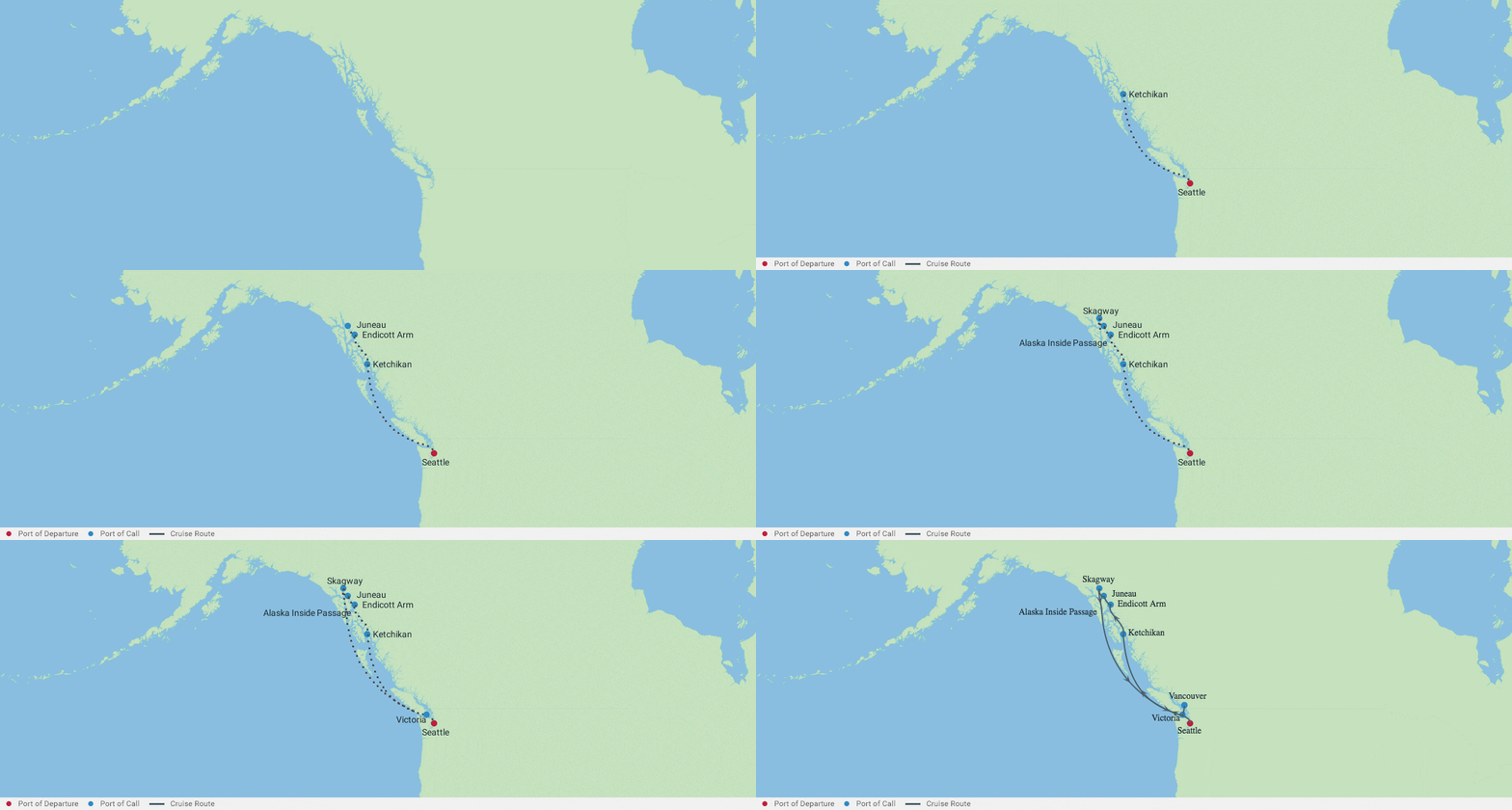
Ports of Call
Seattle, Washington
At Sea - Cruising
Ketchikan, Alaska
Ketchikan is often the quintessential introduction to the Inside Passage, serving as a potent concentration of everything travelers seek in Alaska. Known as the "Salmon Capital of the World," the town balances a gritty industrial history of fishing and logging with the profound heritage of the Tlingit, Haida, and Tsimshian peoples. Visitors should be prepared for "liquid sunshine"—this sits squarely in a temperate rainforest, and the frequent rain is an atmospheric element of the destination, not a deterrent.
For a relaxed day, the town is highly walkable. The centerpiece is Creek Street, a historic boardwalk built on pilings over the water. Formerly the city's notorious red-light district, it is now a charming, albeit busy, collection of galleries and local shops. In late summer, looking over the rails offers a front-row seat to thousands of salmon fighting their way upstream; the nearby fish ladder provides a fascinating, close-up view of this biological struggle.
To engage with the region's history beyond the souvenir shops, we recommend the Totem Heritage Center. Located a short walk or quick taxi ride from the bustle of the port, it houses an unparalleled collection of original 19th-century totem poles retrieved from deserted villages. Unlike the brightly repainted replicas found in parks, these are preserved in their natural, weathered state, offering a somber and powerful insight into Native artistry.
While the town is engaging, the true grandeur of this stop lies in the surrounding wilderness. If logistics and budget permit, a floatplane excursion to Misty Fjords National Monument is the definitive Ketchikan experience. Soaring past sheer granite cliffs and cascading waterfalls provides a perspective on Alaska’s scale that ground tours simply cannot match. Whether you explore the boardwalks or fly into the fjords, Ketchikan delivers a dense, accessible dose of the frontier.
For a relaxed day, the town is highly walkable. The centerpiece is Creek Street, a historic boardwalk built on pilings over the water. Formerly the city's notorious red-light district, it is now a charming, albeit busy, collection of galleries and local shops. In late summer, looking over the rails offers a front-row seat to thousands of salmon fighting their way upstream; the nearby fish ladder provides a fascinating, close-up view of this biological struggle.
To engage with the region's history beyond the souvenir shops, we recommend the Totem Heritage Center. Located a short walk or quick taxi ride from the bustle of the port, it houses an unparalleled collection of original 19th-century totem poles retrieved from deserted villages. Unlike the brightly repainted replicas found in parks, these are preserved in their natural, weathered state, offering a somber and powerful insight into Native artistry.
While the town is engaging, the true grandeur of this stop lies in the surrounding wilderness. If logistics and budget permit, a floatplane excursion to Misty Fjords National Monument is the definitive Ketchikan experience. Soaring past sheer granite cliffs and cascading waterfalls provides a perspective on Alaska’s scale that ground tours simply cannot match. Whether you explore the boardwalks or fly into the fjords, Ketchikan delivers a dense, accessible dose of the frontier.
Juneau, Alaska
Juneau is a paradox: a state capital accessible only by air or sea, where the wilderness doesn't just surround the city—it defines it. As a port of call, it offers perhaps the most accessible high-adventure opportunities in Alaska, though managing expectations regarding weather and crowds is essential for a quality experience.
The Mendenhall Glacier is the undisputed centerpiece. While the Visitor Center offers a solid introduction, the glacier has receded significantly in recent years. To truly grasp the scale of the Juneau Icefield, we recommend a helicopter excursion. Landing on the glacier or dog sledding on the ice cap is a significant investment, but it provides a visceral connection to the landscape that a distant view from the visitor center cannot match. If you prefer to stay grounded, the hike to Nugget Falls offers a powerful view of the glacier's face and a roaring waterfall without the flight costs.
Juneau’s waters are among the most productive feeding grounds for humpback whales in the world. Sightings in Auke Bay are exceptionally reliable during the cruise season. If you have not booked a wildlife excursion elsewhere on your itinerary, this is the place to do it.
Downtown Juneau is compact and historic, though South Franklin Street can feel congested when multiple ships are in port. For a sophisticated cultural break, the Alaska State Museum is outstanding, housing world-class exhibits on Native Alaskan heritage and Russian history. The Mount Roberts Tramway, located right at the dock, offers sweeping views, but we advise purchasing tickets only after assessing the cloud cover; the view is spectacular, but non-existent in heavy fog.
For a culinary finish, skip the generic tourist traps and visit Tracy’s King Crab Shack for genuine local flavor. Juneau is a wet city—it lies in a temperate rainforest—so dress in waterproof layers to enjoy this spectacular intersection of civilization and wild frontier.
The Mendenhall Glacier is the undisputed centerpiece. While the Visitor Center offers a solid introduction, the glacier has receded significantly in recent years. To truly grasp the scale of the Juneau Icefield, we recommend a helicopter excursion. Landing on the glacier or dog sledding on the ice cap is a significant investment, but it provides a visceral connection to the landscape that a distant view from the visitor center cannot match. If you prefer to stay grounded, the hike to Nugget Falls offers a powerful view of the glacier's face and a roaring waterfall without the flight costs.
Juneau’s waters are among the most productive feeding grounds for humpback whales in the world. Sightings in Auke Bay are exceptionally reliable during the cruise season. If you have not booked a wildlife excursion elsewhere on your itinerary, this is the place to do it.
Downtown Juneau is compact and historic, though South Franklin Street can feel congested when multiple ships are in port. For a sophisticated cultural break, the Alaska State Museum is outstanding, housing world-class exhibits on Native Alaskan heritage and Russian history. The Mount Roberts Tramway, located right at the dock, offers sweeping views, but we advise purchasing tickets only after assessing the cloud cover; the view is spectacular, but non-existent in heavy fog.
For a culinary finish, skip the generic tourist traps and visit Tracy’s King Crab Shack for genuine local flavor. Juneau is a wet city—it lies in a temperate rainforest—so dress in waterproof layers to enjoy this spectacular intersection of civilization and wild frontier.
Endicott Arm & Dawes Glacier
Endicott Arm offers a quintessential Alaskan experience, distinct from the commercial bustle of port towns. This is a day dedicated to scenic cruising, where the ship navigates a 30-mile fjord carved by ancient ice. The scale here is humbling; sheer granite cliffs rise thousands of feet directly from the emerald water, often decorated with vertical stripes of cascading waterfalls. Unlike the open ocean, the water here is usually calm, turning the fjord into a mirror for the scenery above.
The destination is the Dawes Glacier, an active tidewater glacier standing over 600 feet tall. As you approach, the water becomes cluttered with floating ice sculptures—from small 'bergy bits' to massive, sapphire-blue chunks. The highlight is the 'white thunder' of calving, where massive slabs of ice fracture and crash into the sea. While the visual is stunning, the sound is equally memorable.
Wildlife viewing is excellent here. Look for harbor seals hauling out on the ice floes near the glacier face—this is a primary breeding ground for them. Mountain goats appear as white specks on the high cliffs, and brown bears are occasionally spotted along the shoreline. We recommend spending this time on the open decks rather than behind glass; the sensory experience of the crisp air and the roar of the ice is lost indoors. If your itinerary offers a small boat excursion here, it is worth the investment to get closer to the water level and the glacier face.
The destination is the Dawes Glacier, an active tidewater glacier standing over 600 feet tall. As you approach, the water becomes cluttered with floating ice sculptures—from small 'bergy bits' to massive, sapphire-blue chunks. The highlight is the 'white thunder' of calving, where massive slabs of ice fracture and crash into the sea. While the visual is stunning, the sound is equally memorable.
Wildlife viewing is excellent here. Look for harbor seals hauling out on the ice floes near the glacier face—this is a primary breeding ground for them. Mountain goats appear as white specks on the high cliffs, and brown bears are occasionally spotted along the shoreline. We recommend spending this time on the open decks rather than behind glass; the sensory experience of the crisp air and the roar of the ice is lost indoors. If your itinerary offers a small boat excursion here, it is worth the investment to get closer to the water level and the glacier face.
Inside Passage
Skagway, Alaska
Skagway operates as a living museum of the 1898 Klondike Gold Rush, situated at the northern terminus of the Inside Passage. While the town’s year-round population is small, its historical footprint is massive. The downtown district is part of the Klondike Gold Rush National Historical Park, featuring meticulously restored false-front buildings and wooden boardwalks. It is undeniably tourist-centric, yet the preservation is authentic enough to transport you back to the era of prospectors and con artists. You can easily explore the core of Broadway Street in an hour or two, perhaps stopping at the Red Onion Saloon or the National Park Service visitor center for context.
However, we advise viewing Skagway primarily as a staging ground for the wilderness beyond. The town sits in a narrow, wind-swept valley, and the most dramatic scenery requires leaving the immediate port area. The definitive experience here is the White Pass & Yukon Route Railroad. This narrow-gauge railway is an engineering masterpiece that climbs nearly 3,000 feet in just 20 miles, offering vertiginous views of gorges, waterfalls, and the Sawtooth Mountains. It is not merely a train ride; it is the most efficient and spectacular way to understand the geography that challenged gold seekers.
For a different perspective, Skagway is the premier port for flightseeing. Helicopter excursions to nearby glaciers—often combined with dog sledding—provide a sense of scale that ground-based tours cannot match. For those preferring to stay closer to sea level, a float down the Taiya River or a hike to Lower Reid Falls offers serenity away from the busy boardwalks. Ultimately, Skagway rewards those who book a specific adventure rather than wandering aimlessly.
However, we advise viewing Skagway primarily as a staging ground for the wilderness beyond. The town sits in a narrow, wind-swept valley, and the most dramatic scenery requires leaving the immediate port area. The definitive experience here is the White Pass & Yukon Route Railroad. This narrow-gauge railway is an engineering masterpiece that climbs nearly 3,000 feet in just 20 miles, offering vertiginous views of gorges, waterfalls, and the Sawtooth Mountains. It is not merely a train ride; it is the most efficient and spectacular way to understand the geography that challenged gold seekers.
For a different perspective, Skagway is the premier port for flightseeing. Helicopter excursions to nearby glaciers—often combined with dog sledding—provide a sense of scale that ground-based tours cannot match. For those preferring to stay closer to sea level, a float down the Taiya River or a hike to Lower Reid Falls offers serenity away from the busy boardwalks. Ultimately, Skagway rewards those who book a specific adventure rather than wandering aimlessly.
Victoria, British Columbia
Victoria is arguably the most civilized port of call in the Pacific Northwest, blending British colonial heritage with West Coast vitality. Ships dock at Ogden Point, a pleasant 20-minute coastal walk or short shuttle ride from the Inner Harbour. This central hub is the city’s beating heart, framed by the ivy-covered Fairmont Empress and the neo-baroque Parliament Buildings. It is compact, safe, and exceptionally walkable.
For many, the headline attraction is Butchart Gardens. While truly a horticultural masterpiece, we advise caution regarding logistics: the gardens are located 35-45 minutes from the port. Visiting requires a dedicated block of four hours, leaving little time for the city itself. If you are a devoted gardener, it is worth the journey; if you prefer a relaxed pace, the city center offers ample rewards without the commute.
The Royal BC Museum is a standout recommendation for this demographic. It is one of North America's finest museums, featuring immersive exhibits on First Nations history and the region's natural evolution that are intellectually satisfying without being dry. Nearby, Government Street offers sophisticated strolling; look for Munro’s Books—set in a magnificent neoclassical building—and Rogers’ Chocolates for local heritage.
For a casual interlude, a short walk leads to Fisherman’s Wharf, where colorful houseboats and fresh halibut and chips offer a looser vibe. Whether you opt for High Tea at the Empress or a quiet walk through Beacon Hill Park to see the world’s tallest free-standing totem pole, Victoria delivers a polished, high-quality experience that respects your time.
For many, the headline attraction is Butchart Gardens. While truly a horticultural masterpiece, we advise caution regarding logistics: the gardens are located 35-45 minutes from the port. Visiting requires a dedicated block of four hours, leaving little time for the city itself. If you are a devoted gardener, it is worth the journey; if you prefer a relaxed pace, the city center offers ample rewards without the commute.
The Royal BC Museum is a standout recommendation for this demographic. It is one of North America's finest museums, featuring immersive exhibits on First Nations history and the region's natural evolution that are intellectually satisfying without being dry. Nearby, Government Street offers sophisticated strolling; look for Munro’s Books—set in a magnificent neoclassical building—and Rogers’ Chocolates for local heritage.
For a casual interlude, a short walk leads to Fisherman’s Wharf, where colorful houseboats and fresh halibut and chips offer a looser vibe. Whether you opt for High Tea at the Empress or a quiet walk through Beacon Hill Park to see the world’s tallest free-standing totem pole, Victoria delivers a polished, high-quality experience that respects your time.
Our staff can assist you with all your travel arrangements.
Questions? Call us at 800-525-9696.We can assist you with all your travel arrangements. We'd be happy to help you plan your flights, hotels or tours before and/or after your cruise conference.
SHORE EXCURSIONS
Please note that our shore excursions are operated separately and
independently of those offered by the cruise line.
Please note that our shore excursions are operated separately and
independently of those offered by the cruise line.
©2019 - University at Sea®