
COURSE CREDITS & HOURS
14 ANCC Contact Hours
8 Hours of Pharmacology for NPs
COURSE FEES
TARGET AUDIENCE
PROGRAM TOPICS
- Buprenorphine
- Participants will be able to differentiate the actions and pharmacokinetics of buprenorphine and patients who would benefit from buprenorphine as an analgesic
- Nalbuphine
- Participants will be able to employ nalbuphine in clinical situations for which it has an advantage
- Cannabis, Palmitoylethanolamide in the Management of Pain
- Participants will be able to recite the data regarding cannabis as an analgesic
- Participants will be introduced to palmitoylethanolamide as an analgesic and co-analgesic
- Neuropathy
- Participants will be able to recite the reasons why neuropathic pain is relatively opioid resistant
- Opioids: The Good, Bad and Ugly
- Participants will be able to recognize the role mu receptor subtypes and bias signaling have lead to the potential of better analgesics
- Opioids: Where is the balance
- Participants will be able to recite the lesser known risks with opioids such as depression, infections, primary hypogonadism, falls , fractures , impaired wound healing and myocardial infarction
- Opioid Induced Hyperalgesia: Does it Exist, What Does It Mean
- Participants will be able to discuss the evidence for opioid induced hyperalgesia based on a review of 10-14 studies
- Opioid Dosing Strategies for Cancer Pain
- Participants will apply the WHO stepladder to cancer pain management
- Case Presentations
- Participants will be able to discuss pain management in the face of organ failure, addiction
- Participants will be able to management pain in difficulty to manage pain syndromes
- Facial Paralysis and Bell's Palsy
- Participants should be able to differentiate the potential causes of unilateral facial paralysis and know the present AAO-HNS guidelines for diagnosis, treatment and follow-up
- Head and neck manifestations of Reflux
- Participants should be able to list and associate symptoms that may be caused by reflux in patients that have no heartburn or GI symptoms
- Rhinitis- not just Allergy
- Participants should be able to recognize allergic from non-allergic rhinitis and improve patient care with most appropriate treatment.
- Sinus headaches and Facial Pain syndromes
- Participants should be able to differentiate facial pain arising from sinus disease from the many other causes of facial pain and headache. and determine symptoms that suggests other etiologies of headache.
- Narcolepsy and other sleep disorders
- Participants should be able to diagnose other causes of daytime sleepiness and discuss diagnostic testing and treatment options.
- Sleep Apnea Update 2019
- Participants should be able to Identify risk factors for OSA and co-morbidities. Treatment options and follow-up will be emphasized.
- Incorporating CPAP care into the primary care office
- Participant should be able to understand positive airway pressure machines and the differences between CPAP, BPAP,ASV and autoPAP. Attendees will understand Medicare guidelines for treatment and follow-up.
IMPORTANT INFORMATION
Faculty
J. David Cunningham, Jr., MD, FACS

Clinical Associate Professor of Surgery, Department of Otolaryngology
Campbell University Medical School
Director of Sleep Diagnostics, UNC ENT
Goldsboro, NC
David Cunningham MD completed his medical training at Thomas Jefferson University as well as an Otolaryngology-Head and Neck Surgery residency in 1984. He was in private practice in suburban Philadelphia and was an academic instructor in Otolaryngology with both the University of Pennsylvania and Thomas Jefferson until moving to North Carolina in 2001. He is presently practicing at UNC Ear Nose and Throat, associated with University of North Carolina since March of 2018 and is an associate Professor of Otolaryngology with Campbell University Medical College since 2014. He is board certified in Otolaryngology in 1984 and with subspecialty Sleep Medicine in 2008.
Mellar Davis, MD, FCCP, FAAHPM

Editor-in-Chief, Progress in Palliative Care
Chairman, Palliative Section, Multinational Association of Supportive Care in Cancer
Scientific Subcommittee, American Academy of Hospice and Palliative Medicine
Reviewer, journals Cancer, Palliative Medicine, British Journal of Cancer, Journal of Pain and Symptom Management, Chest, Journal of Palliative Medicine, Journal of Supportive Care in Oncology
Dr. Mellar Davis is a member of the Palliative Care Department, and Section Head, Geisinger Medical System Danville, PA.
He has been a member of the Geisinger Medical Staff since August 2016. In his role as Section Head, Dr Davis is responsible for developing palliative care services throughout the Geisinger Medical System including outpatient and inpatient services. In addition, Dr Davis works with the Geisinger Hospice Services to develop and coordinate care within the central region.
Dr. Davis was a member of the Cleveland Clinic Palliative Care section, Taussig Cancer Institute and fellowship director until joining the Geisinger Medical System. He was the co- chair of the Palliative Care Study Group of the Multinational Association of Supportive Care (MASCC) and a past board member since 2010.
He is a Professor of Medicine in The Cleveland Clinic Lerner College of Medicine, Case Western Reserve University, since 2009 and elected as a Fellow to the American Academy of Hospice and Palliative Medicine in 2010. He is Editor in Chief of Progress on Palliative Care.
His present duties within the Associate Editor in Chief of PC FACS (Fast Article Critical Summary for Clinicians in Palliative Care).
Accreditation
|
|
Credit Designation for Nurses: Continuiung Education, Inc. designates this continuing nursing education activity for 12 contact hours. |
|
Nurse Practitioners: can claim either ANCC Contact Hours or AMA PRA Category 1 Credits™ as needed. |

|
|
In support of improving patient care, Continuing Education, Inc./University at Sea® is jointly accredited by the Accreditation Council for Continuing Medical Education (ACCME), the Accreditation Council for Pharmacy Education (ACPE), and the American Nurses Credentialing Center (ANCC), to provide continuing education for the healthcare team. |
|
|
|
|
|
Credit Designation for Physicians: Continuing Education, Inc. designates this live activity for 14 AMA PRA Category 1 Credits™. Physicians should claim only the credit commensurate with the extent of their participation in the activity. Osteopathic Physicians: This program is eligible for Category 2 credit with the American Osteopathic Association (AOA). |
|
|
|
|
|
Credit Designation for Nurses: Continuiung Education, Inc. designates this continuing nursing education activity for 14 contact hours. Nurse Practitioners: Can claim either ANCC Contact Hours or AMA PRA Category 1 CreditsTM as needed. Pharmacology credits are identified on individual activities. |
|
|
|
|
|
Royal College of Physicians and Surgeons of Canada: |
|
|
|
|
|
Credit Designation for Pharmacists: This knowledge-based activity is approved for 14 hours of pharmacy continuing education credit. |




|
|
Credit Designation for Nurses: Continuiung Education, Inc. designates this continuing nursing education activity for 14 contact hours. |
|
Nurse Practitioners: can claim either ANCC Contact Hours or AMA PRA Category 1 Credits™ as needed. |
Osteopathic Physicians: This program is eligible for Category 2 credit with the American Osteopathic Association (AOA).
US or Canadian Family Physicians: Please let us know if you require AAFP Prescribed Credits.
Nurse Practitioners: can claim either ANCC Contact Hours or AMA PRA Category 1 CreditsTM as needed.
Pharmacology credits are identified on individual activities.
|
|
Successful completion of this CME activity, which includes participation in the evaluation component, enables the participant to earn up to 14 (part II) MOC points in medical knowledge in the American Board of Internal Medicine's (ABIM) Maintenance of Certification (MOC) program. Participants will earn MOC points equivalent to the amount of CME credits claimed for the activity. It is the CME activity provider's responsibility to submit participant completion information to ACCME for the purpose of granting ABIM MOC credit. |

 This activity has been registered to offer 14 ( Part II) MOC Points in the ABA MOC program.

Cruise Itinerary
| DATE | PORT OF CALL | ARRIVE | DEPART |
|---|---|---|---|
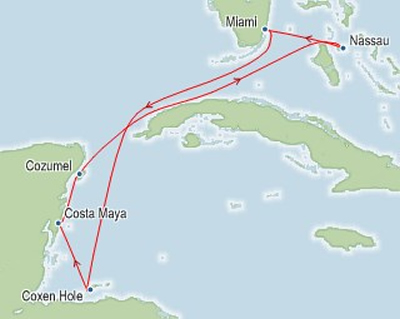
| Saturday, April 6 | Miami, Florida |
- | 4:30 pm |
| Sunday, April 7 | *At Sea - Cruising |
- | - |
| Monday, April 8 | Roatan, Honduras |
8:00 am | 6:00 pm |
| Tuesday, April 9 | Puerto Costa Maya, Mexico |
8:00 am | 6:00 pm |
| Wednesday, April 10 | Cozumel, Mexico |
7:00 am | 6:00 pm |
| Thursday, April 11 | *At Sea - Cruising |
- | - |
| Friday, April 12 | Nassau, Bahamas |
9:00 am | 6:00 pm |
| Saturday, April 13 | Miami, Florida |
6:00 am | - |
Ports of Call
Miami, Florida

South Beach remains the headline attraction, but we advise looking past the tourist-heavy sands to focus on the Art Deco Historic District. This is a legitimate architectural treasure; a morning walk along Ocean Drive reveals the world's highest concentration of 1930s and '40s resort architecture. It is best experienced early in the day, before the crowds and heat peak, perhaps with a coffee at the News Cafe.
For a shift from pastel nostalgia to modern grit, the Wynwood Arts District is essential. Once an industrial warehouse zone, it has evolved into one of the world’s most significant open-air art installations. The Wynwood Walls are the curated center, but the surrounding blocks offer museum-quality murals and a dense collection of independent galleries and breweries that feel entirely authentic.
To understand the city's demographic heartbeat, visit Little Havana. While parts of Calle Ocho cater to tourists, the neighborhood retains its soul. Watch the intense domino games at Máximo Gómez Park, or visit a *ventanita* (walk-up window) for a *cortadito* and a guava pastry. It is an unpretentious, sensory-rich experience.
If you prefer European elegance to urban energy, the Vizcaya Museum & Gardens offers a stunning Italian Renaissance-style villa on Biscayne Bay. It provides a serene, historical counterpoint to the modern city. Note that Miami is geographically spread out and traffic can be heavy; these neighborhoods are distinct and best accessed via ride-share services rather than attempting to combine too many in a single short visit.
At Sea - Cruising
Roatan, Honduras

Beyond the reef, the island offers two distinct experiences. West Bay is the quintessential Caribbean postcard—powder-white sands and calm turquoise waters—though expect significant crowds at the resorts. For a more authentic atmosphere, head to the neighboring West End village. It offers a bohemian mix of dive shops, open-air bars, and artisan stalls. Grab a fresh baleada, the thick flour tortilla staple of Honduran street food, while walking the strip.

Inland, the most popular excursions involve the island’s wildlife sanctuaries. Interactions with capuchin monkeys and sloths at places like Gumbalimba Park or Daniel Johnson's Monkey and Sloth Hang Out have become signature experiences, offering genuine engagement for animal lovers.
Ships dock at either the town of Coxen Hole or the purpose-built Mahogany Bay. Arrange transport away from these immediate port areas to experience the island’s true merit. Roatan is not a hub for colonial history or high culture; it is a natural playground. If you prioritize marine exploration or relaxed beach time over shopping and sightseeing, this port delivers.


Puerto Costa Maya, Mexico


A short taxi or shuttle ride leads to Mahahual, a neighboring fishing village that offers a genuine slice of coastal Mexican life. Here, a pedestrian malecón runs parallel to the water, lined with unpretentious beach clubs and local eateries serving fresh seafood. It provides a relaxed, low-stress beach day far superior to the crowded pool decks back at the ship.
Culturally, Costa Maya is the strategic access point for the Chacchoben Mayan ruins. Unlike the arduous travel required for Chichén Itzá, Chacchoben is accessible via a moderate drive, offering a fascinating, less-crowded introduction to ancient architecture set within a jungle teeming with wildlife. Alternatively, nature enthusiasts should consider the journey to Lake Bacalar. Known as the "Lagoon of Seven Colors," this freshwater marvel offers stunning turquoise waters and a tranquil atmosphere distinct from the ocean coast. Whether you choose the history of the ruins, the local flavor of Mahahual, or the natural beauty of Bacalar, the true value of this stop is found outside the immediate port complex.


Cozumel, Mexico


A critical note regarding Mayan history: While the famous mainland sites of Tulum and Coba are spectacular, visiting them requires a 45-minute ferry to Playa del Carmen followed by a bus ride. This logistical commitment consumes your entire day and introduces transit stress. Unless these specific sites are non-negotiable, we advise remaining on the island. You can visit the smaller, on-island ruins of San Gervasio to satisfy historical curiosity without the risk of missing the ship.
If your goal is relaxation, Cozumel’s beach clubs are highly developed, ranging from high-energy all-inclusives to sophisticated, quiet retreats where the focus is on service and tranquility. When dining in the main town of San Miguel, avoid the waterfront tourist strip. Instead, walk three to four blocks inland to find authentic family-run cantinas serving excellent cochinita pibil and fresh ceviche at a fraction of the tourist prices. Cozumel is a polished tourism machine, but by focusing on the reef, the east coast, or a high-end beach club, you can curate a sophisticated and restorative experience.


Nassau, Bahamas

For a meaningful dose of history, a short walk leads to the Queen's Staircase, a remarkable 66-step passage carved from solid limestone by enslaved people in the 18th century. It ascends to Fort Fincastle, offering commanding views of the island and a quiet respite from the downtown noise. For a more refined local taste, the John Watling's Distillery on the historic Buena Vista Estate provides tours and tastings in a setting that feels worlds away from the cruise terminal.

If a classic beach day is your priority, we advise looking beyond the nearest options, which can be crowded and underwhelming. A taxi to the expansive sands of Cable Beach or, for a more curated experience, a day pass to one of the major resorts on Paradise Island will provide the tranquil, turquoise-water escape you envision. These passes often grant access to pristine private beaches and high-quality amenities, turning a potentially hectic port day into a truly relaxing one.
For the most authentic local flavor, take a taxi to Arawak Cay, known as 'The Fish Fry.' This is where Bahamians go for fresh conch salad, fried snapper, and a vibrant, casual atmosphere. It offers a true taste of the islands that the port-side buffets simply cannot match.


We can assist you with all your travel arrangements. We'd be happy to help you plan your flights, hotels, or tours before and/or after your cruise conference.
PLEASE NOTE: To attend the conference, participants must book their cruise accommodations through University at Sea®. This ensures we can provide full conference services and complimentary social amenities to meeting participants and guests. Participants' family and friends are welcome to book within our group allotment and take advantage of our typically excellent rates.
Request a Quote online or by voice at 800-525-9696 (US/Can) or direct/int'l tel +1-727-526-1571.
Prices below are for the full cruise including meals and evening entertainment
Suites
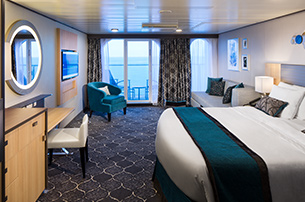 Junior Suite with Balcony (J4)
Bedroom area with two twin beds that convert to Royal King. Full bathroom with tub. Sitting area with sofa. Private balcony. Up to 4 guests. Stateroom: 287 sq. ft. Balcony: 80 sq. ft. (Decks 7, 8, 9, 11, 12 & 14)
800-525-9696
for Pricing
 Suite/Deluxe
Ultimate Family Suite US.
Two-story suite designed as an ultra-luxury family accommodation. Features an in-suite slide from the kids' bedroom on the upper level down to the living room, a floor-to-ceiling LEGO wall, air-hockey table, hanging egg swing chairs, a separate 3D cinema room with gaming consoles. The wraparound aft-facing balcony includes a full-size whirlpool and kids' climbing wall enclosed in netting.
In-suite slide connecting upper and lower levels
85-inch TV with three video game consoles
Air hockey table
Floor-to-ceiling LEGO wall
Popcorn machine
Two hanging egg swing chairs
Full-size whirlpool on balcony
Kids' climbing wall (netted) on balcony
3D cinema room
Royal Genie service (Star Class)
Royal Genie personal service
Complimentary specialty dining
Complimentary beverages including premium
Priority check-in and boarding
Exclusive Suite Lounge access
Suite Sun Deck access
Coastal Kitchen dining
In-suite bar setup
Suite/Deluxe
Ultimate Family Suite US.
Two-story suite designed as an ultra-luxury family accommodation. Features an in-suite slide from the kids' bedroom on the upper level down to the living room, a floor-to-ceiling LEGO wall, air-hockey table, hanging egg swing chairs, a separate 3D cinema room with gaming consoles. The wraparound aft-facing balcony includes a full-size whirlpool and kids' climbing wall enclosed in netting.
In-suite slide connecting upper and lower levels
85-inch TV with three video game consoles
Air hockey table
Floor-to-ceiling LEGO wall
Popcorn machine
Two hanging egg swing chairs
Full-size whirlpool on balcony
Kids' climbing wall (netted) on balcony
3D cinema room
Royal Genie service (Star Class)
Royal Genie personal service
Complimentary specialty dining
Complimentary beverages including premium
Priority check-in and boarding
Exclusive Suite Lounge access
Suite Sun Deck access
Coastal Kitchen dining
In-suite bar setup 800-525-9696
for Pricing
 Suite/Deluxe
Spacious AquaTheater Suite with Large Balcony - 2 Bedrooms A1.
Master bedroom has a King size bed with Duxiana Mattress. Second bedroom has two twin beds that convert to Royal King and two Pullman beds. Vanity with chair in each bedroom, living area with double sofa bed, dining room, marble entry, entertainment center. Two bathrooms, master with tub. Expansive balcony with table and chairs. Up to 8 guests. Stateroom: 823 sq. ft. Balcony: 772 sq. ft.
Suite/Deluxe
Spacious AquaTheater Suite with Large Balcony - 2 Bedrooms A1.
Master bedroom has a King size bed with Duxiana Mattress. Second bedroom has two twin beds that convert to Royal King and two Pullman beds. Vanity with chair in each bedroom, living area with double sofa bed, dining room, marble entry, entertainment center. Two bathrooms, master with tub. Expansive balcony with table and chairs. Up to 8 guests. Stateroom: 823 sq. ft. Balcony: 772 sq. ft. 800-525-9696
for Pricing
 Suite/Deluxe
AquaTheater Suite with Large Balcony - 2 Bedrooms A2.
Master bedroom has a King size bed with Duxiana Mattress. Second bedroom has two twin beds that convert to Royal King and two Pullman beds. Vanity with chair in each bedroom, living area with double sofa bed, dining room, marble entry, entertainment center. Two bathrooms, master with tub. Expansive balcony with table and chairs. Up to 8 guests. Stateroom: 673 sq. ft. Balcony: 610 sq.
Suite/Deluxe
AquaTheater Suite with Large Balcony - 2 Bedrooms A2.
Master bedroom has a King size bed with Duxiana Mattress. Second bedroom has two twin beds that convert to Royal King and two Pullman beds. Vanity with chair in each bedroom, living area with double sofa bed, dining room, marble entry, entertainment center. Two bathrooms, master with tub. Expansive balcony with table and chairs. Up to 8 guests. Stateroom: 673 sq. ft. Balcony: 610 sq. 800-525-9696
for Pricing
 Suite/Deluxe
Royal Loft Suite RL.
Two-decks-high stateroom with panoramic views. On second level, master bedroom has a King size bed with Duxiana Mattress; bathroom with tub, shower, two sinks and bidet and a closet. On main level, second bedroom with closet and two twin beds that convert to Royal King; dining area with dry bar, living room with sofa that converts to double bed; bathroom with shower. Private balcony with whirlpool and dining area. Sleeps up to 6 guests. Stateroom: 1,744 sq. ft. Balcony (main level): 843 sq. ft.
Suite/Deluxe
Royal Loft Suite RL.
Two-decks-high stateroom with panoramic views. On second level, master bedroom has a King size bed with Duxiana Mattress; bathroom with tub, shower, two sinks and bidet and a closet. On main level, second bedroom with closet and two twin beds that convert to Royal King; dining area with dry bar, living room with sofa that converts to double bed; bathroom with shower. Private balcony with whirlpool and dining area. Sleeps up to 6 guests. Stateroom: 1,744 sq. ft. Balcony (main level): 843 sq. ft. 800-525-9696
for Pricing
 Suite/Deluxe
Star Loft Suite TL.
Two-decks-high stateroom with panoramic views. Master bedroom and bathroom on second level. Bedroom has a King size bed with Duxiana Mattress. Stairway to second level. Bathrooms with shower for two. Private balcony with dining area. Dining area with dry bar. Living room sofa converts to double bed. Closets on each level. Sleeps up to 4 guests. Stateroom: 722 sq. ft. Balcony: 410 sq. ft.
Suite/Deluxe
Star Loft Suite TL.
Two-decks-high stateroom with panoramic views. Master bedroom and bathroom on second level. Bedroom has a King size bed with Duxiana Mattress. Stairway to second level. Bathrooms with shower for two. Private balcony with dining area. Dining area with dry bar. Living room sofa converts to double bed. Closets on each level. Sleeps up to 4 guests. Stateroom: 722 sq. ft. Balcony: 410 sq. ft. 800-525-9696
for Pricing
 Suite/Deluxe
Villa Suite - 4 Bedrooms VS.
Two Master bedrooms with King size bed with Duxiana Mattress. Two Master bathrooms with tub. Two bedrooms with two twin beds that convert to Royal King and two Pullman beds (one with bathroom). Guest bathroom with shower. Balcony with a whirlpool, dining area, and bar. Dining room with dry bar. Living room sofa converts to a double bed. Stateroom can sleep up to 14 guests, must have at least 8 to book. Stateroom: 1,142 sq. ft. Balcony: 476 sq. ft.
Suite/Deluxe
Villa Suite - 4 Bedrooms VS.
Two Master bedrooms with King size bed with Duxiana Mattress. Two Master bathrooms with tub. Two bedrooms with two twin beds that convert to Royal King and two Pullman beds (one with bathroom). Guest bathroom with shower. Balcony with a whirlpool, dining area, and bar. Dining room with dry bar. Living room sofa converts to a double bed. Stateroom can sleep up to 14 guests, must have at least 8 to book. Stateroom: 1,142 sq. ft. Balcony: 476 sq. ft. 800-525-9696
for Pricing
 Suite/Deluxe
Spacious AquaTheater Suite with Large Balcony -1 Bedroom A3.
Bedroom area with two twin beds that convert to Royal King. One bathroom with tub, large closets, sitting area with table and sofa bed. Private balcony with seating area and private dining. Sleeps 4 guests. Stateroom: 562 sq. ft. Balcony: 589 sq. ft.
Suite/Deluxe
Spacious AquaTheater Suite with Large Balcony -1 Bedroom A3.
Bedroom area with two twin beds that convert to Royal King. One bathroom with tub, large closets, sitting area with table and sofa bed. Private balcony with seating area and private dining. Sleeps 4 guests. Stateroom: 562 sq. ft. Balcony: 589 sq. ft. 800-525-9696
for Pricing
 Suite/Deluxe
Grand Suite - 1 Bedroom GS.
Bedroom area with two twin beds that convert to Royal King. Full bathroom with tub and two sinks. Living room with sofa that converts to double bed. Private balcony with seating area and private dining. Up to 4 guests. Stateroom: 371 sq. ft. Balcony: 105 sq. ft.
Suite/Deluxe
Grand Suite - 1 Bedroom GS.
Bedroom area with two twin beds that convert to Royal King. Full bathroom with tub and two sinks. Living room with sofa that converts to double bed. Private balcony with seating area and private dining. Up to 4 guests. Stateroom: 371 sq. ft. Balcony: 105 sq. ft. 800-525-9696
for Pricing
 Suite/Deluxe
Grand Suite - 2 Bedrooms GT.
Two bedrooms with two twin beds that convert to Royal King and vanity with chair. Two Pullman beds in second room. Living area with double convertible sofa, marble entry, entertainment center, two bathrooms - master bath with tub. Private balcony with table and chairs. Up to 8 guests. Stateroom: 580 sq. ft. Balcony: 238 sq. ft.
Suite/Deluxe
Grand Suite - 2 Bedrooms GT.
Two bedrooms with two twin beds that convert to Royal King and vanity with chair. Two Pullman beds in second room. Living area with double convertible sofa, marble entry, entertainment center, two bathrooms - master bath with tub. Private balcony with table and chairs. Up to 8 guests. Stateroom: 580 sq. ft. Balcony: 238 sq. ft. 800-525-9696
for Pricing
 Suite/Deluxe
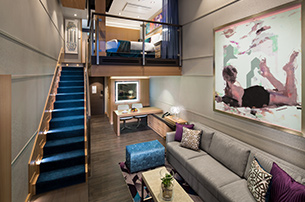
Crown Loft Suite L1.
Two-decks-high stateroom with panoramic views. Master bedroom with Royal King size bed and bath on second level. Bath with shower on main level. Private balcony with chairs, dining area with dry bar, table/desk. Living room sofa converts to double bed. Sleeps up to 4 guests. Stateroom: 545 sq. ft. Balcony : 114 sq. ft.
Suite/Deluxe
Crown Loft Suite L1.
Two-decks-high stateroom with panoramic views. Master bedroom with Royal King size bed and bath on second level. Bath with shower on main level. Private balcony with chairs, dining area with dry bar, table/desk. Living room sofa converts to double bed. Sleeps up to 4 guests. Stateroom: 545 sq. ft. Balcony : 114 sq. ft. 800-525-9696
for Pricing
 Suite/Deluxe
Owner's Suite OS.
Two twin beds that convert to Royal King. Private bathroom with tub and two sinks, marble entry, large closets, living area with table and sofa. Private balcony with table and chairs. Up to 4 guests. Stateroom: 556 sq. ft. Balcony: 243 sq. ft.
Suite/Deluxe
Owner's Suite OS.
Two twin beds that convert to Royal King. Private bathroom with tub and two sinks, marble entry, large closets, living area with table and sofa. Private balcony with table and chairs. Up to 4 guests. Stateroom: 556 sq. ft. Balcony: 243 sq. ft. 800-525-9696
for Pricing
Suite/Deluxe
Junior Suite with Balcony J3.
Bedroom area with two twin beds that convert to Royal King. Full bathroom with tub. Sitting area with sofa. Private balcony. Up to 4 guests. Stateroom: 287 sq. ft. Balcony: 80 sq. ft. 800-525-9696
for Pricing
 Suite/Deluxe
AquaTheater Suite with Large Balcony -1 Bedroom A4.
Bedroom area with two twin beds that convert to Royal King. One bathroom with tub, large closets, sitting area with table and sofa bed. Private balcony with seating area and private dining. Stateroom: 562 sq. ft. Balcony: 589 sq. ft.
Suite/Deluxe
AquaTheater Suite with Large Balcony -1 Bedroom A4.
Bedroom area with two twin beds that convert to Royal King. One bathroom with tub, large closets, sitting area with table and sofa bed. Private balcony with seating area and private dining. Stateroom: 562 sq. ft. Balcony: 589 sq. ft. 800-525-9696
for Pricing
Suite/Deluxe
Crown Loft Suite L2.
Bedroom area with two twin beds that convert to Royal King. One bathroom with tub, large closets, sitting area with table and sofa bed. Private balcony with seating area and private dining. Stateroom: 562 sq. ft. Balcony: 589 sq. ft. 800-525-9696
for Pricing
 Suite/Deluxe
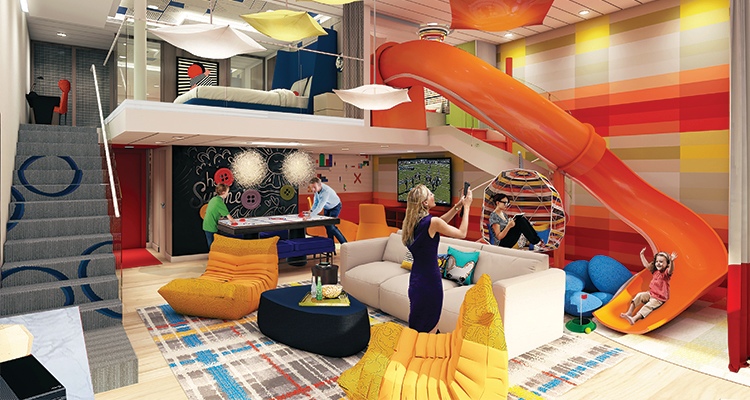
Ultimate Family Suite RL-UFS.
The new Ultimate Family Suite is two stories of awesome thrills on every level. Like your very own in-suite slide where there's never a line, an air hockey table, table tennis on your balcony and access to just about any video game you could want. Plus a separate master suite where parents can escape to serene amenities. Stateroom 1,134 sq. ft. Balcony: 212 sq. ft.
Suite/Deluxe
Ultimate Family Suite RL-UFS.
The new Ultimate Family Suite is two stories of awesome thrills on every level. Like your very own in-suite slide where there's never a line, an air hockey table, table tennis on your balcony and access to just about any video game you could want. Plus a separate master suite where parents can escape to serene amenities. Stateroom 1,134 sq. ft. Balcony: 212 sq. ft. 800-525-9696
for Pricing
Balcony
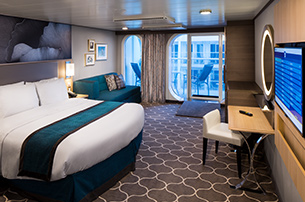 Central Park View with Balcony (2J)
All staterooms and suites come complete with private bathroom, vanity area, hair-dryer, closed-circuit TV, radio and phone. Two twin beds that convert to Royal King. Boardwalk or Central Park view balcony, sitting area, and a private bathroom. Balcony: 52 sq. ft. (Decks 10, 11, 12 & 14)
800-525-9696
for Pricing
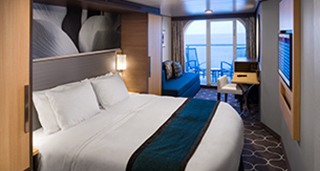 Oceanview with Balcony (8D)
Two twin beds that convert to Royal King, sitting area with sofa, full bathroom and private balcony.
Stateroom: 182 sq. ft. Balcony: 50 sq. ft.
800-525-9696
for Pricing
 Balcony
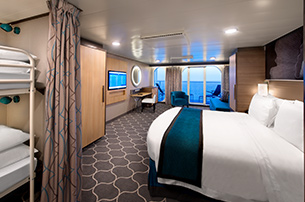
Ultra Spacious Oceanview with Large Balcony 1A.
Two twin beds that convert to Royal King. Sofa converts to double, two Pullman beds, private bathroom and sitting area. Up to 6 guests. Stateroom: 271 sq. ft. Balcony: 82 sq. ft.
Balcony
Ultra Spacious Oceanview with Large Balcony 1A.
Two twin beds that convert to Royal King. Sofa converts to double, two Pullman beds, private bathroom and sitting area. Up to 6 guests. Stateroom: 271 sq. ft. Balcony: 82 sq. ft. 800-525-9696
for Pricing
Balcony
Oceanview with Large Balcony 1C.
All staterooms and suites come complete with private bathroom, vanity area, hair-dryer, closed-circuit TV, radio and phone.
Two twin beds that convert to Royal King, sitting area with sofa, full bathroom and private balcony. Up to 4 guests. Stateroom: 182 sq. ft. Balcony: 80 sq. ft. 800-525-9696
for Pricing
Balcony
Oceanview with Large Balcony 1D.
All staterooms and suites come complete with private bathroom, vanity area, hair-dryer, closed-circuit TV, radio and phone. Two twin beds that convert to a Royal King bed. Stateroom: 182 sq. ft. Balcony: 50 sq. ft. 800-525-9696
for Pricing
 Balcony
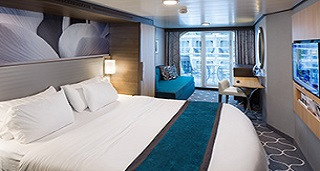
Boardwalk View with Balcony 1I.
All staterooms and suites come complete with private bathroom, vanity area, hair-dryer, closed-circuit TV, radio and phone.
Two twin beds that convert to Royal King, boardwalk view balcony, sitting area, and a private bathroom. Up to 4 guests. Stateroom: 182 sq. ft. Balcony: 52 sq. ft.
Balcony
Boardwalk View with Balcony 1I.
All staterooms and suites come complete with private bathroom, vanity area, hair-dryer, closed-circuit TV, radio and phone.
Two twin beds that convert to Royal King, boardwalk view balcony, sitting area, and a private bathroom. Up to 4 guests. Stateroom: 182 sq. ft. Balcony: 52 sq. ft. 800-525-9696
for Pricing
Balcony
Central Park View with Balcony 1J.
All staterooms and suites come complete with private bathroom, vanity area, hair-dryer, closed-circuit TV, radio and phone. Two twin beds that convert to Royal King. Boardwalk or Central Park view balcony, sitting area, and a private bathroom. Balcony: 52 sq. ft. 800-525-9696
for Pricing
Balcony
Oceanview with Large Balcony 2C.
All staterooms and suites come complete with private bathroom, vanity area, hair-dryer, closed-circuit TV, radio and phone.
Two twin beds that convert to Royal King, sitting area with sofa, full bathroom and private balcony. Up to 4 guests. Stateroom: 182 sq. ft. Balcony: 80 sq. ft. 800-525-9696
for Pricing
Balcony
Oceanview with Balcony 2D.
All staterooms and suites come complete with private bathroom, vanity area, hair-dryer, closed-circuit TV, radio and phone. Two twin beds that convert to a Royal King bed. Stateroom: 182 sq. ft. Balcony: 50 sq. ft. 800-525-9696
for Pricing
Balcony
Boardwalk View with Balcony 2I.
All staterooms and suites come complete with private bathroom, vanity area, hair-dryer, closed-circuit TV, radio and phone.
Two twin beds that convert to Royal King, boardwalk view balcony, sitting area, and a private bathroom. Up to 4 guests. Stateroom: 182 sq. ft. Balcony: 52 sq. ft. 800-525-9696
for Pricing
Balcony
Oceanview with Balcony 3D.
All staterooms and suites come complete with private bathroom, vanity area, hair-dryer, closed-circuit TV, radio and phone. Two twin beds that convert to a Royal King bed. Stateroom: 182 sq. ft. Balcony: 50 sq. ft. 800-525-9696
for Pricing
Balcony
Oceanview with Balcony 4D.
All staterooms and suites come complete with private bathroom, vanity area, hair-dryer, closed-circuit TV, radio and phone. Two twin beds that convert to a Royal King bed. Stateroom: 182 sq. ft. Balcony: 50 sq. ft. 800-525-9696
for Pricing
Balcony
Boardwalk View with Balcony 4I.
Two twin beds that convert to Royal King, boardwalk view balcony, sitting area, and a private bathroom. Stateroom: 182 sq. ft. Balcony: 52 sq. ft. 800-525-9696
for Pricing
Balcony
Oceanview with Balcony 5D.
All staterooms and suites come complete with private bathroom, vanity area, hair-dryer, closed-circuit TV, radio and phone. Two twin beds that convert to a Royal King bed. Stateroom: 182 sq. ft. Balcony: 50 sq. ft. 800-525-9696
for Pricing
Balcony
Oceanview with Balcony 6D.
Two twin beds that convert to Royal King, sitting area with sofa, full bathroom and private balcony. Stateroom: 182 sq. ft. Balcony: 50 sq. ft. 800-525-9696
for Pricing
Balcony
Oceanview with Balcony 7D.
Two twin beds that convert to Royal King, sitting area with sofa, full bathroom and private balcony. Stateroom: 182 sq. ft. Balcony: 50 sq. ft. 800-525-9696
for Pricing
 Balcony
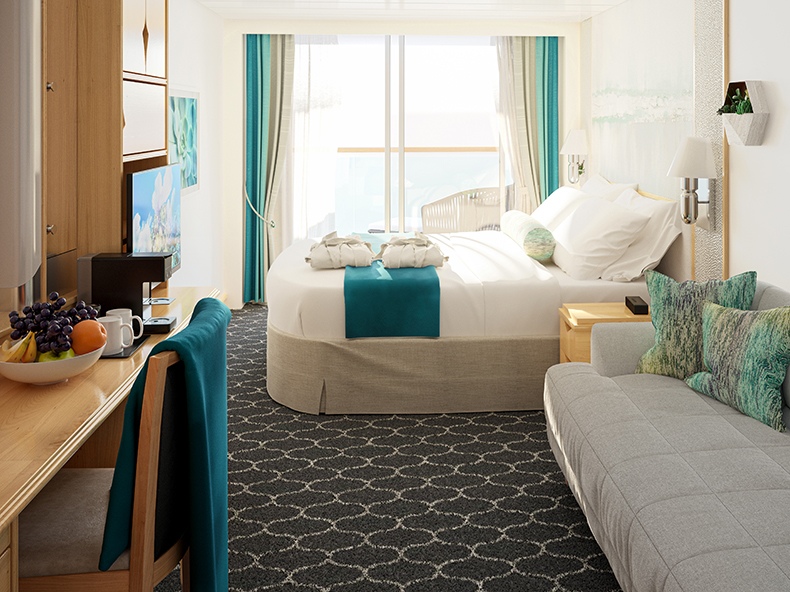
Spa Oceanview with Balcony S4.
Experience a spectacular view for a memorable vacation.
Balcony
Spa Oceanview with Balcony S4.
Experience a spectacular view for a memorable vacation.Spa Class Exclusive:
- Upgraded showerhead
- Luxurious bathrobe
- Daily refreshments
- Priority Embarkation/Debarkation
Stateroom: 182 sq. ft. Balcony: 50 sq. ft.
800-525-9696
for Pricing
Outside
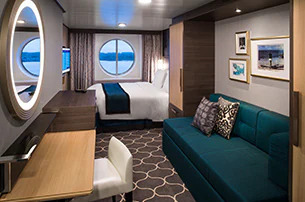 Oceanview Stateroom (2N)
All staterooms and suites come complete with private bathroom, vanity area, hair-dryer, closed-circuit TV, radio and phone. Two twin beds that convert to Royal King, private bathroom and sitting area. Up to 4 guests. Stateroom: 179 sq. ft. (Deck 3)
800-525-9696
for Pricing
 Outside
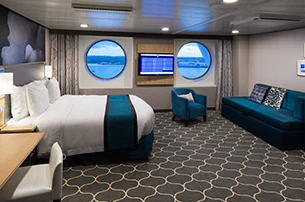
Ultra Spacious Oceanview 1K.
All staterooms and suites come complete with private bathroom, vanity area, hair-dryer, closed-circuit TV, radio and phone. Two twin beds that convert to Royal King. Sofa converts to double, two Pullman beds, private bathroom and sitting area. Up to 6 guests. Stateroom: 271 sq. ft.
Outside
Ultra Spacious Oceanview 1K.
All staterooms and suites come complete with private bathroom, vanity area, hair-dryer, closed-circuit TV, radio and phone. Two twin beds that convert to Royal King. Sofa converts to double, two Pullman beds, private bathroom and sitting area. Up to 6 guests. Stateroom: 271 sq. ft. 800-525-9696
for Pricing
Outside
Oceanview Stateroom 1N.
All staterooms and suites come complete with private bathroom, vanity area, hair-dryer, closed-circuit TV, radio and phone. Two twin beds that convert to Royal King, private bathroom and sitting area. Up to 4 guests. Stateroom: 179 sq. ft. 800-525-9696
for Pricing
 Outside
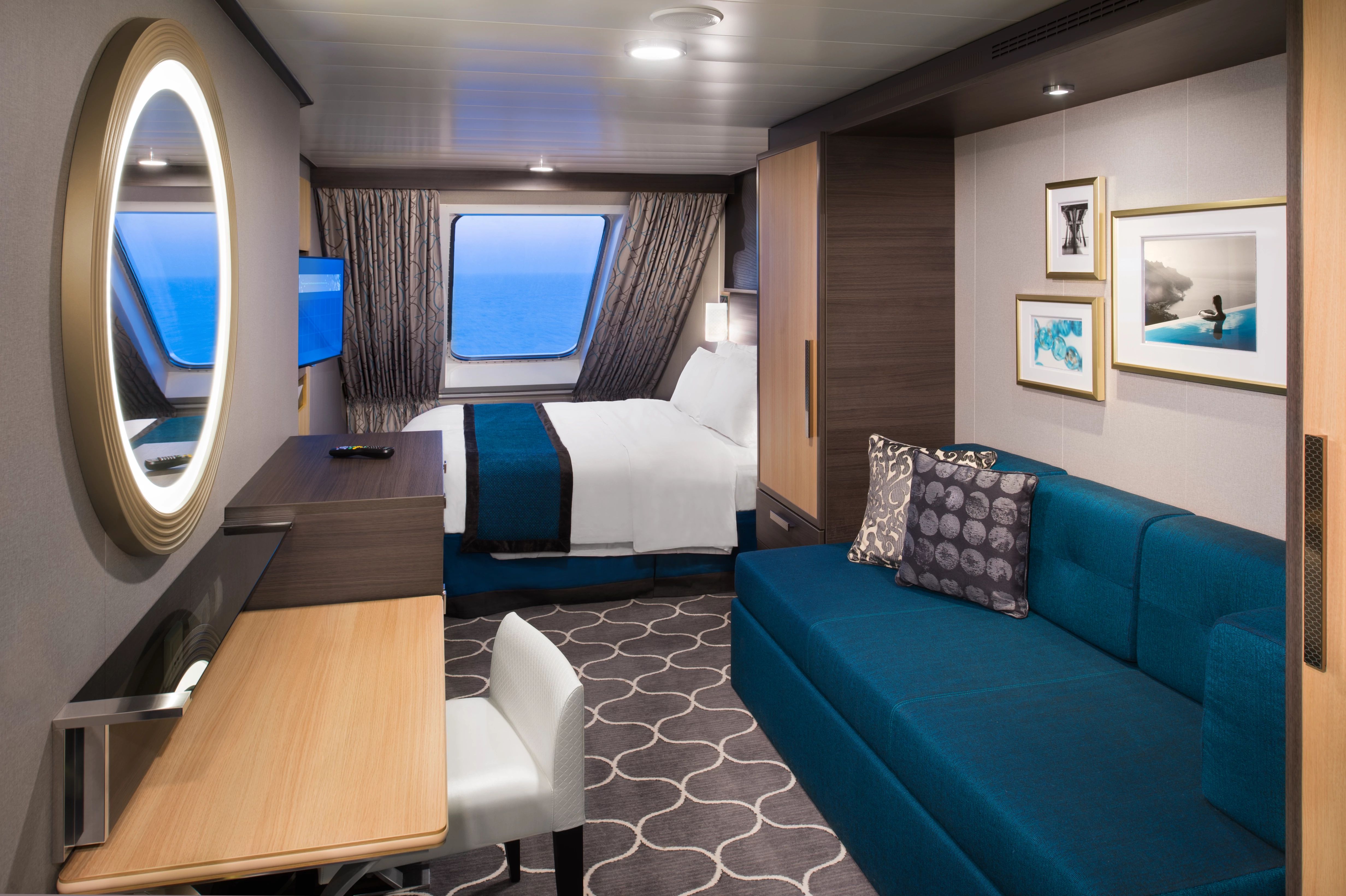
Oceanview Stateroom 4N.
All staterooms and suites come complete with private bathroom, vanity area, hair-dryer, closed-circuit TV, radio and phone. Two twin beds that convert to Royal King, private bathroom and sitting area. Up to 4 guests. Stateroom: 179 sq. ft.
Outside
Oceanview Stateroom 4N.
All staterooms and suites come complete with private bathroom, vanity area, hair-dryer, closed-circuit TV, radio and phone. Two twin beds that convert to Royal King, private bathroom and sitting area. Up to 4 guests. Stateroom: 179 sq. ft. 800-525-9696
for Pricing
Outside
Oceanview Stateroom 6N.
Two twin beds that convert to Royal King, private bathroom and sitting area. Stateroom: 179 sq. ft. Please note that some staterooms in this class have obstructed views. Note: This stateroom category when located on the bow, has an obstructed view. 800-525-9696
for Pricing
Inside
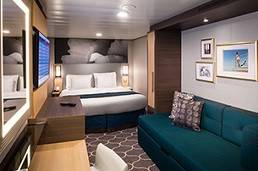 Interior Stateroom (2V)
Two twin beds that convert to Royal King, private bathroom and sitting area. Stateroom: 149 sq. ft.
800-525-9696
for Pricing
 Inside
Spacious Interior 1R.
All staterooms and suites come complete with private bathroom, vanity area, hair-dryer, closed-circuit TV, radio and phone. Two twin beds that convert to Royal King. Sofa converts to double, two Pullman beds, private bathroom and sitting area. Stateroom: 260 sq. ft.
Inside
Spacious Interior 1R.
All staterooms and suites come complete with private bathroom, vanity area, hair-dryer, closed-circuit TV, radio and phone. Two twin beds that convert to Royal King. Sofa converts to double, two Pullman beds, private bathroom and sitting area. Stateroom: 260 sq. ft. 800-525-9696
for Pricing
 Inside
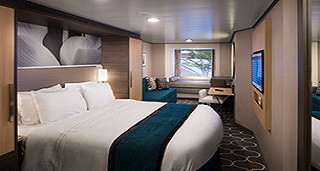
Central Park View Interior 1S.
Two twin beds that convert to Royal King, boardwalk view, sitting area, and a private bathroom. Stateroom: 191 sq. ft.
Inside
Central Park View Interior 1S.
Two twin beds that convert to Royal King, boardwalk view, sitting area, and a private bathroom. Stateroom: 191 sq. ft.
800-525-9696
for Pricing
 Inside
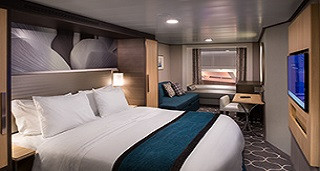
Promenade View Interior 1T.
Two twin beds that convert to Royal King, private bathroom and sitting area. Stateroom: 194 sq. ft.
Inside
Promenade View Interior 1T.
Two twin beds that convert to Royal King, private bathroom and sitting area. Stateroom: 194 sq. ft. 800-525-9696
for Pricing
Inside
Interior Stateroom 1V.
Two twin beds that convert to Royal King, private bathroom and sitting area with sofa bed. Stateroom: 149 sq. ft. 800-525-9696
for Pricing
Inside
Interior Stateroom 3V.
All staterooms and suites come complete with private bathroom, vanity area, hair-dryer, closed-circuit TV, radio and phone. Two twin beds that convert to Royal King, private bathroom and sitting area. Up to 4 guests. Stateroom: 149 sq. ft. 800-525-9696
for Pricing
 Inside
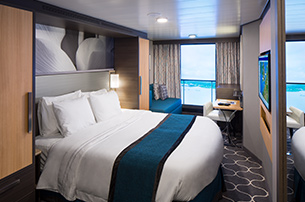
Interior with Virtual Balcony 4U.
A high-definition screen that spans nearly floor to ceiling, providing real-time views of the ocean and destinations. Two twin beds that convert to Royal King, private bathroom and sitting area with sofa. Up to 4 guests. Stateroom: 160 sq. ft.
Inside
Interior with Virtual Balcony 4U.
A high-definition screen that spans nearly floor to ceiling, providing real-time views of the ocean and destinations. Two twin beds that convert to Royal King, private bathroom and sitting area with sofa. Up to 4 guests. Stateroom: 160 sq. ft. 800-525-9696
for Pricing
Inside
Interior Stateroom 4V.
All staterooms and suites come complete with private bathroom, vanity area, hair-dryer, closed-circuit TV, radio and phone. Two twin beds that convert to Royal King, private bathroom and sitting area. Up to 4 guests. Stateroom: 149 sq. ft. 800-525-9696
for Pricing
Inside
Interior Stateroom 6V.
Two twin beds that convert to Royal King, private bathroom and sitting area. Stateroom: 149 sq. ft. 800-525-9696
for Pricing
Before & After Your Cruise
Hotels
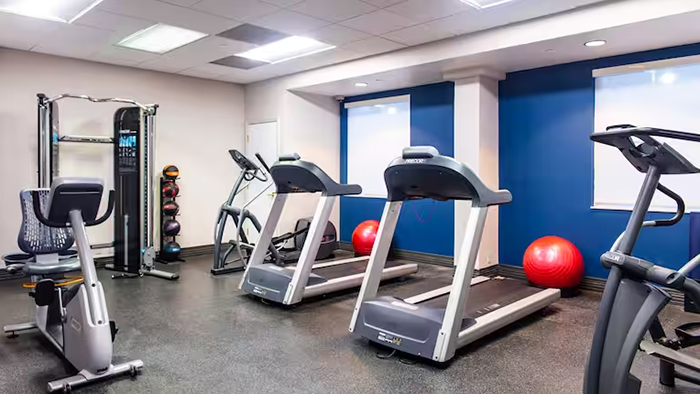
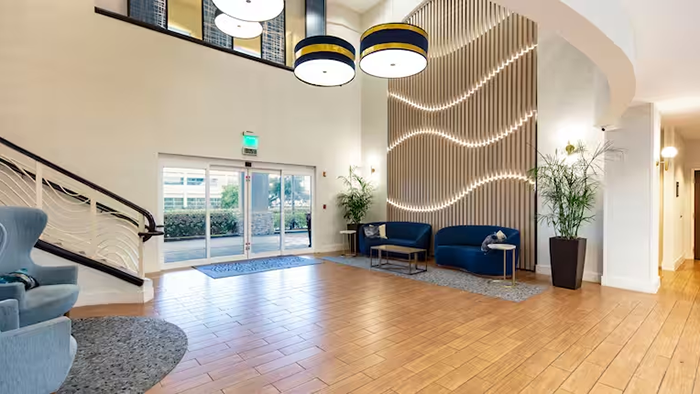
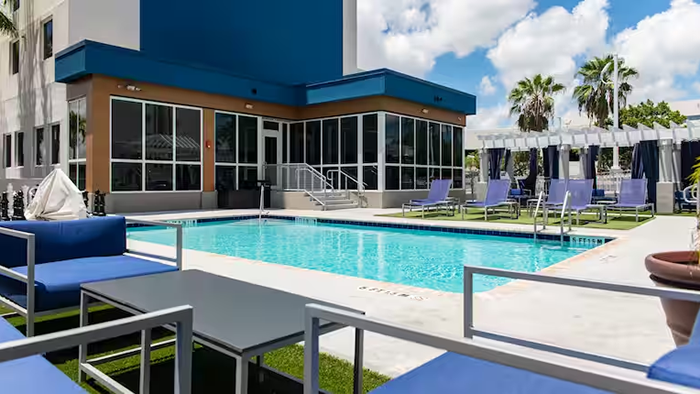
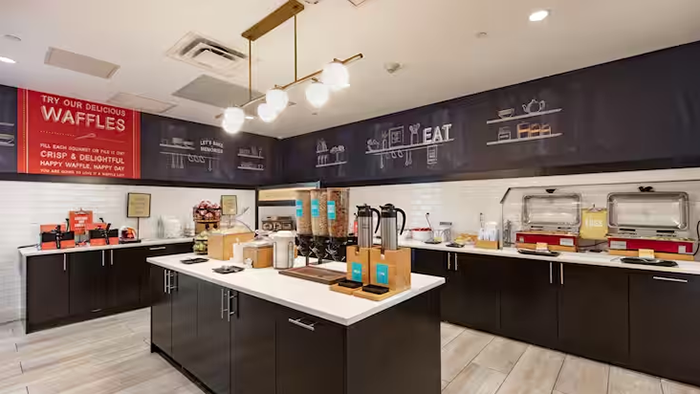
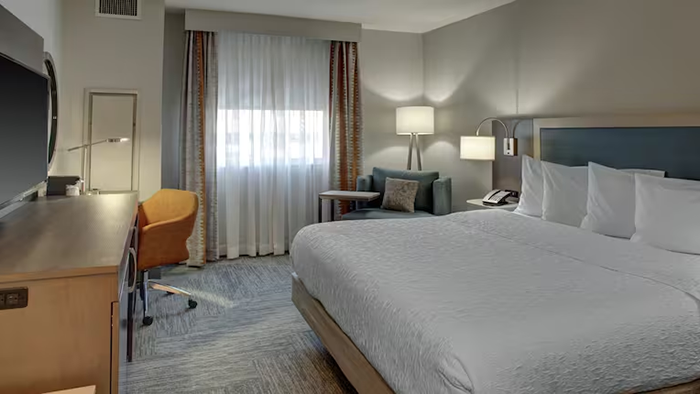
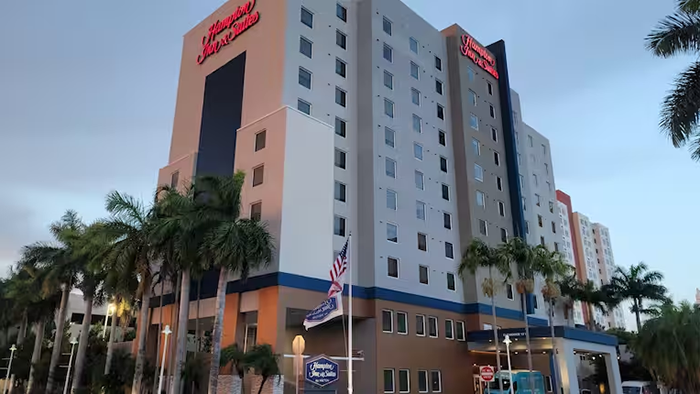
Hampton Inn & Suites by Hilton - Miami Airport South Blue Lagoon
A Stone's Throw from Miami's Airport
777 NW 57th Ave, Miami, FL 33126 — Miami
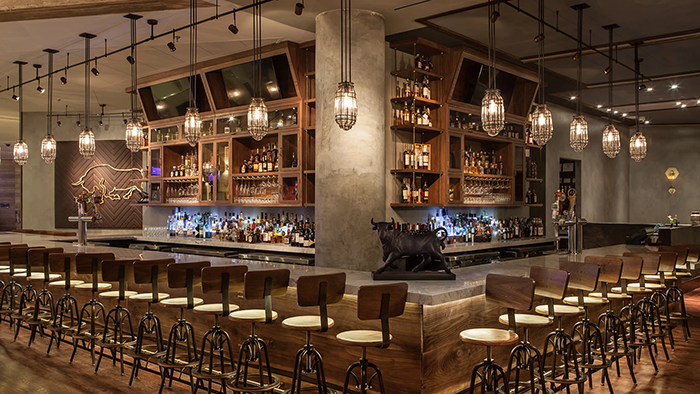
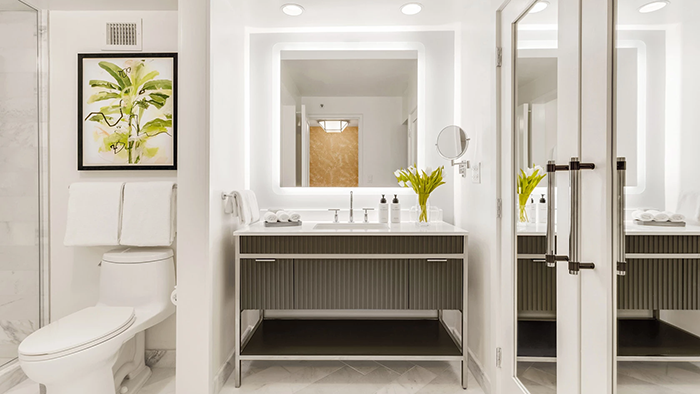
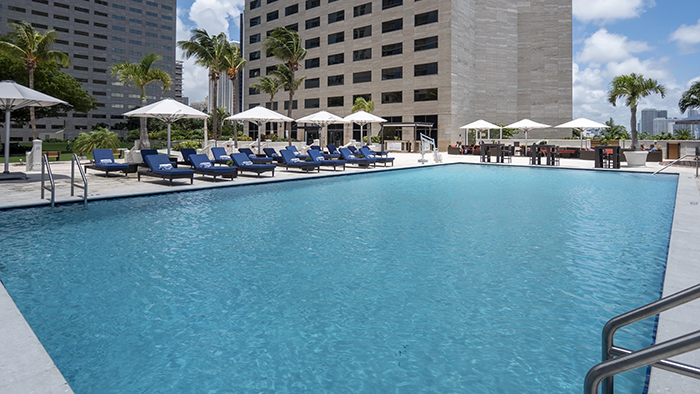
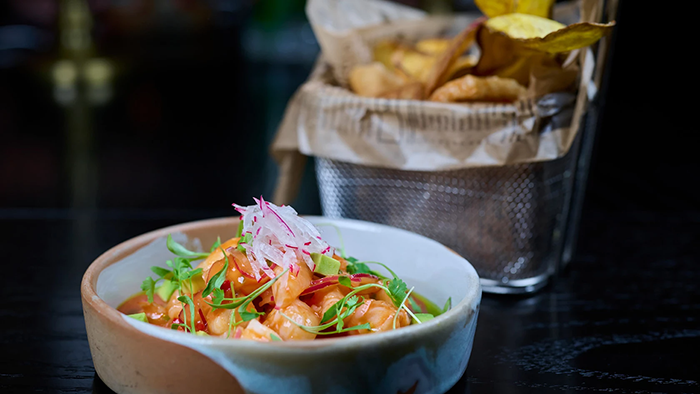
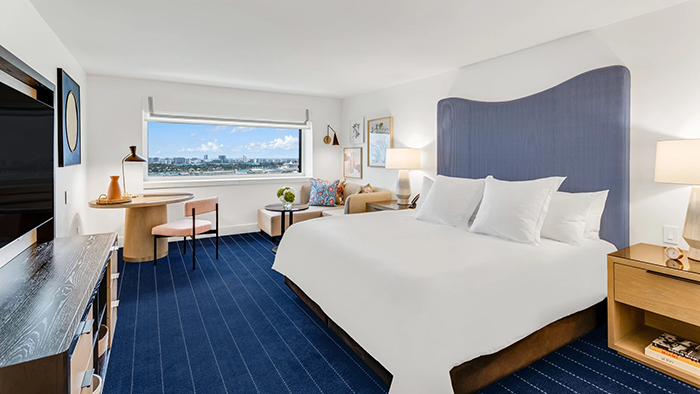
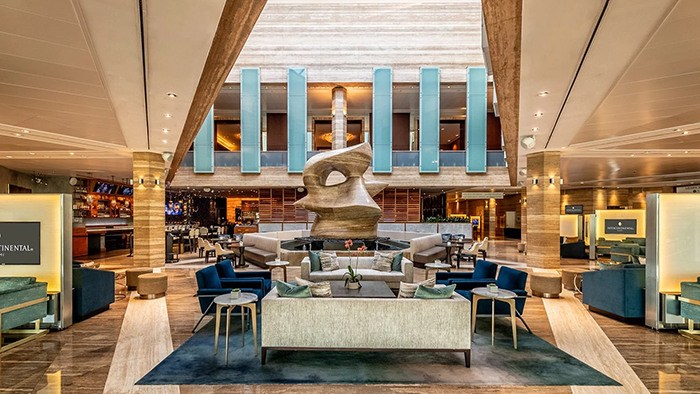
InterContinental Miami, an IHG Hotel
Miami's Bayfront Icon
100 Chopin Plaza, Miami, FL 33131 — Miami
Protect Your Trip with Allianz Travel Insurance
Allianz Travel Insurance plans can give you flexibility and support when your trip doesn’t go quite as planned. From unexpected flight issues to covered trip cancellations, travel emergencies, and more, travel insurance can help you manage unforeseen events that may impact your trip—giving you peace of mind from the moment you book your trip through your return home.
For an instant quote:
- Simply provide a few short details about your trip
- Review the available protection plans
- Enjoy the peace of mind you deserve
Why Protect your Trip?
Whether you’re planning your next trip or you recently booked one, travel insurance can help smooth over many unexpected travel glitches—while putting your mind at ease, knowing you’re off the hook for covered expenses that could arise from them.
Allianz Travel Insurance plans can provide you benefits and professional support when a covered situation comes up before or during your trip. The following examples may qualify for benefits:
- Cancelling your trip after unexpectedly becoming too sick to travel
- Taking care of a sick or injured traveling companion
- Having to end your trip early due to a family emergency
- Dealing with a flight delay or cancellation
- Needing to buy personal items if your luggage is lost or stolen
- Missing your cruise departure after a covered flight delay
You also can contact our travel protection partner Allianz Global Assistance’s 24/7, award-winning customer service for on-the-go assistance with issues like a medical emergency, replacing your lost passport, or making reservations around the world. To be eligible for a time-sensitive waiver of pre-existing medical condition exclusions, purchase your travel insurance plan within 14 days of initial trip deposit (other purchase requirements and conditions apply). Specific plan benefits may vary. Please review your plan details for more information.
What Can Travel Insurance Help Protect?
Allianz Travel Insurance plans can protect you before and during your trip—keeping you, your loved ones, and your travel budget safer. Benefits vary by plan, and these are brief descriptions. Please read your plan documents for details.
TRIP CANCELLATION
Reimburses your prepaid, non-refundable travel expenses if you need to cancel your trip due to a covered reason, such as you, a family member, or traveling companion experiencing a covered illness or injury. Examples include:
- A doctor says you or a traveling companion is too sick to fly
- Your parent or child requires hospitalization
- You need to attend the birth of a family member’s child
- You have a traffic accident (not breakdown) on the way to the airport
- A storm shuts down your airport for 24 hours or more
TRIP INTERRUPTION
Reimburses your unused, non-refundable travel expenses and increased transportation costs during your trip if you have to return home early due to a covered reason, for instance when a family member has a qualifying medical emergency and needs your care. Examples include:
- You have a covered illness or injury and a doctor says you must return home
- A family member has a qualifying injury and needs your care
- A covered emergency, like a fire or flood, makes your home uninhabitable
TRAVEL DELAY
If you have a covered delay while traveling, travel insurance can reimburse you for meals, accommodations, and transportation expenses when your trip is delayed for a minimum number of consecutive hours for a covered reason. Minimum number of hours varies by plan.
EMERGENCY MEDICAL AND DENTAL CARE
Reimburses your expenses related to covered medical and dental emergencies* that might occur on your trip. This benefit can be especially helpful if you have a covered emergency outside the United States, as most health insurance policies won’t cover you outside the country. Examples include:
- You slip and break your ankle while sightseeing
- You get food poisoning while sampling the local cuisine
- You lose a filling and need immediate dental treatment*
*A sublimit and maximum apply for this benefit. Check your plan documents for details.
EMERGENCY MEDICAL TRANSPORTATION
Arranges and pays for medically necessary transportation following a covered injury or illness to the nearest appropriate medical facility to receive care and get you home after treatment.
BAGGAGE LOSS, DAMAGE, or THEFT
Reimburses the replacement of your lost, damaged, or stolen luggage and personal items while traveling.
BAGGAGE DELAY
Reimburses essential items purchased during your trip if your baggage is delayed for a minimum number of hours (varies by plan).
CHANGE FEE
Reimburses fees if you need to change your flight itinerary due to a covered reason.
24-HOUR ASSISTANCE
Provides around-the-clock support during your trip. Allianz Global Assistance’s staff of multilingual problem solvers can help you with medical, legal, and travel-related emergencies whenever they happen. Medical assistance may include, but is not limited to:
- Medical triage with referrals to local prescreened medical providers
- Ongoing medical monitoring
- Payment guarantee
- Emergency medical transportation
Additional services for travel-related emergencies can help with:
- Missed connecting flights
- Lost/stolen travel documents
- Pre-trip information
- Prescription replacements
Our Promise to You
When you purchase any Allianz Travel Insurance plan, you automatically get 15 days (or more, depending on your state of residence) to review your policy documents. Within that period, you can cancel your plan for a full refund if you’re not satisfied, as long as you haven’t filed a claim or departed on your trip.
Need Help Along the Way?
Contact Allianz Global Assistance’s award-winning team of travel experts. Call anytime for assistance navigating travel mishaps overseas or in the U.S.—or help with everything from reporting lost baggage to locating emergency medical treatment. They can also help you replace passports, refer you to legal assistance, secure cash from home in case of emergency, and guarantee payment when you need to be admitted to a hospital, in some instances.
Contact Allianz Global Assistance
Phone (24/7):
1-800-284-8300 (within the U.S., Canada, Puerto Rico, and the U.S. Virgin Islands)
1-804-281-5700 (outside of the U.S., call collect)
File or Track a Claim
It’s easy and convenient to file and track a claim, upload documents, and more online. Start your claim using your email address or policy number.
File a ClaimIf you need help filing a claim or understanding the claims process, visit the Allianz Global Assistance Claims Center.
Update Your Plan
If you need to update your travel insurance plan, such as adjusting the dates of your plan to reflect itinerary changes, please contact us or manage your plan online so your plan reflects your entire itinerary and provides the right amount of protection for your travels.
Manage My PlanAbout Allianz Global Assistance
Allianz Global Assistance is a world leader in travel insurance and assistance, helping millions of travelers across the globe every year. Allianz Global Assistance is owned by Allianz SE, the world’s largest diversified insurance company. For over 100 years, Allianz SE has helped protect important milestones in American history, insuring the Wright Brothers’ first flight and Golden Gate Bridge construction.
Terms, conditions, and exclusions apply including for pre-existing medical conditions. Insurance benefits underwritten by BCS Insurance Company (OH, Administrative Office: 2 Mid America Plaza, Suite 200, Oakbrook Terrace, IL 60181), rated “A” (Excellent) by A.M. Best Co., under BCS Form No. 52.201 series or 52.401 series, or Jefferson Insurance Company (NY, Administrative Office: 9950 Mayland Drive, Richmond, VA 23233), rated “A+” (Superior) by A.M. Best Co., under Jefferson Form No. 101-C series or 101-P series, depending on your state of residence and plan chosen. A+ (Superior) and A (Excellent) are the 2nd and 3rd highest, respectively, of A.M. Best’s 13 Financial Strength Ratings. Plans only available to U.S. residents and may not be available in all jurisdictions. Allianz Global Assistance and Allianz Travel Insurance are marks of AGA Service Company dba Allianz Global Assistance or its affiliates. Allianz Travel Insurance products are distributed by Allianz Global Assistance, the licensed producer and administrator of these plans and an affiliate of Jefferson Insurance Company. The insured shall not receive any special benefit or advantage due to the affiliation between AGA Service Company and Jefferson Insurance Company. Plans include insurance benefits and assistance services. Any Non-Insurance Assistance services purchased are provided through AGA Service Company. Except as expressly provided under your plan, you are responsible for charges you incur from third parties. Contact AGA Service Company at 800-284-8300 or 9950 Mayland Drive, Richmond, VA 23233 or customerservice@allianzassistance.com.