
COURSE CREDITS & HOURS
14 ANCC Contact Hours
6 ¾ Hours of Pharmacology for NPs
COURSE FEES
TARGET AUDIENCE
PROGRAM TOPICS
- Asthma
- Updates on strategies to reduce and prevent asthma with consideration of practice guidelines in management
- Rhinitis/Sinusitis
- Appreciate the signs and symptoms of rhinitis due to allergies and acute and chronic sinusitis with an emphasis on diagnosis and treatment.
- Allergy Shots/ Sublingual Immunotherapy
- Learn about allergy shots and sublingual immunotherapy and indications for its use and how they may be given safely .
- Environmental and Occupational Allergenic Triggers
- Provide appropriate testing and counseling to patients with suspected environmental and occupational triggers for disease .
- Food Allergy
- Determine whether a patient has food allergy, perform and interpret appropriate allergy tests, and provide a management plan for patients with food allergy.
- Atopic Dermatitis/Eczema
- Manage atopic dermatitis, based upon better knowledge of a complex chronic skin disorders.
- Anaphylaxis
- Recognize the severity of anaphylaxis and the causes.
- Approach to the patient with Spells
- Identify clinical signs and symptoms involved in patients with recurrent spells.
- Epilepsy - Medical and Surgical Management
- Describe the type of epilepsy and appropriate medical and surgical approaches to best practice.
- Using Anti-seizure Drugs
- Know the essential differences in new and old anti-seizure drugs when choosing them for epilepsy and neurological disease states.
- Focusing on the Neurological Examination
- Enhance the skill necessary to provide a targeted time-efficient neurological examination for patients with conditions impairing neurological function.
- Signs in Neurological Disease
- Determine the significant features involved in clinical signs present in patients with neurological disease.
- Case Studies in Neurology
- Address important features in case studies involving neurological signs/symptoms, synthesize a differential diagnosis, and implement specific treatment.
- Video Challenge: You Make the Call
- Assess the role of video in supporting a clinical diagnosis in patients with neurological complaint.
IMPORTANT INFORMATION
Faculty
Wanda Phipatanakul, MD, MS

Harvard Medical School
Director, Asthma Clinical Research Center
Boston Children's Hospital
Asthma, Allergy and Immunology
Boston, MA
Wanda Phipatanakul, MD, MS, director of the Asthma Clinical Research Center at Boston Children’s Hospital and Professor of Pediatrics at Harvard Medical School, has dedicated her career to reducing and preventing asthma and allergic diseases.
Originally from St. Louis, she earned her medical degree from Loma Linda University and completed her residency in pediatrics at Children’s Hospital Los Angeles in 1997. After a fellowship in immunology at Johns Hopkins University, she joined the faculty in the Division of Immunology and Allergy at Boston Children’s and Harvard Medical School, where she has remained for nearly 2 decades.
Dr. Phipatanakul has built a deep network of community relationships, and she conducts both school- and home-based asthma studies in children and has had continuous NIH funding for nearly 20 years. She leads the NIAID School Inner-City Asthma Intervention Study and the NHLBI Environment Assessment of Sleep in Youth, and overall PI for a NIAID funded, nationwide, multicenter asthma prevention study evaluating omalizumab (anti-IgE) in preventing the atopic march and asthma. Most recently she was awarded a NIAID U01 evaluating whether patients carrying a IL4RαR576gene variant, will have a greater response to dupilumab.
She leads her Center as Pediatric PI in multiple NHLBI asthma and prevention networks, including Precise and has authored over 220 publications in scientific journals, including JAMA and the New England Journal of Medicine. She is passionate about successfully mentoring the next generation of investigators, and has received multiple mentoring awards for her efforts. She also enjoys serving the American Academy of Allergy, Asthma, and Immunology and the American Board of Allergy and Immunology in support of her specialty and serving as a role model to others balancing work and family.
William O. Tatum IV, DO, FAAN, FACNS, FAES

Director, Comprehensive Epilepsy Center, Mayo Clinic Florida
Jacksonville, FL
Dr. William O. Tatum IV is a Professor of Neurology at the Mayo Clinic College of Medicine and Health Sciences and a senior consultant at Mayo Clinic Florida, where he serves as the Director of the Comprehensive Epilepsy Center. Board-certified in Neurology, Clinical Neurophysiology, and Epilepsy, he previously served as Chair of the Division of Epilepsy and Director of the Epilepsy Monitoring Unit. He is a Fellow of the American Academy of Neurology, the American Clinical Neurophysiology Society, and the American Epilepsy Society.
Dr. Tatum earned his medical degree from the College of Osteopathic Medicine and Surgery in Des Moines, Iowa. He completed his neurology residency at Loyola University Medical Center in Chicago, Illinois, followed by a two-year epilepsy fellowship at Graduate Hospital, affiliated with the University of Pennsylvania. Prior to joining the Mayo Clinic as a clinician-educator in 2009, he established the Tampa General Hospital-University of South Florida Comprehensive Epilepsy Center.
A dedicated leader in his field, Dr. Tatum is a past president of both the American Board of Clinical Neurophysiology and the American Clinical Neurophysiology Society, and he is a past chair of the clinical neurophysiology section of the American Academy of Neurology. He has served on the board of directors for the Neurodiagnostic Society and the professional advisory board of the Epilepsy Foundation of America. Highly active in medical publishing, he is the immediate past Editor-in-Chief of Epilepsy and Behavior Reports, the current Editor for Epilepsy Issues for Practical Neurology, and serves on the editorial board of the Journal of Clinical Neurophysiology.
Dr. Tatum frequently lectures nationally and internationally as an invited speaker. His research focuses on the medical and surgical treatment of drug-resistant epilepsy, seizure semiology, and clinical neurophysiology. Backed by intramural and extramural grant funding, he frequently serves as a principal investigator for pharmacologic and device clinical trials and holds patents for two intraoperative monitoring sensing devices. An accomplished author, Dr. Tatum has published over 345 peer-reviewed manuscripts and editorials, authored 48 book chapters, and edited eight books in the field of epilepsy and clinical neurophysiology.
Accreditation
|
|
In support of improving patient care, Continuing Education, Inc./University at Sea® is jointly accredited by the Accreditation Council for Continuing Medical Education (ACCME), the Accreditation Council for Pharmacy Education (ACPE), and the American Nurses Credentialing Center (ANCC), to provide continuing education for the healthcare team. |
|
|
|
|
|
Credit Designation for Physicians: Continuing Education, Inc. designates this live activity for 14 AMA PRA Category 1 Credits™. Physicians should claim only the credit commensurate with the extent of their participation in the activity. Osteopathic Physicians: This program is eligible for Category 2 credit with the American Osteopathic Association (AOA). |
|
|
|
|
|
Credit Designation for Nurses: Continuiung Education, Inc. designates this continuing nursing education activity for 14 contact hours. Nurse Practitioners: Can claim either ANCC Contact Hours or AMA PRA Category 1 CreditsTM as needed. Pharmacology credits are identified on individual activities. |
|
|
|
|
|
Royal College of Physicians and Surgeons of Canada: |
|
|
|
|
|
Credit Designation for Pharmacists: This knowledge-based activity is approved for 14 hours of pharmacy continuing education credit. |





|
|
Successful completion of this CME activity, which includes participation in the evaluation component, enables the participant to earn up to 14 (part II) MOC points in medical knowledge in the American Board of Internal Medicine's (ABIM) Maintenance of Certification (MOC) program. Participants will earn MOC points equivalent to the amount of CME credits claimed for the activity. It is the CME activity provider's responsibility to submit participant completion information to ACCME for the purpose of granting ABIM MOC credit. |


Cruise Itinerary
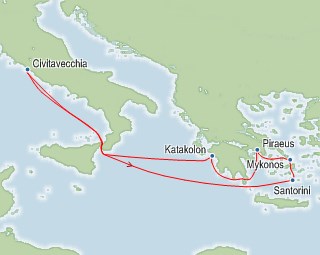
| DATE | PORT OF CALL | ARRIVE | DEPART |
|---|---|---|---|
| Sunday, June 16 | Rome (Civitavecchia), Italy |
- | 5:00 pm |
| Monday, June 17 | *At Sea - Cruising |
- | - |
| Tuesday, June 18 | Santorini, Greece |
1:00 am | 10:00 pm |
| Wednesday, June 19 | Mykonos, Greece |
8:00 am | 7:00 pm |
| Thursday, June 20 | Athens (Piraeus), Greece |
6:00 am | 6:00 pm |
| Friday, June 21 | Olympia (Katakolon), Greece |
9:00 am | 5:00 pm |
| Saturday, June 22 | *At Sea - Cruising |
- | - |
| Sunday, June 23 | Rome (Civitavecchia), Italy |
5:00 am | - |
Ports of Call
Rome (Civitavecchia), Italy

With a typical port day, attempting to see 'everything' guarantees nothing but exhaustion. We strongly recommend curating your day around one of three distinct tracks to ensure a quality experience.

First, the Imperial Track. Focus on the Colosseum, the Roman Forum, and Palatine Hill. Walking the Via Sacra offers a tangible connection to the origins of Western law and governance. However, admission lines here can consume hours; pre-purchased, timed-entry tickets are not optional—they are essential.
Second, the Vatican Track. St. Peter’s Basilica and the Vatican Museums hold an overwhelming concentration of artistic wealth. Standing beneath Michelangelo’s Sistine Chapel ceiling is profound, but the crowds are equally intense. Strict dress codes (shoulders and knees covered) are enforced, and guided access is the only way to navigate the vast collections efficiently within a limited window.

Third, the Centro Storico. For those who prefer atmosphere over checklists, a walking tour of the historic center offers a more relaxed pace. Start at the Pantheon—the world’s best-preserved ancient building—then wander to Piazza Navona and the Trevi Fountain. This approach allows time for a proper Roman lunch. Avoid restaurants directly facing major monuments; walk two streets back to find authentic cacio e pepe or carciofi alla giudia (Jewish-style artichokes). A rushed sandwich does a disservice to Italian culinary heritage, whereas a seated meal offers a necessary respite from the sensory overload.
Regardless of your choice, Rome demands respect for the clock. Always build a significant buffer for your return trip to Civitavecchia to ensure a stress-free conclusion to a spectacular day.


At Sea - Cruising
Santorini, Greece


To maximize your time and minimize frustration, we strongly recommend arranging a boat transfer to Oia or a pre-booked excursion that includes transportation from the tender pier. This strategy bypasses the initial cable car queue, which can consume hours of your morning. Once you have ascended, the island offers distinct experiences. Oia, on the northern tip, is the famous "postcard" village with blue-domed churches and marble streets. It is undeniably beautiful but frequently overwhelmed by crowds; visit early or late if possible. Fira, the capital, offers similar views with more bustle, museums, and shopping, serving as the central hub for the return descent.
For a reprieve from the congestion, the archaeological site of Akrotiri offers a world-class window into the Bronze Age, preserved under volcanic ash. Alternatively, the island’s viticulture is unique; vines are basket-woven low to the ground to survive the wind. Visiting a local estate to taste crisp, volcanic Assyrtiko wine provides a sophisticated, relaxing counterpoint to the busy towns. Santorini is a destination that rewards preparation; with the logistics managed, the views are truly unparalleled.


Mykonos, Greece

Navigate toward the waterfront to witness the iconic Kato Mili (windmills) standing sentinel on the hill. Just below lies Little Venice, where medieval houses with colorful balconies hover directly over the sea. It is the prime location for a coffee or cocktail, though be prepared for premium pricing that reflects the world-class view.
For our clients with a deep interest in history, Mykonos is the gateway to something far more significant: Delos. A short ferry ride away, this UNESCO World Heritage site is the mythological birthplace of Apollo and Artemis and one of the most important archaeological sites in the Mediterranean. If you prioritize ancient history over high-end shopping, a guided excursion here is non-negotiable.
If a beach day is preferred, manage your expectations regarding crowds and cost. The famous Paradise Beach is high-energy; for a more refined, family-friendly atmosphere, Ornos or Platis Gialos are superior choices, accessible via local bus or water taxi. Finally, a logistical note: if your ship docks at the New Port (Tourlos) rather than tendering, the local SeaBus is the most efficient transfer to the town center, bypassing the often-gridlocked taxi queues.
Athens (Piraeus), Greece


Your first priority is getting into the city center efficiently. The metro (Green Line 1 from Piraeus station) is a direct and affordable option that bypasses all traffic. Taxis are plentiful, but be sure to agree on a fare or insist on using the meter to avoid surprises. Once in Athens, the Acropolis is the day's non-negotiable centerpiece. Seeing the Parthenon preside over the city is a profound experience that connects you directly to 2,500 years of history, philosophy, and art. We strongly advise pre-booking your tickets online to save precious time you’d otherwise spend in a queue under the Greek sun.

After descending from the Acropolis, the modern Acropolis Museum awaits at its base. This stunningly designed space provides essential context for what you’ve just seen, housing the original artifacts in a climate-controlled, brilliantly curated environment. From there, immerse yourself in the Plaka, the city’s oldest neighborhood. This labyrinth of cobblestone streets, draped in bougainvillea, is where you’ll find the true Athenian spirit. It’s the perfect place to find a traditional taverna for a leisurely lunch of classic Greek dishes.
Our best advice for a port day in Athens is to be strategic. Don’t try to see everything. Focus on the Acropolis, its museum, and a wonderful meal in the Plaka. By doing so, you will have experienced the profound essence of the city, rather than just rushing past its landmarks. Wear comfortable shoes, stay hydrated, and prepare for an unforgettable immersion into the foundations of our world.


Olympia (Katakolon), Greece
The site itself is a stirring landscape of fallen columns and foundational stones. Key highlights include the ruins of the massive Temple of Zeus, once home to a wondrous statue that was one of the Seven Wonders of the Ancient World, and the Temple of Hera, where the Olympic flame is still lit for the modern games. The most evocative experience is standing on the starting line of the original stadium, a simple packed-earth track where history feels palpably close.
Adjacent to the ruins, the Archaeological Museum of Olympia is essential. It is not a minor provincial gallery but a world-class institution housing masterpieces of Greek sculpture, including the breathtaking Hermes of Praxiteles and the pediments from the Temple of Zeus.
After immersing yourself in antiquity, the town of Katakolon offers a gentle return to the present. Its waterfront is lined with cafes and tavernas, perfect for a quiet moment with a coffee or a glass of local wine, reflecting on the history you’ve just witnessed before returning to your ship.
We can assist you with all your travel arrangements. We'd be happy to help you plan your flights, hotels, or tours before and/or after your cruise conference.
PLEASE NOTE: To attend the conference, participants must book their cruise accommodations through University at Sea®. This ensures we can provide full conference services and complimentary social amenities to meeting participants and guests. Participants' family and friends are welcome to book within our group allotment and take advantage of our typically excellent rates.
Request a Quote online or by voice at 800-525-9696 (US/Can) or direct/int'l tel +1-727-526-1571.
Prices below are for the full cruise including meals and evening entertainment
Suites
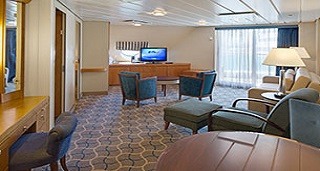
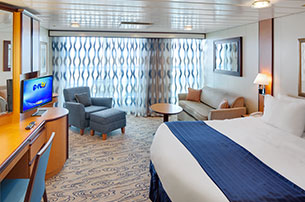 Junior Suite with Balcony (J3)
Two twin beds that convert to Royal King, private balcony, sitting area with sofa bed and private bathroom with tub. Stateroom: 299 sq. ft. Balcony: 66 sq. ft.
800-525-9696
for Pricing
 Suite/Deluxe
Owner's Suite - 2 Bedroom OT.
All staterooms and suites come complete with private bathroom, vanity area, hair-dryer, closed-circuit TV, radio and phone.
Suite/Deluxe
Owner's Suite - 2 Bedroom OT.
All staterooms and suites come complete with private bathroom, vanity area, hair-dryer, closed-circuit TV, radio and phone.These large suites offer two bedrooms, two bathrooms and a living area with a sofa bed.
Two sets of two twin beds that convert to a Royal King bed
One double sofa bed
Two Pullman beds
- Stateroom: 584 sq. ft.
- Balcony: 191 sq. ft.
800-525-9696
for Pricing
 Suite/Deluxe
Owner's Suite - 1 Bedroom OS.
Queen-size bed, bathroom with whirlpool tub, double sink and bidet. Separate living area with a double sofa bed. Stateroom: 512 sq. ft. Balcony: 66 sq. ft
Suite/Deluxe
Owner's Suite - 1 Bedroom OS.
Queen-size bed, bathroom with whirlpool tub, double sink and bidet. Separate living area with a double sofa bed. Stateroom: 512 sq. ft. Balcony: 66 sq. ft
800-525-9696
for Pricing
Suite/Deluxe
Suite Guarantee WS.
800-525-9696
for Pricing
Balcony
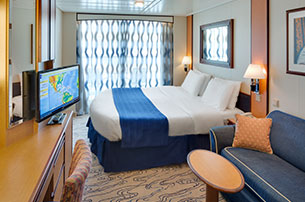 Oceanview with Balcony (6D)
Two twin beds that convert to Royal King, sitting area, private balcony and private bathroom. Stateroom: 179 sq. ft. Balcony: 41 sq. ft.
800-525-9696
for Pricing
Balcony
Oceanview with Balcony 5D.
Two twin beds that convert to Royal King, sitting area, private balcony and private bathroom. Stateroom: 179 sq. ft. Balcony: 41 sq. ft. 800-525-9696
for Pricing
Balcony
Oceanview with Balcony 4D.
Two twin beds that convert to Royal King, sitting area, private balcony and private bathroom.Stateroom: 179 sq. ft. Balcony: 41 sq. ft.
800-525-9696
for Pricing
Balcony
Oceanview with Balcony 1D.
Two twin beds that convert to Royal King, sitting area, private balcony and private bathroom.Stateroom: 179 sq. ft. Balcony: 41 sq. ft.
800-525-9696
for Pricing
Balcony
Oceanview with Balcony 2D.
Two twin beds that convert to Royal King, sitting area, private balcony and private bathroom.Stateroom: 179 sq. ft. Balcony: 41 sq. ft.
800-525-9696
for Pricing
Balcony
Ocean View Balcony Guarantee XB.
800-525-9696
for Pricing
Outside
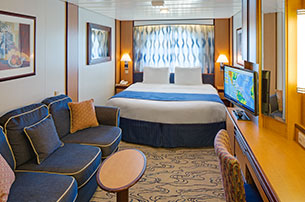 Oceanview Stateroom (3N)
Two twin beds that convert to Royal King and private bathroom. Stateroom: 170 sq. ft.
800-525-9696
for Pricing
Oceanview Stateroom (8N)Two twin beds that convert to Royal King and private bathroom. Stateroom: 170 sq. ft.
800-525-9696
for Pricing
Outside
Oceanview Stateroom 2N.
Two twin beds that convert to Royal King and private bathroom. Stateroom: 170 sq. ft. 800-525-9696
for Pricing
Outside
Oceanview Stateroom 4N.
Two twin beds that convert to Royal King and private bathroom.Stateroom: 170 sq. ft.
800-525-9696
for Pricing
Outside
Oceanview Stateroom 1N.
Two twin beds that convert to Royal King and private bathroom. Stateroom: 170 sq. ft. 800-525-9696
for Pricing
Outside
Ocean View Guarantee YO.
800-525-9696
for Pricing
Inside
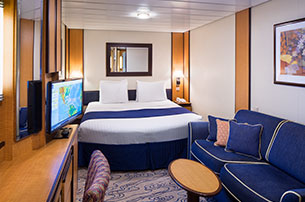 Interior Stateroom (4V)
Two twin beds that convert to Royal King and private bathroom. Stateroom: 170 sq. ft.
800-525-9696
for Pricing
Inside
Interior Stateroom 2V.
Two twin beds that convert to Royal King and private bathroom. Stateroom: 170 sq. ft. 800-525-9696
for Pricing
 Inside
Interior Stateroom 1V.
Two twin beds that convert to Royal King and private bathroom. Stateroom: 170 sq. ft.
Inside
Interior Stateroom 1V.
Two twin beds that convert to Royal King and private bathroom. Stateroom: 170 sq. ft. 800-525-9696
for Pricing
Inside
Interior Stateroom 3V.
Two twin beds that convert to Royal King and private bathroom. Stateroom: 170 sq. ft. 800-525-9696
for Pricing
Inside
Interior Stateroom 6V.
Two twin beds that convert to Royal King and private bathroom. Stateroom: 170 sq. ft. 800-525-9696
for Pricing
Inside
Interior Guarantee ZI.
800-525-9696
for Pricing
Before & After Your Cruise
Hotels

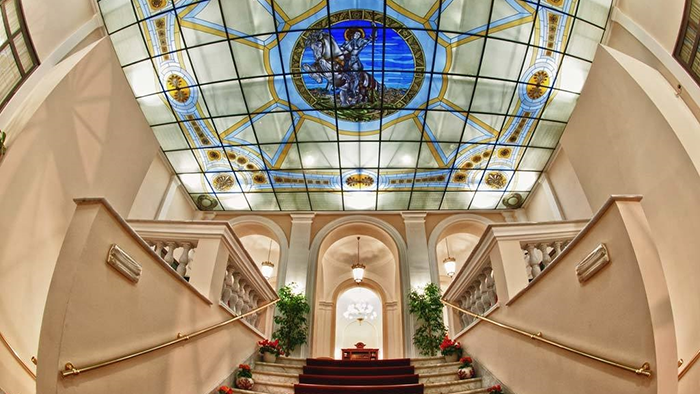
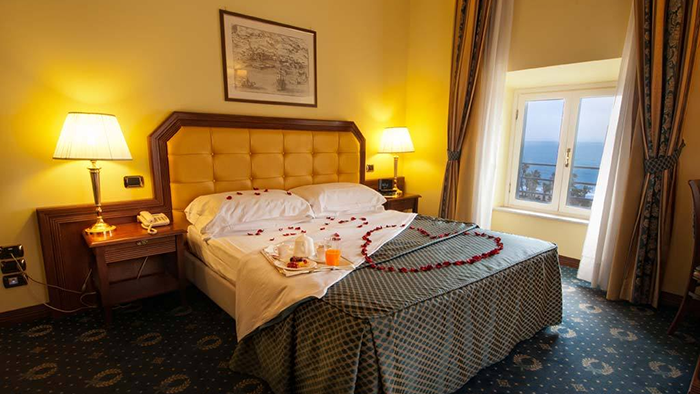
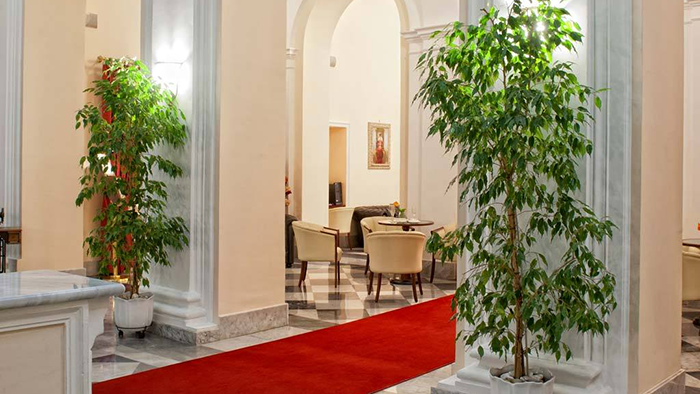
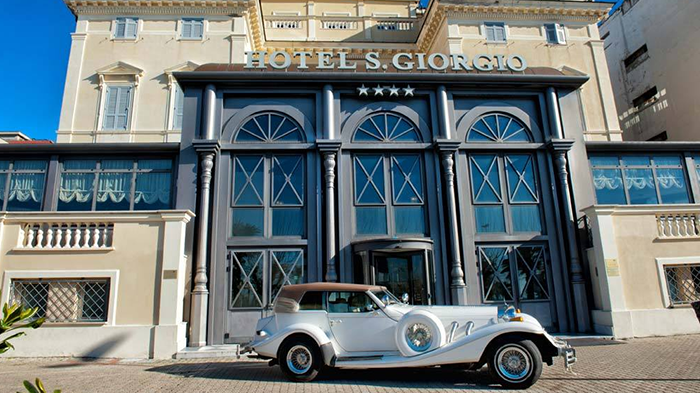
Hotel San Giorgio
Coastal Comfort Near the Cruise Port
Viale Giuseppe Garibaldi, 34, 00053 Civitavecchia RM, Italy — Rome
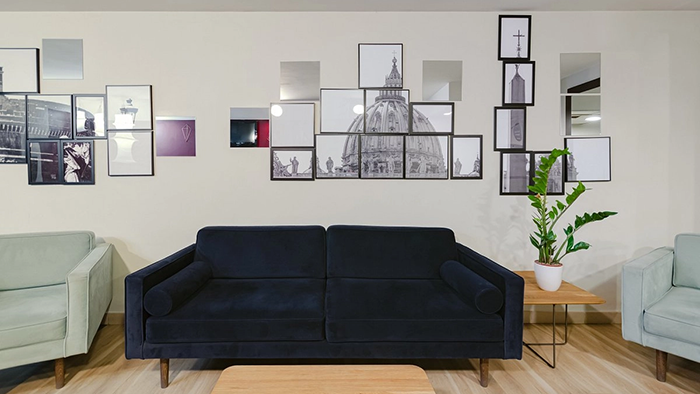
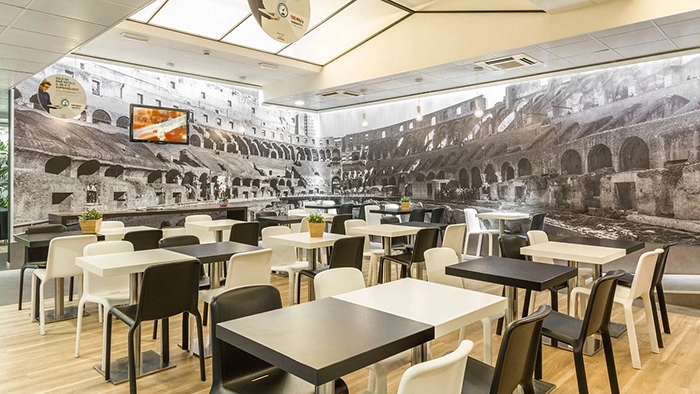
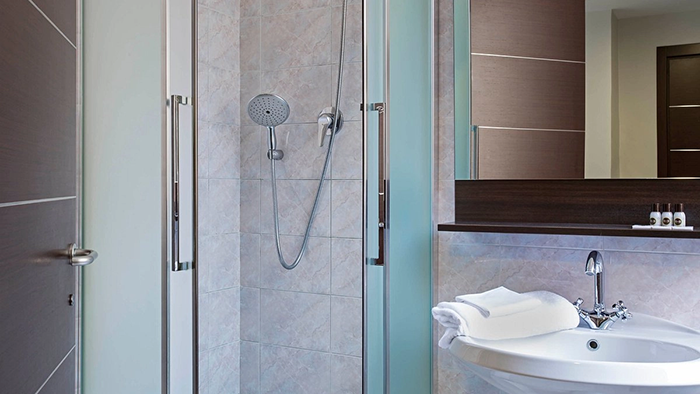
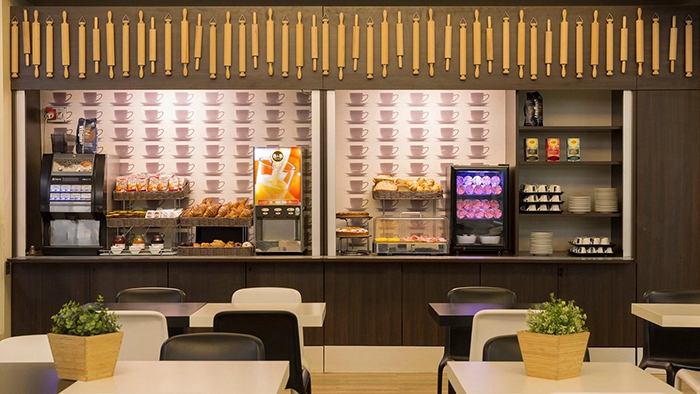
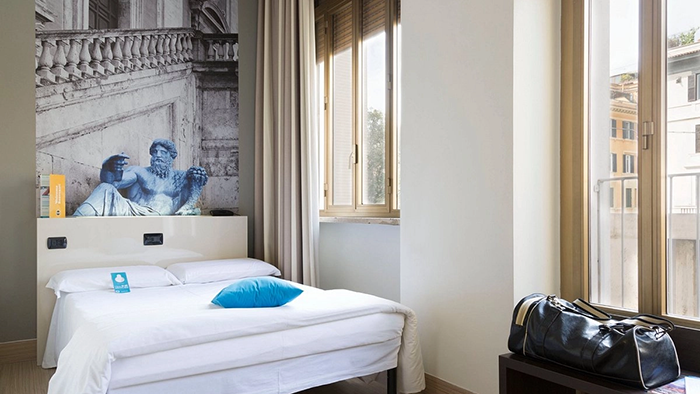
B&B Hotel Roma Trastevere
A 3-Star Hotel Close to the City Center
Viale di Trastevere, 249d, 00153 Roma RM, Italy — Rome
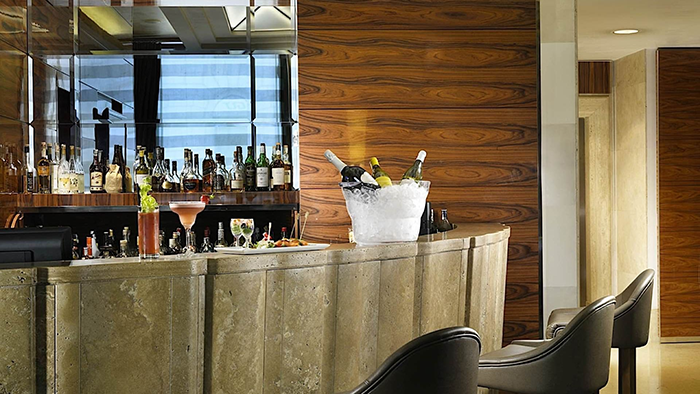
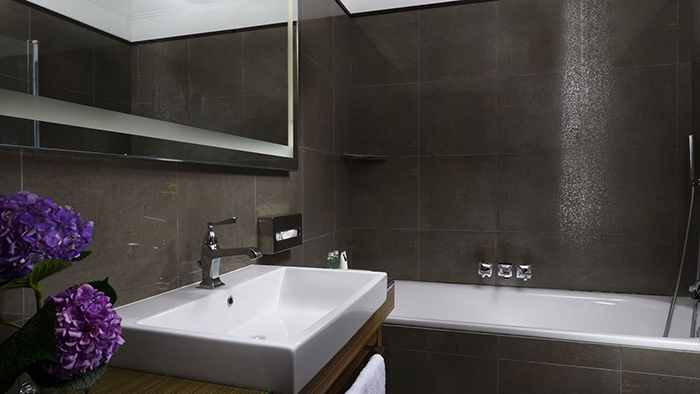
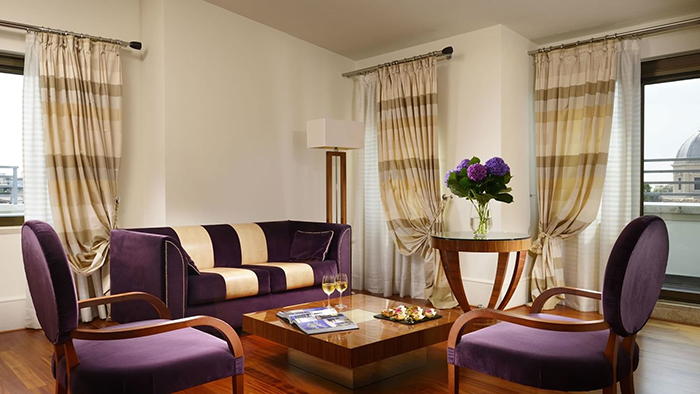
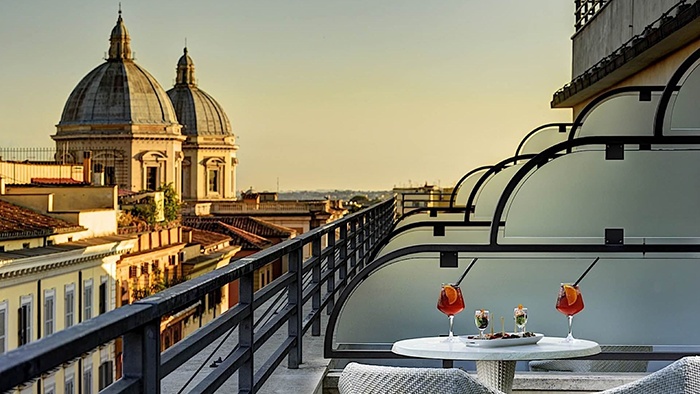
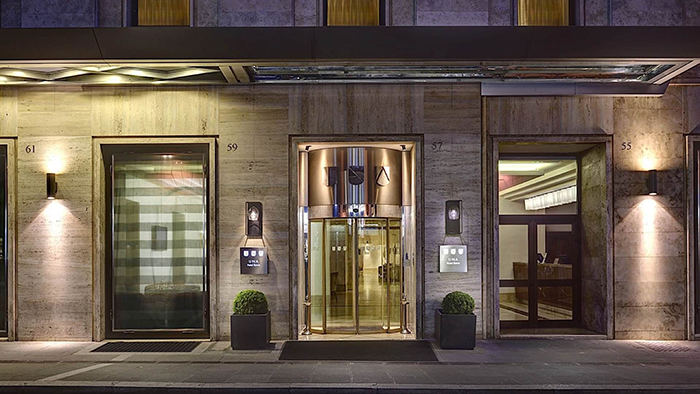
UNAHOTELS Decò Roma
Italian Taste and Warm Hospitality
Via Giovanni Amendola, 57, 00185 Roma RM, Italy — Rome
Protect Your Trip with Allianz Travel Insurance
Allianz Travel Insurance plans can give you flexibility and support when your trip doesn’t go quite as planned. From unexpected flight issues to covered trip cancellations, travel emergencies, and more, travel insurance can help you manage unforeseen events that may impact your trip—giving you peace of mind from the moment you book your trip through your return home.
For an instant quote:
- Simply provide a few short details about your trip
- Review the available protection plans
- Enjoy the peace of mind you deserve
Why Protect your Trip?
Whether you’re planning your next trip or you recently booked one, travel insurance can help smooth over many unexpected travel glitches—while putting your mind at ease, knowing you’re off the hook for covered expenses that could arise from them.
Allianz Travel Insurance plans can provide you benefits and professional support when a covered situation comes up before or during your trip. The following examples may qualify for benefits:
- Cancelling your trip after unexpectedly becoming too sick to travel
- Taking care of a sick or injured traveling companion
- Having to end your trip early due to a family emergency
- Dealing with a flight delay or cancellation
- Needing to buy personal items if your luggage is lost or stolen
- Missing your cruise departure after a covered flight delay
You also can contact our travel protection partner Allianz Global Assistance’s 24/7, award-winning customer service for on-the-go assistance with issues like a medical emergency, replacing your lost passport, or making reservations around the world. To be eligible for a time-sensitive waiver of pre-existing medical condition exclusions, purchase your travel insurance plan within 14 days of initial trip deposit (other purchase requirements and conditions apply). Specific plan benefits may vary. Please review your plan details for more information.
What Can Travel Insurance Help Protect?
Allianz Travel Insurance plans can protect you before and during your trip—keeping you, your loved ones, and your travel budget safer. Benefits vary by plan, and these are brief descriptions. Please read your plan documents for details.
TRIP CANCELLATION
Reimburses your prepaid, non-refundable travel expenses if you need to cancel your trip due to a covered reason, such as you, a family member, or traveling companion experiencing a covered illness or injury. Examples include:
- A doctor says you or a traveling companion is too sick to fly
- Your parent or child requires hospitalization
- You need to attend the birth of a family member’s child
- You have a traffic accident (not breakdown) on the way to the airport
- A storm shuts down your airport for 24 hours or more
TRIP INTERRUPTION
Reimburses your unused, non-refundable travel expenses and increased transportation costs during your trip if you have to return home early due to a covered reason, for instance when a family member has a qualifying medical emergency and needs your care. Examples include:
- You have a covered illness or injury and a doctor says you must return home
- A family member has a qualifying injury and needs your care
- A covered emergency, like a fire or flood, makes your home uninhabitable
TRAVEL DELAY
If you have a covered delay while traveling, travel insurance can reimburse you for meals, accommodations, and transportation expenses when your trip is delayed for a minimum number of consecutive hours for a covered reason. Minimum number of hours varies by plan.
EMERGENCY MEDICAL AND DENTAL CARE
Reimburses your expenses related to covered medical and dental emergencies* that might occur on your trip. This benefit can be especially helpful if you have a covered emergency outside the United States, as most health insurance policies won’t cover you outside the country. Examples include:
- You slip and break your ankle while sightseeing
- You get food poisoning while sampling the local cuisine
- You lose a filling and need immediate dental treatment*
*A sublimit and maximum apply for this benefit. Check your plan documents for details.
EMERGENCY MEDICAL TRANSPORTATION
Arranges and pays for medically necessary transportation following a covered injury or illness to the nearest appropriate medical facility to receive care and get you home after treatment.
BAGGAGE LOSS, DAMAGE, or THEFT
Reimburses the replacement of your lost, damaged, or stolen luggage and personal items while traveling.
BAGGAGE DELAY
Reimburses essential items purchased during your trip if your baggage is delayed for a minimum number of hours (varies by plan).
CHANGE FEE
Reimburses fees if you need to change your flight itinerary due to a covered reason.
24-HOUR ASSISTANCE
Provides around-the-clock support during your trip. Allianz Global Assistance’s staff of multilingual problem solvers can help you with medical, legal, and travel-related emergencies whenever they happen. Medical assistance may include, but is not limited to:
- Medical triage with referrals to local prescreened medical providers
- Ongoing medical monitoring
- Payment guarantee
- Emergency medical transportation
Additional services for travel-related emergencies can help with:
- Missed connecting flights
- Lost/stolen travel documents
- Pre-trip information
- Prescription replacements
Our Promise to You
When you purchase any Allianz Travel Insurance plan, you automatically get 15 days (or more, depending on your state of residence) to review your policy documents. Within that period, you can cancel your plan for a full refund if you’re not satisfied, as long as you haven’t filed a claim or departed on your trip.
Need Help Along the Way?
Contact Allianz Global Assistance’s award-winning team of travel experts. Call anytime for assistance navigating travel mishaps overseas or in the U.S.—or help with everything from reporting lost baggage to locating emergency medical treatment. They can also help you replace passports, refer you to legal assistance, secure cash from home in case of emergency, and guarantee payment when you need to be admitted to a hospital, in some instances.
Contact Allianz Global Assistance
Phone (24/7):
1-800-284-8300 (within the U.S., Canada, Puerto Rico, and the U.S. Virgin Islands)
1-804-281-5700 (outside of the U.S., call collect)
File or Track a Claim
It’s easy and convenient to file and track a claim, upload documents, and more online. Start your claim using your email address or policy number.
File a ClaimIf you need help filing a claim or understanding the claims process, visit the Allianz Global Assistance Claims Center.
Update Your Plan
If you need to update your travel insurance plan, such as adjusting the dates of your plan to reflect itinerary changes, please contact us or manage your plan online so your plan reflects your entire itinerary and provides the right amount of protection for your travels.
Manage My PlanAbout Allianz Global Assistance
Allianz Global Assistance is a world leader in travel insurance and assistance, helping millions of travelers across the globe every year. Allianz Global Assistance is owned by Allianz SE, the world’s largest diversified insurance company. For over 100 years, Allianz SE has helped protect important milestones in American history, insuring the Wright Brothers’ first flight and Golden Gate Bridge construction.
Terms, conditions, and exclusions apply including for pre-existing medical conditions. Insurance benefits underwritten by BCS Insurance Company (OH, Administrative Office: 2 Mid America Plaza, Suite 200, Oakbrook Terrace, IL 60181), rated “A” (Excellent) by A.M. Best Co., under BCS Form No. 52.201 series or 52.401 series, or Jefferson Insurance Company (NY, Administrative Office: 9950 Mayland Drive, Richmond, VA 23233), rated “A+” (Superior) by A.M. Best Co., under Jefferson Form No. 101-C series or 101-P series, depending on your state of residence and plan chosen. A+ (Superior) and A (Excellent) are the 2nd and 3rd highest, respectively, of A.M. Best’s 13 Financial Strength Ratings. Plans only available to U.S. residents and may not be available in all jurisdictions. Allianz Global Assistance and Allianz Travel Insurance are marks of AGA Service Company dba Allianz Global Assistance or its affiliates. Allianz Travel Insurance products are distributed by Allianz Global Assistance, the licensed producer and administrator of these plans and an affiliate of Jefferson Insurance Company. The insured shall not receive any special benefit or advantage due to the affiliation between AGA Service Company and Jefferson Insurance Company. Plans include insurance benefits and assistance services. Any Non-Insurance Assistance services purchased are provided through AGA Service Company. Except as expressly provided under your plan, you are responsible for charges you incur from third parties. Contact AGA Service Company at 800-284-8300 or 9950 Mayland Drive, Richmond, VA 23233 or customerservice@allianzassistance.com.