16 ANCC Contact Hours
$795.00 for Nurse Practitioners, Physician Assistants
$595.00 for Nurses
OUR OFFICE HOURS
Mon-Fri 8:30am-6:00pm EST
Sat 10:00am-2:00pm EST
Our staff can assist you with all your travel arrangements.
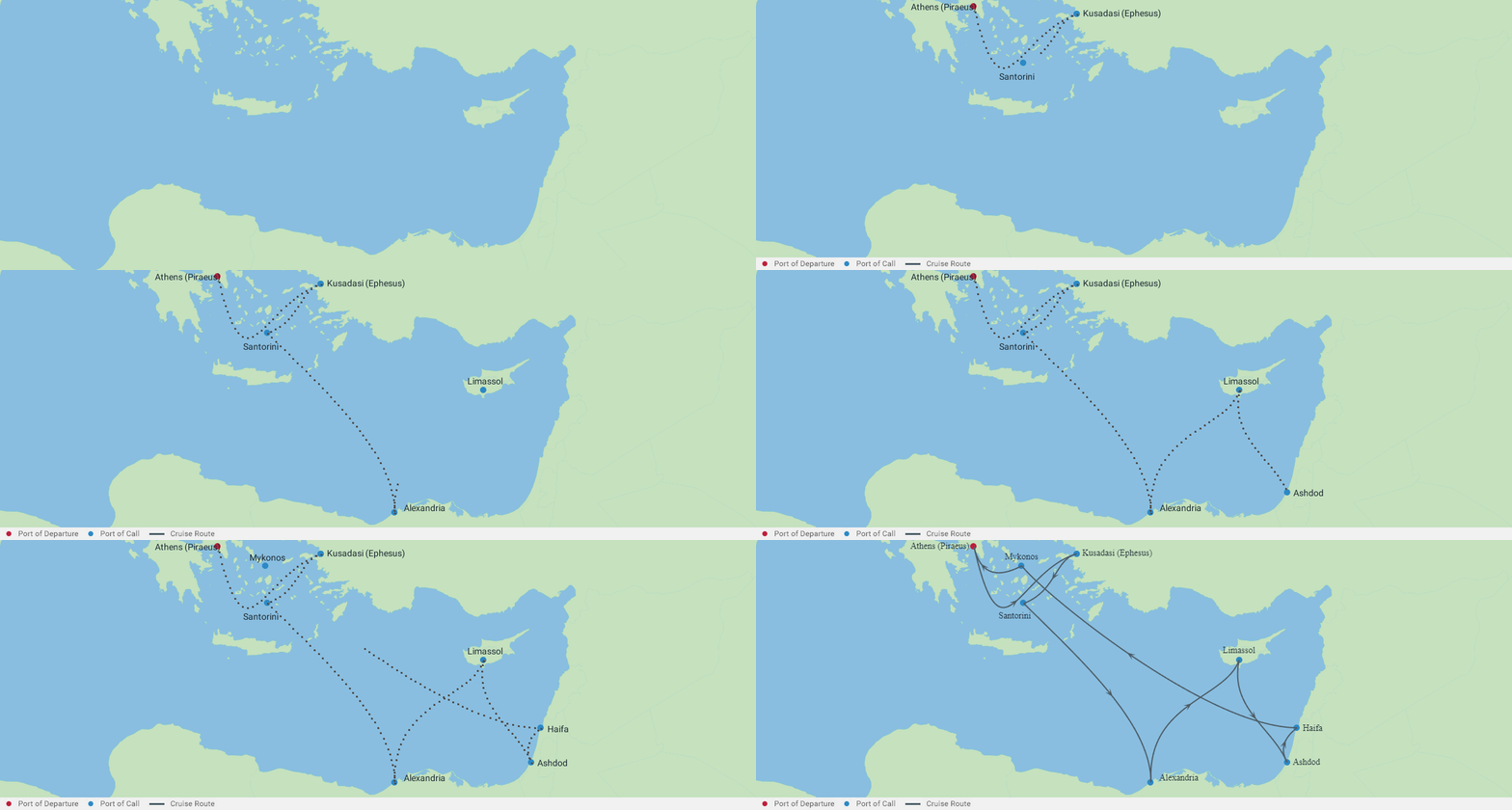
| DATE | PORT OF CALL | ARRIVE | DEPART |
|---|---|---|---|
| Sun Sep 07 | Athens (Piraeus), Greece |
- | 5:00 pm |
| Mon Sep 08 | Mykonos, Greece |
7:00 am | 6:00 pm |
| Tue Sep 09 | Santorini, Greece |
7:00 am | 8:00 pm |
| Wed Sep 10 | Chania (Souda), Crete, Greece |
8:00 am | 5:00 pm |
| Thu Sep 11 | Rhodes, Greece |
8:00 am | 5:00 pm |
| Fri Sep 12 | *At Sea - Cruising Lectures 8:30 AM - 12:30 PM, 1:30 PM - 3:30 PM |
- | - |
| Sat Sep 13 | Valletta, Malta |
8:00 am | 12:00 am |
| Sun Sep 14 | *At Sea - Cruising Lectures 8:30 AM - 12:30 PM, 1:30 PM - 3:30 PM |
- | - |
| Mon Sep 15 | Kotor, Montenegro |
8:00 am | 5:00 pm |
| Tue Sep 16 | Dubrovnik, Croatia |
7:00 am | 6:00 pm |
| Wed Sep 17 | Split, Croatia |
9:00 am | 8:00 pm |
| Thu Sep 18 | *At Sea - Cruising Lectures 8:30 AM - 12:30 PM |
- | - |
| Fri Sep 19 | Venice (Ravenna), Italy |
6:00 am | - |
Athens (Piraeus), Greece - Athens is a metropolis where the foundations of Western civilization are not merely stored in museums but are woven into the chaotic, vibrant fabric of daily life. As the capital of Greece and a primary Mediterranean embarkation hub, it offers a profound context for the voyage ahead. However, Athens is also a dense, sprawling city that can be overwhelming without a plan. Arriving at least one or two days prior to embarkation is not just a safeguard against flight delays; it is necessary to properly experience a city that requires patience to appreciate fully. **Logistics: Arrival and Accommodation** Upon landing at Athens International Airport (ATH), the journey to the city center takes approximately 40 to 60 minutes. While the Metro (Line 3) is efficient and affordable, it can be crowded. For travelers with cruise luggage, a pre-booked private transfer or a taxi is often the wiser choice to avoid navigating stairs and crowds in the summer heat. Regarding accommodation, a critical distinction must be made: Piraeus is the port, but Athens is the destination. Piraeus is a bustling industrial hub with limited touristic appeal beyond the harbor itself. To maximize your experience, book a hotel in central Athens—specifically in the Plaka, Monastiraki, or Koukaki neighborhoods. These areas place you within walking distance of the major archaeological sites and the best dining, allowing you to immerse yourself in the city's atmosphere immediately. **Day 1: The Acropolis and The Old City** Your first morning should be dedicated to the Acropolis. The strategy here is simple: go early. Arriving at the entrance by 8:00 AM allows you to ascend the sacred rock before the midday heat and the heaviest crowds arrive. Standing before the Parthenon, the Erechtheion, and the Propylaea offers a humbling perspective on human achievement. The view of the sprawling white city against the Aegean Sea is spectacular. Descend directly to the Acropolis Museum. This modern architectural gem provides the necessary context for what you have just seen, housing the original Caryatids and the Parthenon Marbles in a space flooded with natural light. It is a masterclass in making ancient history accessible. Spend your afternoon in the Plaka. While parts of it cater heavily to tourists, it remains the most charming district for aimless wandering. Seek out the Anafiotika neighborhood, a tiny cluster of whitewashed houses built by islanders from Anafi, which feels like a Cycladic village hidden beneath the Acropolis. For dinner, look for rooftop dining in Monastiraki to watch the Parthenon illuminate at dusk—a sight that never loses its power. **Day 2: Democracy, Markets, and Modern Life** Begin your second day at the Ancient Agora. Often less crowded than the Acropolis, this was the actual heart of public life where Socrates taught and democracy was debated. The Temple of Hephaestus here is among the best-preserved Doric temples in Greece. From the quiet of the Agora, transition to the noise of the Monastiraki Flea Market. It is a sensory overload of antiques, vinyl records, and souvenirs that showcases the city's commercial spirit. A short walk leads to Syntagma Square to witness the Changing of the Guard at the Tomb of the Unknown Soldier, a ceremony of precision and tradition. For your final pre-cruise meal, venture into Psiri. This neighborhood has transformed from a working-class district into a hub of nightlife and gastronomy. It offers excellent tavernas serving authentic meze—grilled octopus, fava, and lamb chops—often accompanied by live Rembetika music. **Embarkation Day** On the day of departure, allow ample time to reach the Port of Piraeus. Traffic in Athens is unpredictable. A taxi or private transfer from the city center typically takes 30 to 45 minutes. By arriving in Athens early, you step onto your ship not as a weary traveler rushing from the airport, but as an acclimated explorer, already enriched by the history and culture of this enduring city.
Mykonos, Greece - Mykonos serves as the archetype of the Cyclades: blinding white cubic architecture set against the deep blue Aegean. While the island’s reputation rests on its glitzy nightlife, the daytime experience offers a distinct, sophisticated charm if navigated correctly. Your priority should be the labyrinthine Chora (Mykonos Town). We advise disembarking early to beat the midday crush. The winding, whitewashed streets were originally designed to confuse pirates; today, they offer a delightful aimlessness. Allow yourself to wander off the busy Matoyianni Street to discover quieter corners, hidden chapels, and bougainvillea-draped balconies where the island’s authentic character remains. Navigate toward the waterfront to witness the iconic Kato Mili (windmills) standing sentinel on the hill. Just below lies Little Venice, where medieval houses with colorful balconies hover directly over the sea. It is the prime location for a coffee or cocktail, though be prepared for premium pricing that reflects the world-class view. For our clients with a deep interest in history, Mykonos is the gateway to something far more significant: Delos. A short ferry ride away, this UNESCO World Heritage site is the mythological birthplace of Apollo and Artemis and one of the most important archaeological sites in the Mediterranean. If you prioritize ancient history over high-end shopping, a guided excursion here is non-negotiable. If a beach day is preferred, manage your expectations regarding crowds and cost. The famous Paradise Beach is high-energy; for a more refined, family-friendly atmosphere, Ornos or Platis Gialos are superior choices, accessible via local bus or water taxi. Finally, a logistical note: if your ship docks at the New Port (Tourlos) rather than tendering, the local SeaBus is the most efficient transfer to the town center, bypassing the often-gridlocked taxi queues.
Santorini, Greece - Santorini delivers the visual drama promised by travel brochures, with whitewashed villages spilling down the sides of a massive volcanic caldera. It is spectacular, but it is also one of the most logistically challenging ports in the Mediterranean. Understanding the arrival process is critical to enjoying your day. Ships anchor in the caldera, tendering passengers to a small dock at the base of the cliffs. From there, you face a bottleneck: a low-capacity cable car, a grueling 600-step climb, or donkeys (which we generally discourage due to animal welfare and sanitary concerns). To maximize your time and minimize frustration, we strongly recommend arranging a boat transfer to Oia or a pre-booked excursion that includes transportation from the tender pier. This strategy bypasses the initial cable car queue, which can consume hours of your morning. Once you have ascended, the island offers distinct experiences. Oia, on the northern tip, is the famous "postcard" village with blue-domed churches and marble streets. It is undeniably beautiful but frequently overwhelmed by crowds; visit early or late if possible. Fira, the capital, offers similar views with more bustle, museums, and shopping, serving as the central hub for the return descent. For a reprieve from the congestion, the archaeological site of Akrotiri offers a world-class window into the Bronze Age, preserved under volcanic ash. Alternatively, the island’s viticulture is unique; vines are basket-woven low to the ground to survive the wind. Visiting a local estate to taste crisp, volcanic Assyrtiko wine provides a sophisticated, relaxing counterpoint to the busy towns. Santorini is a destination that rewards preparation; with the logistics managed, the views are truly unparalleled.
Chania (Souda), Crete, Greece - Cruise ships arrive at the modern port of Souda, a short taxi or local bus ride from the true destination: the enchanting city of Chania. The city’s soul is its magnificent 14th-century Venetian Harbor, a stunning crescent of pastel-hued townhouses, waterfront cafes, and the iconic Egyptian lighthouse standing guard at its entrance. While the harbor front is perfect for a scenic stroll, the real magic lies within the labyrinthine alleys of the Old Town directly behind it. Allow yourself to get lost in the narrow, bougainvillea-draped lanes of the Topanas and Evraiki (Jewish) quarters, where you’ll discover hidden courtyards, artisan workshops, and beautifully preserved Venetian and Ottoman architecture. The imposing Firkas Fortress at the harbor's edge houses the Maritime Museum and offers commanding views of the sea and cityscape. For an authentic taste of the island, visit the recently renovated Municipal Market (Agora), a vibrant cross-shaped hall where vendors sell local cheeses, honey, herbs, and olive oil. For lunch, we recommend bypassing the busiest harbor-front establishments and seeking out a traditional taverna tucked away on a side street for more authentic Cretan cuisine. Chania is not a port for ticking off a list of grand monuments; it is a destination to be savored. It’s a place for aimless wandering, enjoying a strong Greek coffee, and immersing yourself in the atmosphere of one of the Mediterranean’s most beautiful and historic towns.
Rhodes, Greece - Rhodes offers one of the most compelling arrivals in the Mediterranean. Your ship docks directly beside the monumental stone walls of its Old Town, a UNESCO World Heritage site and one of the best-preserved medieval cities in Europe. The primary experience here is simply to get lost within its labyrinthine, cobblestone streets. The main artery is the Street of the Knights, a remarkably intact medieval thoroughfare leading to the imposing Palace of the Grand Master. This fortress-palace, rebuilt by the Italians in the 20th century, offers a glimpse into the lives of the Knights of St. John with its grand halls and Hellenistic mosaics. The nearby Archaeological Museum, housed in the former Hospital of the Knights, provides further context to the island's rich history. For those seeking classical antiquity, a short taxi ride uphill leads to the Acropolis of Rhodes on Monte Smith, where the remains of a Temple of Apollo, a stadium, and a small theater offer panoramic views over the city and sea. The Mandraki Harbour, where the legendary Colossus of Rhodes is said to have stood, is now a pleasant waterfront promenade marked by statues of deer. Many are tempted by the famous village of Lindos, with its whitewashed houses and clifftop acropolis. It is undeniably stunning, but be aware that the one-hour drive each way, combined with significant crowds, will consume the majority of your day. A choice must be made: a deep, immersive exploration of the magnificent Old Town, or a dedicated excursion to Lindos. For a truly rewarding day, embracing the historical tapestry at your feet in Rhodes Town is often the more satisfying option.
At Sea - Cruising -
Valletta, Malta - Sailing into Valletta’s Grand Harbour offers one of the Mediterranean’s most dramatic arrivals. You are immediately enveloped by immense, honey-colored limestone fortifications rising from the sea—a fitting introduction to a city built by the Knights of St. John. While the waterfront promenade is attractive, the city proper sits high above. We strongly recommend taking the Upper Barrakka Lift from the waterfront to the city gardens; it saves time and energy better spent exploring the steep, grid-patterned streets. The city is compact and walkable, though visitors should be prepared for stairs and inclines. The primary cultural destination is St. John's Co-Cathedral. Its austere façade belies a jaw-dropping interior of High Baroque opulence, with every surface covered in intricate carvings, gold leaf, and marble. The cathedral’s true masterpiece is Caravaggio’s monumental painting, “The Beheading of Saint John the Baptist,” a profoundly moving work that justifies the entry fee alone. For the best views, the Upper Barrakka Gardens offer a stunning panorama of the harbor and the historic Three Cities across the water. Time your visit for the daily cannon firing at noon or 4:00 PM from the Saluting Battery below. Beyond the major sites, the real joy of Valletta is wandering its streets, admiring the traditional enclosed wooden balconies (*gallariji*), and stopping at a historic venue like Caffe Cordina. Be sure to try a *pastizz*—a flaky, savory pastry filled with ricotta or peas—which is the quintessential local snack. If you prefer a quieter, medieval atmosphere over the bustle of the capital, a taxi ride to the fortified city of Mdina is a worthwhile alternative. Known as the “Silent City,” its labyrinthine alleys and noble palaces offer a peaceful contrast to Valletta's energy. For a unique perspective, take a traditional *dghajsa* (water taxi) across the harbor to explore Birgu, one of the Three Cities, which offers immense history with fewer crowds.
Kotor, Montenegro - The arrival into Kotor is an event in itself. The deep, fjord-like Bay of Kotor is a dramatic waterway flanked by steep, dark mountains, and the sail-in provides a stunning introduction to one of the Adriatic's most remarkable destinations. Once ashore, you step directly into the Stari Grad (Old Town), a UNESCO World Heritage site and a wonderfully preserved labyrinth of cobblestone lanes, hidden squares, and Venetian-era architecture. The town is entirely encircled by formidable medieval walls that snake their way up the adjoining mountain. For the physically active, the port's signature experience is the strenuous but rewarding climb up the 1,350 steps to the Fortress of San Giovanni. The panoramic view from the top—looking down on the triangular Old Town, the bay, and the docked ships—is one of the most iconic in the Mediterranean. We recommend tackling this in the morning to avoid the midday sun and crowds. For those preferring a more relaxed day, the Old Town itself is the main attraction. It’s a place to wander without a fixed agenda. You can visit the 12th-century Cathedral of Saint Tryphon, browse the small shops, and observe the town's famous feline residents. The true pleasure of Kotor lies in finding a quiet piazza, ordering a coffee or a glass of local Vranac wine, and simply absorbing the historic atmosphere. For a change of scenery, a short boat or taxi ride to the impossibly picturesque village of Perast offers a quieter, equally beautiful alternative.
Dubrovnik, Croatia - Dubrovnik is not merely a backdrop; it is a complete, immersive historical experience. The moment you see the formidable stone walls rising from the Adriatic, you understand its acclaim as the ‘Pearl of the Adriatic.’ The main cruise port at Gruž is a short bus or taxi ride from the Pile Gate, the primary entrance to the pedestrian-only Old Town, a UNESCO World Heritage site. Once inside, the city unfolds along the Stradun, a wide, limestone-paved thoroughfare. While it’s tempting to follow the crowds to landmarks like the Rector’s Palace or the Franciscan Monastery, the real magic lies in exploring the labyrinth of narrow side streets and quiet courtyards. Two experiences, however, are truly essential for a day visit. First, walk the city walls. We recommend going as early as possible or later in the afternoon to avoid the intense midday sun and the peak crowds that can make the circuit feel congested. The two-kilometer loop provides unparalleled, evolving views of the terracotta rooftops, the shimmering sea, and the nearby islands. Second, take the cable car to the summit of Mount Srđ. The panoramic vista from the top puts the city's magnificent geography into perspective and is unforgettable. For a more active perspective, a sea kayaking tour offers a unique view of the city's scale from the water. While its recent screen fame is a popular draw, Dubrovnik’s true identity is that of the resilient Republic of Ragusa, a maritime power that has been meticulously restored. It is a world-class destination where strategic timing is the key to fully appreciating its splendor.
Split, Croatia - Split offers a remarkable fusion of ancient history and vibrant modern life, centered almost entirely within the walls of a Roman emperor's palace. The cruise port's prime location allows for an immediate and immersive experience; a short walk brings you to the Bronze Gate, the waterfront entrance to Diocletian's Palace. This is no sterile ruin, but the living, breathing heart of the city, where millennia-old limestone is worn smooth by the footfalls of residents and visitors alike. The palace's central square, the Peristyle, serves as a stunning open-air stage, flanked by the imposing Cathedral of Saint Domnius—originally Diocletian's mausoleum. A climb up its bell tower is highly recommended for breathtaking views over the terracotta roofs and the brilliant blue of the Adriatic. Below ground, explore the vast, vaulted substructures that once supported the emperor's private apartments, now often hosting markets and exhibitions. Beyond the palace walls, the Riva promenade is the city's social artery, a wide boulevard lined with cafes perfect for people-watching over a coffee or a glass of local wine. For a taste of authentic commerce, the bustling Green Market (Pazar) offers fresh produce and regional crafts just outside the Silver Gate. Split’s core is compact and best explored by simply wandering its labyrinthine alleys, discovering hidden courtyards and soaking in an atmosphere that is both monumental and intimately human. It is an ideal port for independent exploration on foot.
Venice (Ravenna), Italy - As your cruise concludes on the Adriatic coast, you may see your port of arrival listed as “Venice (Ravenna).” While Venice is a common point of departure, your journey actually culminates in Ravenna—a city of profound historical significance and quiet beauty that is a destination in its own right. Before you rush to the nearest airport, consider this: after days of intellectual engagement in your onboard conferences, Ravenna offers the perfect epilogue to your Italian adventure. It’s a chance to decompress, explore, and immerse yourself in a world of unparalleled artistry, all within a compact and easily walkable city center. We invite you to extend your stay for a day or three; you’ll find it’s the ideal way to transition from your rewarding professional development back to the world at large. Located on the Adriatic coast in North-East Italy, Ravenna was briefly the capital of the Western Roman Empire and later the Italian capital of the Byzantine Empire. During this time, incredible mosaics were constructed throughout the city. Described as a symphony of color in Dante's Divine Comedy, Ravenna's well-preserved mosaics are some of the finest remaining in the Western world, earning the city eight UNESCO World Heritage sites. Unlike the bustling crowds of larger Italian cities, Ravenna offers a serene and deeply enriching experience, perfect for a discerning traveler. **Your Post-Cruise Itinerary in Ravenna** **Day 1: A Symphony of Mosaics** Your first day is dedicated to the city’s crown jewels. A single combination ticket provides access to most of the key UNESCO sites, making for a seamless day of discovery. Begin at the **Basilica di San Vitale**, an octagonal masterpiece of Byzantine architecture. Step inside and prepare to be mesmerized. The walls are not painted but adorned with millions of tiny, shimmering glass and gold tesserae depicting biblical scenes and, most famously, the imperial portraits of Emperor Justinian and his formidable wife, Theodora. The level of detail and vibrant color, preserved for over 1,500 years, is simply breathtaking. Adjacent to the basilica is the unassuming **Mausoleum of Galla Placidia**. Enter this small, cross-shaped structure and find yourself enveloped in a celestial dreamscape. The ceiling is a deep indigo mosaic sky, blanketed with over 800 golden stars, creating an intimate and profoundly moving atmosphere that has captivated visitors for centuries. From there, a short walk takes you to the **Neonian Baptistery**, one of the oldest monuments in the city, with a stunning ceiling mosaic depicting the baptism of Christ. Later, you can contrast this with the nearby **Arian Baptistery** to appreciate the subtle theological and artistic differences from this unique period of history. **Day 2: Dante, Piadina, and Piazza Life** After a day of artistic immersion, explore Ravenna’s other cultural touchstones. Begin your morning with a visit to the tranquil tomb of **Dante Alighieri**, the father of the Italian language. Exiled from his native Florence, the author of *The Divine Comedy* spent his final years in Ravenna and is buried here in a small, neoclassical mausoleum. It’s a quiet corner of the city perfect for reflection. For lunch, you must experience the culinary soul of the Emilia-Romagna region: the *piadina*. This warm, unleavened flatbread is a local obsession, and you’ll find countless *piadinerie* serving it filled with regional delights like prosciutto, squacquerone cheese, and arugula. It’s a simple, delicious, and authentic meal. In the afternoon, make your way to the **Piazza del Popolo**, the city’s elegant main square. Flanked by Venetian-style architecture, it’s the perfect place to embrace the Italian ritual of the *aperitivo*. Find a table at an outdoor café, order a spritz or a glass of local wine, and simply watch the world go by. The surrounding pedestrian streets are filled with charming boutiques, artisan shops, and gelaterias waiting to be discovered. **Day 3: Deeper Discoveries or Regional Exploration** On your final day, you have options. You can delve deeper into Ravenna by visiting the **Basilica di Sant'Apollinare Nuovo** to see its magnificent parallel mosaics depicting processions of martyrs and virgins. Or, explore the **Domus dei Tappeti di Pietra** (House of the Stone Carpets), an underground archaeological site showcasing stunning Roman and Byzantine floor mosaics. Alternatively, use Ravenna as a base for exploring the region. The train station is conveniently located, offering easy day trips. In just over an hour, you can be in **Bologna**, Italy’s culinary capital, renowned for its fresh pasta, mortadella, and sprawling medieval porticoes. Or, visit the magnificent Renaissance city of **Ferrara**, with its imposing Este Castle surrounded by a moat. **Practicalities for Departure** When your extended stay concludes, traveling onward is straightforward. The cruise terminal at Porto Corsini is connected to Ravenna’s city center by taxi and shuttle services. The most convenient airport is **Bologna Guglielmo Marconi Airport (BLQ)**, easily reached by a direct train from Ravenna to Bologna, followed by a short monorail ride to the terminal. Other options include Venice (VCE) and Florence (FLR), though they require longer train journeys. By choosing to stay, you transform Ravenna from a simple port of disembarkation into a memorable final chapter of your European journey—one filled with art, history, and the relaxed pace of authentic Italian life.
Our staff can assist you with all your travel arrangements.
Questions? Call us at 800-422-0711.