OUR OFFICE HOURS

Mon-Fri 8:30am-6:00pm EST
Sat 10:00am-2:00pm EST

University at Sea®
A Division of Continuing Education, Inc.
5700 4th St. N.
St Petersburg, Florida 33703
Cruise Conference Planning For Your Association

Managing Stress and Burnout to Achieve Wellness for Healthcare Professionals and Their Patients

7-Night Mediterranean Marvels Cruise
Round-trip Athens (Piraeus), Greece
June 28 - July 05, 2026
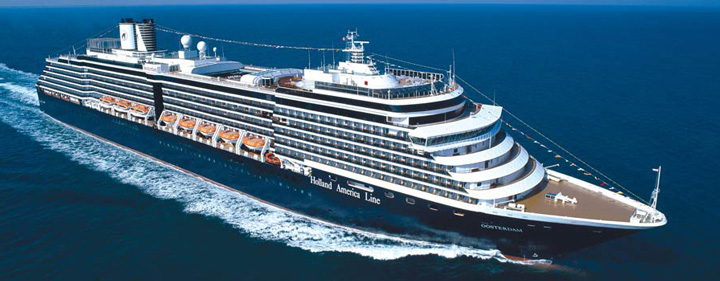
Holland America's <em> Oosterdam</em>
Holland America's Oosterdam
14 AMA PRA Category 1 Credits™
14 CE Credits for Psychologists
14 ADA CERP Credits
14 ANCC Contact Hours
Course Fees
$1,195.00 for Physicians, Psychiatrists, Dentists
$895.00 for Nurse Practitioners, Physician Assistants, Psychologists, Dental Hygienists
$695.00 for Nurses, Counselors, Dental Staff

Target Audience
Physicians, Psychiatrists, Dentists, Nurse Practitioners, Physician Assistants, Psychologists, Nurses, Counselors, Dental Hygienists, Dental Staff
IMPORTANT NOTE: All conferees, their families, and guests must book their cruise within the University at Sea® meeting group through University at Sea® at 800-926-3775 or by registering online. This ensures our company can provide conference services and complimentary social amenities to all meeting participants and their guests. Thank you for your cooperation.
Faculty

Alice D. Domar, PhD

Alice D. Domar, PhD
Chief Compassion Officer, Inception Senior staff psychologist, department of Ob/Gyn, Beth Israel Lahey Heath Associate Professor of Obstetrics, Gynecology and Reproductive biology, part-time, Harvard Medical School Alice D. Domar, PhD is a pioneer in the application of mind/body medicine to women's health issues. She not only established the first Mind/Body Center for Women's Health, but also conducts ongoing ground-breaking research in the field. Her research focuses on the relationship between stress and different women's health conditions, and creating innovative programs to help women decrease physical and psychological symptoms. Dr. Domar received her M.A. and Ph.D. in Health Psychology from Albert Einstein College of Medicine/Ferkauf School of Professional Psychology of Yeshiva University. Her post-doctoral training was at Beth Israel Hospital, Deaconess Hospital, and Children’s Hospital, all in Boston. She has conducted research on infertility, breast cancer, menopausal symptoms, ovarian cancer, pregnancy, and premenstrual syndrome. Dr. Domar has earned an international reputation as one of the country's top women's health experts. She is currently the Executive Director of the Domar Centers for Mind/Body Health, and the Director of Mind/Body Services at Boston IVF. She is an associate professor of Obstetrics, Gynecology, and Reproductive Biology, part-time, at Harvard Medical School, and a senior staff psychologist at Beth Israel Deaconess Medical Center.She is also the Chief Compassion Officer at Inception. Dr. Domar has compiled an impressive list of accomplishments as a best-selling author, media authority and sought-after public speaker. She is the author of numerous books, including the national best seller “Self-Nurture”, and is on the advisory board for Parents Magazine. She was on the Board of Experts for ShareCare.com and was a columnist for Redbook and Health magazines. She was also a featured expert for LLuminari and on the online social health network BeWell.com. She served on the board of Resolve for ten years. Three of her books have been finalists for the Books for a Better Life Award. She was also the Series Editor for a series of mind/body books by Harvard Medical Publications/Simon and Schuster. She is the narrator of the DVD’s “Stress and Relaxation Explained” and “Infertility Explained”, both of which won silver Telly Awards. Dr. Domar has appeared on the Today Show, Good Morning America, CBS This Morning, Dateline NBC, CNN, PBS, and the CBS and NBC Evening News, to name a few. She presents lectures and conducts workshops throughout the US and around the world and went on tour with Oprah in the spring of 2004 and 2005 with the LLuminari team. Dr. Domar was named to the prestigious list of 15 “Women to Watch in 2004” by Lifetime TV. Her seventh book, “Finding Calm for the Expectant Mom” came out in 2016.

Elizabeth Grill, PsyD

Elizabeth Grill, PsyD
Director of Psychological Services Ronald O. Perelman and Claudia Cohen Center for Reproductive Medicine Associate Professor of Clinical Psychology Weill Cornell Medicine Associate Attending Psychologist New York-Presbyterian Hospital New York, NY Dr. Elizabeth Grill is the Director of Psychological Services at the Ronald O. Perelman and Claudia Cohen Center for Reproductive Medicine and an Associate Professor of Clinical Psychology in the Departments of Obstetrics and Gynecology, Reproductive Medicine, and Psychiatry at Weill Cornell Medicine. She also serves as an Associate Attending Psychologist at New York-Presbyterian Hospital. A nationally recognized expert in reproductive mental health, she holds significant leadership roles, including serving as the current Board Chair for RESOLVE: The National Infertility Association, Past Chair of the Mental Health Professional Group of the American Society for Reproductive Medicine (ASRM), and Immediate Past President of the Society for Sex Therapy and Research (SSTAR). She is also the co-creator of FertiCalm and FertiStrong, pioneering digital apps designed to reduce distress for individuals experiencing infertility. Her clinical and research focus covers the emotional aspects of infertility, IVF, third-party reproduction, oncofertility, fertility preservation, and sexual dysfunction. She earned her PsyD from the Illinois School of Professional Psychology and completed postdoctoral fellowships at Weill Cornell and New York-Presbyterian Hospital. Dr. Grill is the author of numerous articles and book chapters, serves as an editorial reviewer for top peer-reviewed journals in the field, and is a sought-after lecturer who has presented to medical and patient audiences worldwide.

Our staff can assist you with all your travel arrangements.

Questions? Call us at 800-422-0711.
We can assist you with all your travel arrangements. We'd be happy to help you plan your flights, hotels or tours before and/or after your cruise conference.

Cruise Itinerary

DATE PORT OF CALL ARRIVE DEPART
Sun Jun 28 Athens (Piraeus), Greece
- 4:00 pm
Mon Jun 29 *At Sea - Cruising
Lectures 8:30 AM - 12:30 PM, 1:30 PM - 4:30 PM
- -
Tue Jun 30 Alexandria, Egypt
6:00 am -
Wed Jul 01 Alexandria, Egypt
- 11:59 pm
Thu Jul 02 *At Sea - Cruising
Lectures 8:30 AM - 12:30 PM, 1:30 PM - 4:30 PM
- -
Fri Jul 03 Rhodes, Greece
8:00 am 6:00 pm
Sat Jul 04 Mykonos, Greece
8:00 am 5:00 pm
Sun Jul 05 Athens (Piraeus), Greece
7:00 am -
*Tentative course schedule, actual class times may differ.

Ports of Call

Athens (Piraeus), Greece - Athens is far more than a logistical checkpoint; it is the foundational chapter of Western civilization, art, and democratic philosophy. While your ship docks in Piraeus—a bustling, industrial port city roughly seven miles southwest of the capital—the true destination lies inland. Piraeus itself is a functional maritime hub, chaotic and gritty, serving as the gateway rather than the attraction. To treat this stop merely as a transfer point is to miss the soul of the region. We strongly advise dedicating at least two full days before or after your voyage to properly inhabit this monumental city, allowing the ancient and the modern to coalesce into a meaningful experience. **Navigating from Port to City** The journey from the cruise terminals in Piraeus to the historic center of Athens requires planning. The distance is deceptive; while short on a map, Athens' notorious traffic can turn a taxi ride into a 45-minute (or longer) crawl. A pre-booked private transfer is the most comfortable option, ensuring a seamless arrival at your hotel. However, for those who prefer efficiency over luxury, the Metro’s Line 1 (the “Green Line”) is a reliable alternative. It connects Piraeus directly to Monastiraki and Thissio stations—dropping you right at the foot of the Acropolis—bypassing the gridlock entirely and offering a glimpse into the daily commute of the Athenians. **The Case for an Extended Stay** Attempting to conquer Athens in a single afternoon results in a frantic, checklist-style tour that leaves little room for appreciation. An extended stay allows you to engage with the city at a human pace. It affords you the luxury of visiting the Acropolis in the late afternoon golden hour, after the aggressive midday heat and the dense waves of tour groups have dissipated. It grants you the time to linger over a second freddo espresso in a Kolonaki café, observing the sophisticated local social scene. Athens is a city of layers—an open-air museum superimposed on a vibrant, chaotic metropolis—and it requires time to peel them back. **The Historical Core** Your exploration naturally centers on the **Acropolis**. We recommend purchasing tickets online well in advance to bypass significant queues. The ascent to the Sacred Rock is best undertaken immediately at opening (8:00 AM) or in the late afternoon. Standing before the **Parthenon**, the **Erechtheion**, and the **Propylaea** is a profound experience, but practical caution is required: the ancient marble paths have been polished smooth by centuries of footsteps and can be incredibly slippery. Sturdy, non-slip footwear is essential. Directly beneath the ancient citadel lies the **Acropolis Museum**. This is not just a storage house for artifacts but an architectural dialogue with the Parthenon visible through its glass walls. Viewing the original Caryatids here, safe from the elements, provides the necessary context to appreciate the replicas standing on the hill above. From the museum, a short walk leads to the **Ancient Agora**, the sprawling marketplace that served as the civic heart of ancient Athens. Unlike the Acropolis, this site is often quieter and greener, offering a contemplative space where Socrates once walked. The **Temple of Hephaestus**, located within the Agora, remains one of the best-preserved Doric temples in Greece, retaining its roof and columns in a way the Parthenon has not. **Neighborhoods & Atmosphere** Athens reveals its true character in its distinct neighborhoods. The **Plaka**, clinging to the slopes of the Acropolis, is the oldest district. While undeniably tourist-centric, its labyrinthine streets, neoclassical architecture, and bougainvillea-draped tavernas offer a charming, village-like atmosphere. For a shopping experience that feels more organic, venture to **Monastiraki**. Its famous flea market is a chaotic treasure trove of antiques, vinyl records, and leather goods, contrasting sharply with the high-end boutiques found in the upscale **Kolonaki** district. For a glimpse of modern Athenian energy, explore **Psiri (Psyri)**. Once a working-class district of leather workers, it has transformed into a hub of creativity, featuring vibrant street art, artisan workshops, and some of the city's most authentic nightlife. This is where locals go for *meze* and live *rembetika* music, away from the polished veneer of the main tourist drag. **Culinary Excellence** Greek cuisine in Athens is ingredient-driven and unpretentious. Avoid the aggressive "plate smashing" tourist venues. Instead, seek out modest tavernas where the menu is short and seasonal. Look for fresh-grilled octopus, *fava* (yellow split pea puree), and the ubiquitous *horiatiki* (Greek salad) featuring slabs of high-quality feta. For a memorable evening, reserve a table at a rooftop restaurant in the Makrygianni or Monastiraki areas. Dining with a direct, illuminated view of the Parthenon is a cliché for a reason—it is spectacularly beautiful. **Suggested 48-Hour Pre-Cruise Itinerary** To help you maximize your time without exhaustion, consider this paced approach: * **Day 1: Arrival & Atmosphere** * **Afternoon:** Check into your hotel (ideally in Plaka, Koukaki, or near Syntagma). Decompress with a walk through the **National Garden**, a lush, shaded refuge in the city center. Exit near the Presidential Mansion to witness the Evzones (Presidential Guard) in their traditional uniform. * **Late Afternoon:** Wander the **Anafiotika** neighborhood. This tiny enclave on the northeast slope of the Acropolis was built by islanders from Anafi and resembles a Cycladic village with white-washed cubic houses. * **Evening:** Dinner in **Psiri**. Choose a taverna filled with locals, then finish the night at a rooftop bar for your first view of the lit Acropolis. * **Day 2: The Ancients & The Arts** * **Morning (8:00 AM):** Enter the **Acropolis** immediately upon opening. Spend two hours exploring the monuments before the heat peaks. * **Late Morning:** Descend to the **Acropolis Museum**. The air-conditioning and historical context provide a perfect follow-up to the physical climb. * **Lunch:** Enjoy a light lunch in the **Makrygianni** pedestrian area. * **Afternoon:** Explore the **Ancient Agora** and the **Roman Agora**. These sites are less crowded and offer a sense of the city's ancient daily life. * **Evening:** Browse the **Monastiraki Flea Market** as the sun sets. Enjoy a farewell dinner of modern Greek cuisine in the city center. * **Day 3: Embarkation** * **Morning:** Enjoy a relaxed breakfast and a final Greek coffee. If time permits, visit the **Cycladic Art Museum** or browse the shops in **Kolonaki**. * **Afternoon:** Transfer to Piraeus (allow 60 minutes) to board your ship, arriving relaxed and culturally enriched.

At Sea - Cruising -

Alexandria, Egypt - Alexandria serves a dual role: it is a historically significant Mediterranean city in its own right, and it is the gateway to the wonders of ancient Egypt in Cairo and Giza. For most visitors, the primary decision is choosing between these two distinct experiences, as it is not feasible to do both in a single day. The journey to Giza to witness the last surviving wonder of the ancient world—the Great Pyramid and the Sphinx—is a powerful draw. It is essential to set realistic expectations for this excursion. The drive is typically three hours or more each way, often through dense traffic, making for a long and demanding day. For many, the reward of standing before these monumental structures is an unforgettable, once-in-a-lifetime experience that justifies the travel time. This trip will consume your entire day in port. For those who prefer to avoid the lengthy overland journey, Alexandria itself offers a wealth of Greco-Roman history and a more relaxed pace. The city’s highlight is the magnificent Bibliotheca Alexandrina, a stunning modern homage to the Great Library of antiquity. Nearby, you can descend into the Catacombs of Kom El Shoqafa, a fascinating multi-level necropolis that uniquely blends Egyptian, Greek, and Roman artistic styles. Other notable sites include the granite column known as Pompey’s Pillar and the well-preserved Roman Amphitheater. A stroll along the Corniche, the city's waterfront promenade, provides a glimpse into modern Alexandrian life and offers opportunities to enjoy fresh seafood with a view of the Mediterranean.

Rhodes, Greece - Rhodes offers one of the most compelling arrivals in the Mediterranean. Your ship docks directly beside the monumental stone walls of its Old Town, a UNESCO World Heritage site and one of the best-preserved medieval cities in Europe. The primary experience here is simply to get lost within its labyrinthine, cobblestone streets. The main artery is the Street of the Knights, a remarkably intact medieval thoroughfare leading to the imposing Palace of the Grand Master. This fortress-palace, rebuilt by the Italians in the 20th century, offers a glimpse into the lives of the Knights of St. John with its grand halls and Hellenistic mosaics. The nearby Archaeological Museum, housed in the former Hospital of the Knights, provides further context to the island's rich history. For those seeking classical antiquity, a short taxi ride uphill leads to the Acropolis of Rhodes on Monte Smith, where the remains of a Temple of Apollo, a stadium, and a small theater offer panoramic views over the city and sea. The Mandraki Harbour, where the legendary Colossus of Rhodes is said to have stood, is now a pleasant waterfront promenade marked by statues of deer. Many are tempted by the famous village of Lindos, with its whitewashed houses and clifftop acropolis. It is undeniably stunning, but be aware that the one-hour drive each way, combined with significant crowds, will consume the majority of your day. A choice must be made: a deep, immersive exploration of the magnificent Old Town, or a dedicated excursion to Lindos. For a truly rewarding day, embracing the historical tapestry at your feet in Rhodes Town is often the more satisfying option.

Mykonos, Greece - Mykonos serves as the archetype of the Cyclades: blinding white cubic architecture set against the deep blue Aegean. While the island’s reputation rests on its glitzy nightlife, the daytime experience offers a distinct, sophisticated charm if navigated correctly. Your priority should be the labyrinthine Chora (Mykonos Town). We advise disembarking early to beat the midday crush. The winding, whitewashed streets were originally designed to confuse pirates; today, they offer a delightful aimlessness. Allow yourself to wander off the busy Matoyianni Street to discover quieter corners, hidden chapels, and bougainvillea-draped balconies where the island’s authentic character remains. Navigate toward the waterfront to witness the iconic Kato Mili (windmills) standing sentinel on the hill. Just below lies Little Venice, where medieval houses with colorful balconies hover directly over the sea. It is the prime location for a coffee or cocktail, though be prepared for premium pricing that reflects the world-class view. For our clients with a deep interest in history, Mykonos is the gateway to something far more significant: Delos. A short ferry ride away, this UNESCO World Heritage site is the mythological birthplace of Apollo and Artemis and one of the most important archaeological sites in the Mediterranean. If you prioritize ancient history over high-end shopping, a guided excursion here is non-negotiable. If a beach day is preferred, manage your expectations regarding crowds and cost. The famous Paradise Beach is high-energy; for a more refined, family-friendly atmosphere, Ornos or Platis Gialos are superior choices, accessible via local bus or water taxi. Finally, a logistical note: if your ship docks at the New Port (Tourlos) rather than tendering, the local SeaBus is the most efficient transfer to the town center, bypassing the often-gridlocked taxi queues.

Our staff can assist you with all your travel arrangements.

Questions? Call us at 800-422-0711.
We can assist you with all your travel arrangements. We'd be happy to help you plan your flights, hotels or tours before and/or after your cruise conference.
SHORE EXCURSIONS
Please note that our shore excursions are operated separately and
independently of those offered by the cruise line.
©2026 - University at Sea®