
COURSE CREDITS & HOURS
14 ANCC Contact Hours
COURSE FEES
TARGET AUDIENCE
PROGRAM TOPICS
Dr. Brodell's Topics
- Approach to Dermatologic Diagnosis
- Superficial Fungal Infections and the KOH Preparation
- Distinguishing Scabies from Other Pruritic Conditions
- Moles: Benign vs. Malignant
- Non-Melanoma Skin Cancer: Diagnosis and Treatment
- Basic Dermatologic Procedures Including Tips and Tricks
- Mission Medicine: Dermatology in Rural Nigeria
Dr. Helms' Topics
- An Approach to Dermatologic Diagnosis
- Eczema and Contact Dermatitis
- Basic Dermatologic Procedures: Tips and Tricks
- Interactive Session 1
- Topical Therapeutics
- Patient Safety: Technical and Cognitive Errors and Their Prevention
- Interactive Session 2
IMPORTANT INFORMATION
Faculty
Robert T. Brodell, MD, FAAD, FRCP(Edin)

University of Mississippi Medical Center
Jackson, MS
Robert T. Brodell, MD, FAAD, FRCP(Edin), is a Tenured Professor of Dermatology and Pathology at the University of Mississippi Medical Center (UMMC). He previously served as the institution's Founding Chair of the Department of Dermatology, Chair of the Department of Pathology, and the Billy S. Guyton, MD, Distinguished Professor. A graduate of Washington and Jefferson College and the University of Rochester School of Medicine and Dentistry, he completed his dermatology and dermatopathology training at Barnes Hospital (Washington University in St. Louis). Prior to his academic tenure, he was in solo private practice for 27 years in Warren, Ohio.
Affectionately known as "Dr. Bob," he is a dedicated educator and researcher who has delivered over 2,000 lectures and directed dozens of symposia. He has produced over 470 publications—almost exclusively co-authored with medical students and residents—along with more than 50 book chapters and 100 poster presentations. He is the author of three books: The Diagnosis and Treatment of Warts: An Evidence-Based Approach, Tips and Tricks in Procedural Dermatology, and Dermatology in Rural Settings — Organizational, Clinical, and Socioeconomic Perspectives.
Dr. Brodell is a highly respected national leader in his field. He has served as President of the American Board of Dermatology and the American Dermatological Association, and serves as the President-Elect of the Noah Worcester Dermatological Society. He has also been the Editor-in-Chief of Practice Update: Dermatology and an Associate Editor of the Journal of the American Academy of Dermatology. His extensive contributions have been recognized with numerous accolades, including the Dermatology Foundation Practitioner of the Year Award, the American Association of Medical Colleges Humanism in Medicine Award, the International League of Dermatological Societies’ Certificate of Appreciation for Humanitarian Dermatology, and a 2026 Presidential Citation Award from the American Society for Laser Medicine and Surgery.
Stephen E. Helms, MD, FAAD

Jackson, MS
Dr. Stephen E. Helms brings more than 40 years of dermatological experience to his role as Professor of Dermatology at the University of Mississippi Medical Center (UMMC), which he joined in 2013 following 35 years of private practice in Warren, Ohio. Board-certified in dermatology since 1978, Dr. Helms earned his medical degree from The Ohio State University College of Medicine and completed his dermatology residency at the University of Pittsburgh.
Dr. Helms’s clinical and academic interests center on occupational dermatology, contact dermatitis, and patient safety, particularly the prevention of medical errors. With a strong commitment to medical education, he previously taught medical students and dermatology residents at Northeast Ohio Medical University and Case Western Reserve University College of Medicine. A Fellow of the American Academy of Dermatology, Dr. Helms has delivered more than 330 invited lectures at professional meetings across the United States. He has participated as an investigator in numerous clinical trials, serves as a journal reviewer for multiple publications, and has authored or co-authored over 60 scientific publications, including dozens of journal articles and medical textbook chapters.
Outside of his clinical and academic work, Dr. Helms enjoys fishing, reading, and watching classic movies, but his favorite pastime is traveling with his wife, their two children, and their extended families.
Accreditation



Cruise Itinerary
| DATE | PORT OF CALL | ARRIVE | DEPART |
|---|---|---|---|
| Saturday, September 5 | Miami, Florida |
- | 4:30 pm |
| Sunday, September 6 | *At Sea - Cruising Lectures 8:30 AM - 12:30 PM, 1:30 PM - 4:30 PM |
- | - |
| Monday, September 7 | Puerto Costa Maya, Mexico |
8:00 am | 5:00 pm |
| Tuesday, September 8 | Roatan, Honduras |
7:00 am | 4:00 pm |
| Wednesday, September 9 | Cozumel, Mexico |
8:00 am | 6:00 pm |
| Thursday, September 10 | *At Sea - Cruising Lectures 8:30 AM - 12:30 PM, 1:30 PM - 4:30 PM |
- | - |
| Friday, September 11 | CocoCay, Bahamas |
7:00 am | 5:00 pm |
| Saturday, September 12 | Miami, Florida |
6:00 am | - |

Ports of Call
Miami, Florida

The Neighborhoods: A Study in Contrasts - Miami is a collection of distinct enclaves, each with a unique personality. Understanding the geography is key to a successful visit, as traffic can be significant.
- South Beach (The Art Deco District): This is the Miami of popular imagination. While Ocean Drive can be crowded and tourist-centric, its architectural significance is genuine. The Art Deco Historic District contains the world's largest concentration of 1930s resort architecture. Our honest advice: Visit in the early morning (before 10:00 AM). The light is perfect for photography, the streets are quiet, and you can appreciate the pastel geometry without the overwhelming crowds. For the beach itself, head to the "South of Fifth" area for a more refined, quieter experience, or north to Mid-Beach for wider sands.
- Little Havana: Just west of downtown, this neighborhood is the emotional heart of the Cuban diaspora. While tour buses frequent Calle Ocho, the area retains an authentic soul. The experience here is sensory: the slap of dominoes at Máximo Gómez Park, the scent of tobacco, and the omnipresent music. Do not look for fine dining here; look for authenticity. Order a *cortadito* (sweetened espresso with steamed milk) from a *ventanita* (walk-up window) and watch the neighborhood wake up. It is a simple, inexpensive ritual that connects you to the local culture better than any guided tour.
- Wynwood & The Design District: These adjacent neighborhoods represent Miami's rapid evolution. Wynwood, formerly a warehouse district, is now an open-air museum of street art. The Wynwood Walls are the curated center, but the surrounding streets offer blocks of stunning, large-scale murals. Just north lies the Design District, a sharp contrast of ultra-luxury retail and modern architecture. Even if you aren't shopping for high-end fashion, the area is worth a walk for its public art installations and some of the city's best chef-driven restaurants.
- Coconut Grove & Coral Gables: For those seeking a break from the high energy, these southern neighborhoods offer lush canopies of banyan trees and historic charm. Coral Gables, built in the 1920s, feels like a Mediterranean dream with its plazas and fountains. The Venetian Pool, carved from a coral rock quarry, is a unique historic swimming hole worth seeing.
If you visit only one paid attraction, make it the Vizcaya Museum & Gardens. Built by industrialist James Deering in 1916, this Italian Renaissance-style villa on Biscayne Bay is a stunning preservation of the Gilded Age. The interiors are opulent, but the formal gardens—fighting back the encroaching mangroves—are the true highlight. It provides a serene counter-narrative to the modern glass skyline.
For nature lovers, Fairchild Tropical Botanic Garden in Coral Gables offers a world-class collection of rare tropical plants. It is a sprawling, peaceful expanse that feels miles away from the urban core.
The Culinary Landscape - Miami’s food scene has matured significantly, recently earning its first Michelin Guide.
- Stone Crabs: If you are visiting between mid-October and mid-May, Florida Stone Crab is the regional delicacy. Joe’s Stone Crab in South Beach is the institution. It does not take reservations for the main dining room, and wait times can be excessive. Tip: Go for lunch to avoid the longest queues, or visit Joe’s Take Away next door for the same food in a casual setting (and take it to the beach).
- Cuban & Latin: Beyond the famous Versailles (which is great for the atmosphere), try Sanguich de Miami on Calle Ocho for an elevated take on the classic Cuban sandwich. The city also boasts exceptional Peruvian cuisine; look for fresh ceviche and *lomo saltado* in the Brickell or Wynwood areas.
This two-day plan focuses on quality over quantity, minimizing cross-town traffic.
- Day 1: The Mainland Mix (Culture & Art)
- Morning: Start in Little Havana. Grab a coffee and a *pastelito* (guava pastry) at a walk-up window. Walk Calle Ocho to see the Domino Park and cigar rollers.
- Late Morning/Lunch: Take a ride-share to Wynwood. Walk the mural-lined streets. Have a casual lunch at a taco spot or Asian food hall in the area.
- Afternoon: Head north to the Design District. Browse the architecture and public art. If you enjoy museums, the Institute of Contemporary Art (ICA) is here and free to enter.
- Evening: Dinner in Brickell or Downtown. Enjoy the skyline views by the Miami River.
- Day 2: Coastal History & Elegance
- Morning: Vizcaya Museum & Gardens. Arrive right at opening (9:30 AM) to beat the heat and crowds. Spend 2-3 hours exploring the house and grounds.
- Lunch: Head to Coconut Grove for a relaxed lunch under the tree canopy. It’s a short drive from Vizcaya.
- Afternoon: Transit to South Beach. Walk the Art Deco district. If you want beach time, rent a chair and umbrella South of Fifth.
- Evening: Enjoy a seafood dinner in the South of Fifth neighborhood, which offers excellent dining without the chaotic noise of central Ocean Drive.
- Transportation: Miami is a sprawling car city. Public transit (Metrorail/Metromover) is useful only within the downtown/Brickell core. For everywhere else, Uber or Lyft are essential. If you are staying in South Beach, you can walk locally, but you will need a car to reach the mainland.
- Traffic: Traffic can be severe, particularly crossing the causeways between Miami Beach and the mainland during rush hour. Always pad your travel time by 20-30 minutes.
- Weather: It is tropical. Sudden, intense rain showers are common, especially in summer and fall. They usually pass quickly. Pack breathable fabrics and a compact umbrella.
- The Brightline: If you are combining your cruise with a stay in Orlando, West Palm Beach, or Fort Lauderdale, the Brightline high-speed train is a game-changer. It connects these cities directly to downtown Miami in comfort, avoiding the stress of I-95.
At Sea - Cruising
Puerto Costa Maya, Mexico


A short taxi or shuttle ride leads to Mahahual, a neighboring fishing village that offers a genuine slice of coastal Mexican life. Here, a pedestrian malecón runs parallel to the water, lined with unpretentious beach clubs and local eateries serving fresh seafood. It provides a relaxed, low-stress beach day far superior to the crowded pool decks back at the ship.
Culturally, Costa Maya is the strategic access point for the Chacchoben Mayan ruins. Unlike the arduous travel required for Chichén Itzá, Chacchoben is accessible via a moderate drive, offering a fascinating, less-crowded introduction to ancient architecture set within a jungle teeming with wildlife. Alternatively, nature enthusiasts should consider the journey to Lake Bacalar. Known as the "Lagoon of Seven Colors," this freshwater marvel offers stunning turquoise waters and a tranquil atmosphere distinct from the ocean coast. Whether you choose the history of the ruins, the local flavor of Mahahual, or the natural beauty of Bacalar, the true value of this stop is found outside the immediate port complex.


Roatan, Honduras

Beyond the reef, the island offers two distinct experiences. West Bay is the quintessential Caribbean postcard—powder-white sands and calm turquoise waters—though expect significant crowds at the resorts. For a more authentic atmosphere, head to the neighboring West End village. It offers a bohemian mix of dive shops, open-air bars, and artisan stalls. Grab a fresh baleada, the thick flour tortilla staple of Honduran street food, while walking the strip.

Inland, the most popular excursions involve the island’s wildlife sanctuaries. Interactions with capuchin monkeys and sloths at places like Gumbalimba Park or Daniel Johnson's Monkey and Sloth Hang Out have become signature experiences, offering genuine engagement for animal lovers.
Ships dock at either the town of Coxen Hole or the purpose-built Mahogany Bay. Arrange transport away from these immediate port areas to experience the island’s true merit. Roatan is not a hub for colonial history or high culture; it is a natural playground. If you prioritize marine exploration or relaxed beach time over shopping and sightseeing, this port delivers.


Cozumel, Mexico


A critical note regarding Mayan history: While the famous mainland sites of Tulum and Coba are spectacular, visiting them requires a 45-minute ferry to Playa del Carmen followed by a bus ride. This logistical commitment consumes your entire day and introduces transit stress. Unless these specific sites are non-negotiable, we advise remaining on the island. You can visit the smaller, on-island ruins of San Gervasio to satisfy historical curiosity without the risk of missing the ship.
If your goal is relaxation, Cozumel’s beach clubs are highly developed, ranging from high-energy all-inclusives to sophisticated, quiet retreats where the focus is on service and tranquility. When dining in the main town of San Miguel, avoid the waterfront tourist strip. Instead, walk three to four blocks inland to find authentic family-run cantinas serving excellent cochinita pibil and fresh ceviche at a fraction of the tourist prices. Cozumel is a polished tourism machine, but by focusing on the reef, the east coast, or a high-end beach club, you can curate a sophisticated and restorative experience.


CocoCay, Bahamas

For adrenaline seekers, the upcharge Thrill Waterpark houses North America's tallest waterslide, Daredevil's Peak, alongside massive wave pools. If you want a lively, complimentary resort-pool atmosphere, head to Oasis Lagoon, the Caribbean's largest freshwater pool, complete with a swim-up bar and DJ.

If you prefer a traditional beach day without additional fees, Chill Island and South Beach provide ample loungers, umbrellas, and calm, clear waters. Complimentary dining is available throughout the island at venues like Skipper's Grill and the Chill Grill.
For a more sophisticated experience away from the crowds, two premium upcharge areas stand out. The Coco Beach Club offers an oceanfront infinity pool, elevated dining, and the Bahamas' first overwater cabanas. Alternatively, Hideaway Beach is an adults-only (18+) zone featuring a private cove, heated pool, and dedicated dining venues like Slice of Paradise.
The island features a deep-water pier, meaning no tender boats are required—you can walk right off the ship. Shipboard Wi-Fi and beverage packages seamlessly extend to the island, making logistics effortless.


We can assist you with all your travel arrangements. We'd be happy to help you plan your flights, hotels, or tours before and/or after your cruise conference.
PLEASE NOTE: To attend the conference, participants must book their cruise accommodations through University at Sea®. This ensures we can provide full conference services and complimentary social amenities to meeting participants and guests. Participants' family and friends are welcome to book within our group allotment and take advantage of our typically excellent rates.
Request a Quote online or by voice at 800-525-9696 (US/Can) or direct/int'l tel +1-727-526-1571.
Prices below are for the full cruise including meals and evening entertainment
Suites
 Suite/Deluxe
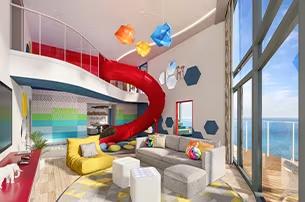
Ultimate Family Townhouse UL.
Three-decks-high stateroom featuring The Yard. Includes a mailbox, table tennis, outdoor seating, outdoor games and seating nook.
Main level inlcudes a private balcony with whirlpool and six person dining table. Upper level inlcudes a private balcony accessible from the master bedroom overlooking Surfside.
Full bathroom with shower and sink on the main level. Master bathroom with two sinks and two shower heads. Kids bathroom with two sinks and a tub.
Sleeps up to 8 guests.
Stateroom: 1,772 sq. ft. (includes net feature and bridge before)
Balcony (main level): 410 sq. ft.
Balcony (second level): 90 sq. ft.
Backyard: 251 sq. ft.
Suite/Deluxe
Ultimate Family Townhouse UL.
Three-decks-high stateroom featuring The Yard. Includes a mailbox, table tennis, outdoor seating, outdoor games and seating nook.
Main level inlcudes a private balcony with whirlpool and six person dining table. Upper level inlcudes a private balcony accessible from the master bedroom overlooking Surfside.
Full bathroom with shower and sink on the main level. Master bathroom with two sinks and two shower heads. Kids bathroom with two sinks and a tub.
Sleeps up to 8 guests.
Stateroom: 1,772 sq. ft. (includes net feature and bridge before)
Balcony (main level): 410 sq. ft.
Balcony (second level): 90 sq. ft.
Backyard: 251 sq. ft. 800-525-9696
for Pricing
 Suite/Deluxe
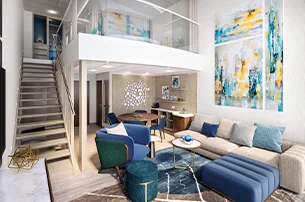
Royal Loft Suite RL.
Two-decks-high stateroom with panoramic views. Main level features a bedroom with closet and vanity and two twin beds that convert to Royal King; dining area with wet bar, piano, living room with sofa that converts to double bed; bathroom with shower and integrated bench. Master bedroom features a King size bed with Matermoll Summer Mattress; bathroom with tub, shower, two sinks, half bath (toilet compartment with sink); and a walk-in closet - all on the second level. Includes vestibule with mini bar and two lounge chairs (retreat) at the top of the stairs - vestibule serves as added privacy - and has no direct view to the bedroom. The Private balcony features whirlpool and dining area, bar with sink.
Bathroom on main level
Master bathroom with tub, shower, two sinks and toilet compartment with sink (3 sinks total) on second level
Sleeps up to 6 guests.
Stateroom: 2,088 sq. ft. (inclusive of the opening)
Stateroom: 1,482 sq. ft. (excluding the opening)
Balcony (main level): 705 sq. ft.
Suite/Deluxe
Royal Loft Suite RL.
Two-decks-high stateroom with panoramic views. Main level features a bedroom with closet and vanity and two twin beds that convert to Royal King; dining area with wet bar, piano, living room with sofa that converts to double bed; bathroom with shower and integrated bench. Master bedroom features a King size bed with Matermoll Summer Mattress; bathroom with tub, shower, two sinks, half bath (toilet compartment with sink); and a walk-in closet - all on the second level. Includes vestibule with mini bar and two lounge chairs (retreat) at the top of the stairs - vestibule serves as added privacy - and has no direct view to the bedroom. The Private balcony features whirlpool and dining area, bar with sink.
Bathroom on main level
Master bathroom with tub, shower, two sinks and toilet compartment with sink (3 sinks total) on second level
Sleeps up to 6 guests.
Stateroom: 2,088 sq. ft. (inclusive of the opening)
Stateroom: 1,482 sq. ft. (excluding the opening)
Balcony (main level): 705 sq. ft. 800-525-9696
for Pricing
Suite/Deluxe
Icon Loft IL.
Two-decks-high stateroom with panoramic views. Main level features living room with sofa that converts to double bed and dining area with a dry bar. Second level features Master bedroom and bathroom. Bedroom has two twin beds that convert to a Royal King size bed. Bathroom includes a shower for two. Closets exist on each level. Private balcony features a dining area.
One bathroom with shower and integrated shower bench on main level
Master bathroom with two shower heads on second level
Stateroom: 838 sq. ft. (inclusive of the opening)
Stateroom: 656 sq. ft. (excluding the opening)
Balcony: 108-172 sq. ft. 800-525-9696
for Pricing
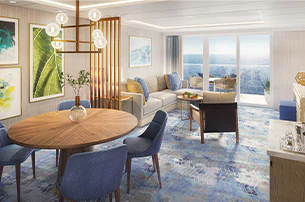 Suite/Deluxe
Owner's Suite - 1 Bedroom OS.
Two twin beds that convert to Royal King. Private bathroom with tub and shower and two sinks, stone entry, large closets, dressing area in bedroom, living area with table and sofa that converts to a double bed. Private balcony with table and chairs.
Stateroom: 658 sq. ft.
Balcony: 190 sq. ft.
Suite/Deluxe
Owner's Suite - 1 Bedroom OS.
Two twin beds that convert to Royal King. Private bathroom with tub and shower and two sinks, stone entry, large closets, dressing area in bedroom, living area with table and sofa that converts to a double bed. Private balcony with table and chairs.
Stateroom: 658 sq. ft.
Balcony: 190 sq. ft. 800-525-9696
for Pricing
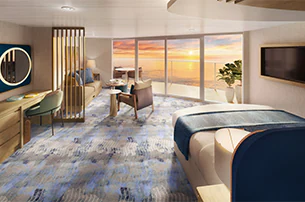 Suite/Deluxe
Sunset Corner Suite SN.
Bedroom area with two twin beds that convert to Royal King. Full bathroom with tub and two sinks. Living room with sofa that converts to double bed. Dry bar area and vanity/desk. Private balcony with seating area and private dining.
Sleeps up to 4.
Stateroom: 380-480 sq. ft.
Balcony: 280 - 360 sq. ft.
Suite/Deluxe
Sunset Corner Suite SN.
Bedroom area with two twin beds that convert to Royal King. Full bathroom with tub and two sinks. Living room with sofa that converts to double bed. Dry bar area and vanity/desk. Private balcony with seating area and private dining.
Sleeps up to 4.
Stateroom: 380-480 sq. ft.
Balcony: 280 - 360 sq. ft. 800-525-9696
for Pricing
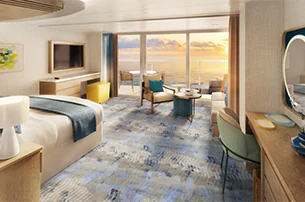 Suite/Deluxe
Sunset Suite SS.
Bedroom area with two twin beds that convert to Royal King. Full bathroom with tub and two sinks. Living room with sofa that converts to double bed. Dry bar area and vanity/desk. Private balcony with seating area and private dining. Sleeps up to 4.
Stateroom: 390 sq. ft.
Balcony: 96-120 sq. ft.
Suite/Deluxe
Sunset Suite SS.
Bedroom area with two twin beds that convert to Royal King. Full bathroom with tub and two sinks. Living room with sofa that converts to double bed. Dry bar area and vanity/desk. Private balcony with seating area and private dining. Sleeps up to 4.
Stateroom: 390 sq. ft.
Balcony: 96-120 sq. ft. 800-525-9696
for Pricing
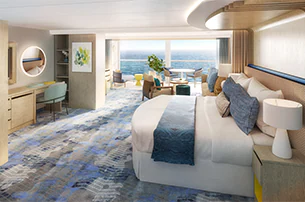 Suite/Deluxe
Infinite Grand Suite IG.
Bedroom area with two twin beds that convert to Royal King. Split bath with one compartment containing a tub and sink and the other with a sink and toilet. Living room features sofa that converts to double bed with the option to extend the interior to outdoors with the convertible balcony. Private balcony with seating area and private dining.
Sleeps up to 4.
Stateroom: 431 sq. ft.
Convertible Balcony: 102 sq. ft.
Suite/Deluxe
Infinite Grand Suite IG.
Bedroom area with two twin beds that convert to Royal King. Split bath with one compartment containing a tub and sink and the other with a sink and toilet. Living room features sofa that converts to double bed with the option to extend the interior to outdoors with the convertible balcony. Private balcony with seating area and private dining.
Sleeps up to 4.
Stateroom: 431 sq. ft.
Convertible Balcony: 102 sq. ft. 800-525-9696
for Pricing
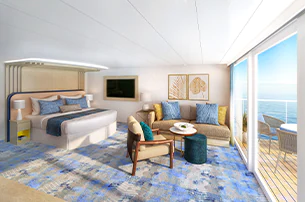 Suite/Deluxe
Grand Suite - 1 Bedroom GS.
Bedroom area with two twin beds that convert to Royal King. Full bathroom with tub and two sinks. Living room with sofa that converts to double bed. Dry bar area and vanity/desk. Private balcony with seating area and private dining.
Sleeps up to 4.
Stateroom: 431 sq. ft.
Balcony: 108 sq. ft.
Suite/Deluxe
Grand Suite - 1 Bedroom GS.
Bedroom area with two twin beds that convert to Royal King. Full bathroom with tub and two sinks. Living room with sofa that converts to double bed. Dry bar area and vanity/desk. Private balcony with seating area and private dining.
Sleeps up to 4.
Stateroom: 431 sq. ft.
Balcony: 108 sq. ft. 800-525-9696
for Pricing
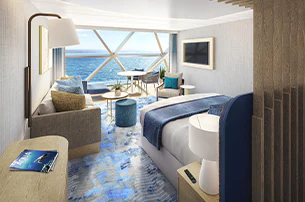 Suite/Deluxe
Panoramic Suite VP.
Bedroom area with two twin beds that convert to Royal King. Dressing area in bedroom. Full bathroom with tub. Seating area with sofa. Extension of room that is a panoramic seating area.
Sleeps up to 4.
Stateroom: 370-440 sq. ft.
Suite/Deluxe
Panoramic Suite VP.
Bedroom area with two twin beds that convert to Royal King. Dressing area in bedroom. Full bathroom with tub. Seating area with sofa. Extension of room that is a panoramic seating area.
Sleeps up to 4.
Stateroom: 370-440 sq. ft. 800-525-9696
for Pricing
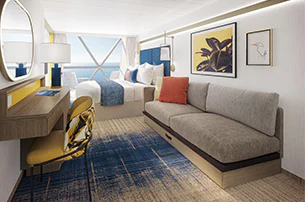 Suite/Deluxe
Sky Junior Suite JY.
Bedroom area with two twin beds that convert to Royal King. Dressing area in bedroom. Full bathroom with tub. Seating area with sofa. Private balcony.
Sleeps up to 4.
Stateroom: 322 sq. ft.
Balcony: 80 sq. ft.
Suite/Deluxe
Sky Junior Suite JY.
Bedroom area with two twin beds that convert to Royal King. Dressing area in bedroom. Full bathroom with tub. Seating area with sofa. Private balcony.
Sleeps up to 4.
Stateroom: 322 sq. ft.
Balcony: 80 sq. ft. 800-525-9696
for Pricing
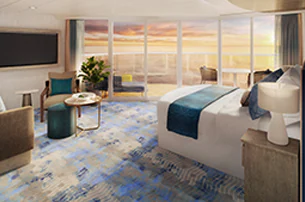 Suite/Deluxe
Sunset Junior Suite JT.
Bedroom area with two twin beds that convert to Royal King. Full bathroom with tub. Seating area with sofa that converts to double bed. Private balcony. Sleeps up to 4.
Stateroom: 322-330 sq. ft.
Balcony: 115-130 sq. ft.
Suite/Deluxe
Sunset Junior Suite JT.
Bedroom area with two twin beds that convert to Royal King. Full bathroom with tub. Seating area with sofa that converts to double bed. Private balcony. Sleeps up to 4.
Stateroom: 322-330 sq. ft.
Balcony: 115-130 sq. ft. 800-525-9696
for Pricing
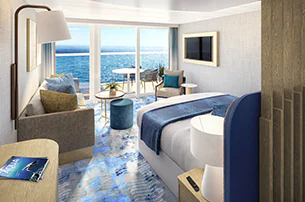 Suite/Deluxe
Junior Suite JS.
Bedroom area with two twin beds that convert to Royal King. Dressing area in bedroom. Full bathroom with tub. Seating area with sofa. Private balcony.
Sleeps up to 4.
Stateroom: 322 sq. ft.
Balcony: 80 sq. ft.
Suite/Deluxe
Junior Suite JS.
Bedroom area with two twin beds that convert to Royal King. Dressing area in bedroom. Full bathroom with tub. Seating area with sofa. Private balcony.
Sleeps up to 4.
Stateroom: 322 sq. ft.
Balcony: 80 sq. ft. 800-525-9696
for Pricing
800-525-9696
for Pricing
 Suite/Deluxe
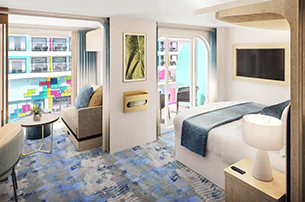
Surfside Family Suite SF.
Bedroom area with two twin beds that convert to Royal King. Split bathrooms with a shower, sink and toilet and sink. Sitting area with sofa that converts to a full bed. Private balcony with Surfside neighborhood view. 269 sqft with 53 sqft balcony.
Suite/Deluxe
Surfside Family Suite SF.
Bedroom area with two twin beds that convert to Royal King. Split bathrooms with a shower, sink and toilet and sink. Sitting area with sofa that converts to a full bed. Private balcony with Surfside neighborhood view. 269 sqft with 53 sqft balcony. 800-525-9696
for Pricing
Balcony
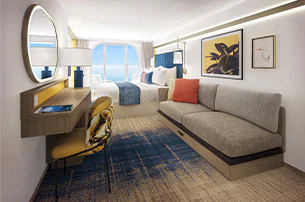 Ocean View Balcony (D2)
Two twin beds that convert to Royal King, seating area with sofa, full bathroom, shower with bench and private balcony. Stateroom: 204 sq. ft. Balcony: 50 sq. ft. (Decks 8, 12 & 14)
800-525-9696
for Pricing
 Balcony
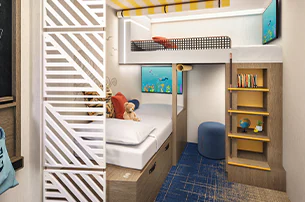
Family Infinite Oceanview Balc IB.
Room with two twin beds that convert to Royal King bed, vanity and seating area with sofa and convertible balcony extendng the interior to outdoors. Separate room with bunk bed. Split bathroom. Connecting staterooms through private vestibule (72 of the 77 staterooms have the connecting staterooms feature).
Stateroom: 285 sq. ft.
Convertible Balcony: 50 sq. ft.
Balcony
Family Infinite Oceanview Balc IB.
Room with two twin beds that convert to Royal King bed, vanity and seating area with sofa and convertible balcony extendng the interior to outdoors. Separate room with bunk bed. Split bathroom. Connecting staterooms through private vestibule (72 of the 77 staterooms have the connecting staterooms feature).
Stateroom: 285 sq. ft.
Convertible Balcony: 50 sq. ft. 800-525-9696
for Pricing
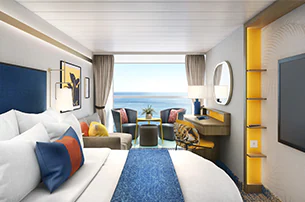 Balcony
Infinite Ocean View Balcony I1.
Two twin beds that convert to Royal King, seating area with sofa, full bathroom, shower with bench. Convertible balcony extends the interior to outdoors.
Stateroom: 200 sq. ft.
Convertible Balcony: 50 sq. ft.
Balcony
Infinite Ocean View Balcony I1.
Two twin beds that convert to Royal King, seating area with sofa, full bathroom, shower with bench. Convertible balcony extends the interior to outdoors.
Stateroom: 200 sq. ft.
Convertible Balcony: 50 sq. ft. 800-525-9696
for Pricing
Balcony
Infinite Ocean View Balcony I3.
Two twin beds that convert to Royal King, seating area with sofa, full bathroom, shower with bench. Convertible balcony extends the interior to outdoors.
Stateroom: 200 sq. ft.
Convertible Balcony: 50 sq. ft. 800-525-9696
for Pricing
800-525-9696
for Pricing
800-525-9696
for Pricing
800-525-9696
for Pricing
Balcony
Ocean View Balcony D1.
Two twin beds that convert to Royal King, seating area with sofa, full bathroom, shower with bench and private balcony.
Stateroom: 204 sq. ft.
Balcony: 50 sq. ft. 800-525-9696
for Pricing
Balcony
Ocean View Balcony D3.
Two twin beds that convert to Royal King, seating area with sofa, full bathroom, shower with bench and private balcony.
Stateroom: 204 sq. ft.
Balcony: 50 sq. ft. 800-525-9696
for Pricing
Balcony
Ocean View Balcony D5.
Two twin beds that convert to Royal King, seating area with sofa, full bathroom, shower with bench and private balcony.
Stateroom: 204 sq. ft.
Balcony: 50 sq. ft. 800-525-9696
for Pricing
Balcony
Ocean View Balcony D4.
Two twin beds that convert to Royal King, seating area with sofa, full bathroom, shower with bench and private balcony.
Stateroom: 204 sq. ft.
Balcony: 50 sq. ft. 800-525-9696
for Pricing
800-525-9696
for Pricing
800-525-9696
for Pricing
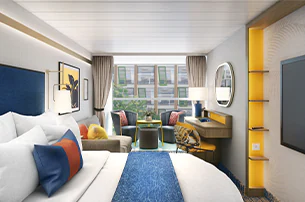 Balcony
Infinite Central Park Balc IF.
Two twin beds that convert to Royal King, seating area with sofa, full bathroom, shower with bench. Convertible balcony extends the interior to outdoors. 200 sqft with 50 sqft balcony.
Balcony
Infinite Central Park Balc IF.
Two twin beds that convert to Royal King, seating area with sofa, full bathroom, shower with bench. Convertible balcony extends the interior to outdoors. 200 sqft with 50 sqft balcony. 800-525-9696
for Pricing
800-525-9696
for Pricing
800-525-9696
for Pricing
800-525-9696
for Pricing
800-525-9696
for Pricing
800-525-9696
for Pricing
800-525-9696
for Pricing
Balcony
Connecting Ocean View Balcony CB.
Connecting oceanview balcony stateroom with two twin beds that convert to Royal King, seating area with sofa, full bathroom, shower with bench and private balcony. Book two adjoining CB staterooms for a family-friendly layout with two separate bedrooms, two full bathrooms and sleeping for up to eight guests.
Stateroom: 204 sq. ft.
Balcony: 50 sq. ft. 800-525-9696
for Pricing
Outside
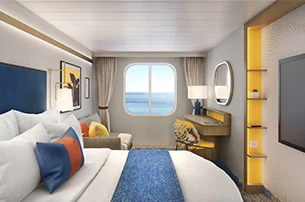 Ocean View (N4)
Two twin beds that convert to Royal King, private bathroom and seating area. Stateroom: 160-187 sq ft. Stateroom images and features are samples only. Actual furniture, fixtures, colors and configurations may vary. (Decks 3, 4, 7, 8, 9, 10 & 11)
800-525-9696
for Pricing
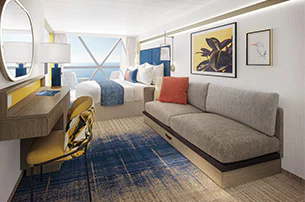 Outside
Panoramic Ocean View L5.
Two twin beds that convert to Royal King, seating area with sofa, full bathroom, shower with bench and extension of room that is a panoramic seating area.
Stateroom: 258 sq. ft.
Stateroom images and features are samples only. Actual furniture, fixtures, colors and configurations may vary.
Outside
Panoramic Ocean View L5.
Two twin beds that convert to Royal King, seating area with sofa, full bathroom, shower with bench and extension of room that is a panoramic seating area.
Stateroom: 258 sq. ft.
Stateroom images and features are samples only. Actual furniture, fixtures, colors and configurations may vary. 800-525-9696
for Pricing
Outside
Ocean View N1.
Two twin beds that convert to Royal King, private bathroom and seating area.
Stateroom: 160-187 sq ft.
Stateroom images and features are samples only. Actual furniture, fixtures, colors and configurations may vary. 800-525-9696
for Pricing
Outside
Ocean View N5.
Two twin beds that convert to Royal King, private bathroom and seating area.
Stateroom: 160-187 sq ft.
Stateroom images and features are samples only. Actual furniture, fixtures, colors and configurations may vary. 800-525-9696
for Pricing
800-525-9696
for Pricing
800-525-9696
for Pricing
Inside
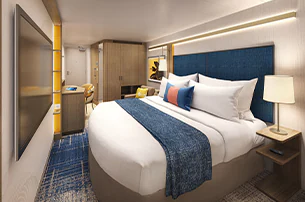 Interior (V4)
Two twin beds that convert to Royal King, private bathroom and seating area. Stateroom: 156 sq. ft. (Decks 3, 4, 7, 8, 9, 10, 11, 12 & 14)
800-525-9696
for Pricing
 Inside
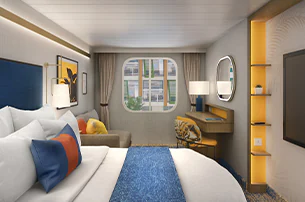
Central Park Interior U5.
Two twin beds that convert to Royal King, private bathroom and seating area.
Stateroom: 187 sq. ft
Inside
Central Park Interior U5.
Two twin beds that convert to Royal King, private bathroom and seating area.
Stateroom: 187 sq. ft 800-525-9696
for Pricing
 Inside
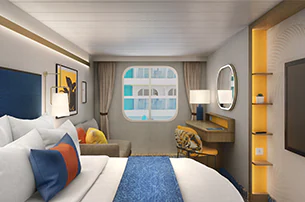
Surfside Family Interior T5.
Two twin beds that convert to Royal King, private bathroom and seating area.
Stateroom: 187 sq. ft.
Inside
Surfside Family Interior T5.
Two twin beds that convert to Royal King, private bathroom and seating area.
Stateroom: 187 sq. ft. 800-525-9696
for Pricing
800-525-9696
for Pricing
800-525-9696
for Pricing
 Inside
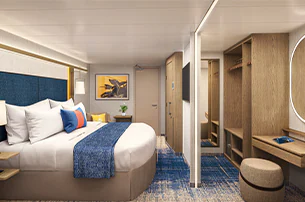
Interior Plus Q2.
Two twin beds that convert to Royal King, walk-in closet, private bathroom and seating area.
Stateroom: 157 sq. ft.
Inside
Interior Plus Q2.
Two twin beds that convert to Royal King, walk-in closet, private bathroom and seating area.
Stateroom: 157 sq. ft. 800-525-9696
for Pricing
800-525-9696
for Pricing
800-525-9696
for Pricing
Before & After Your Cruise
Hotels
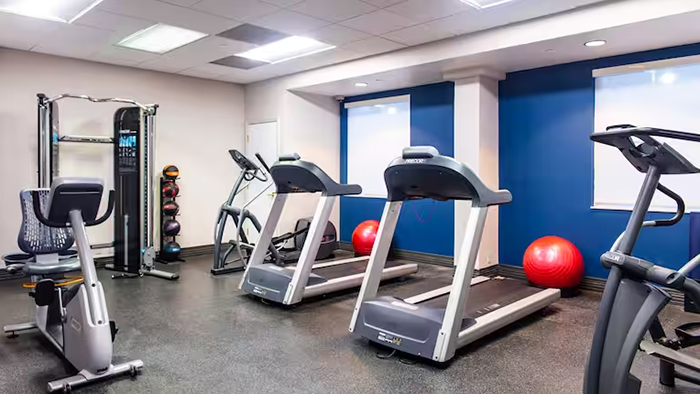
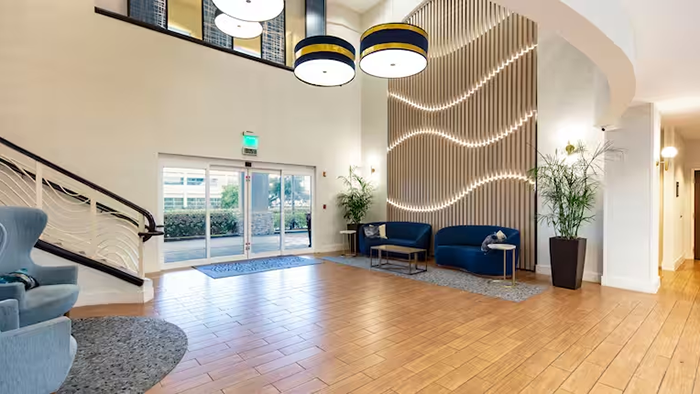
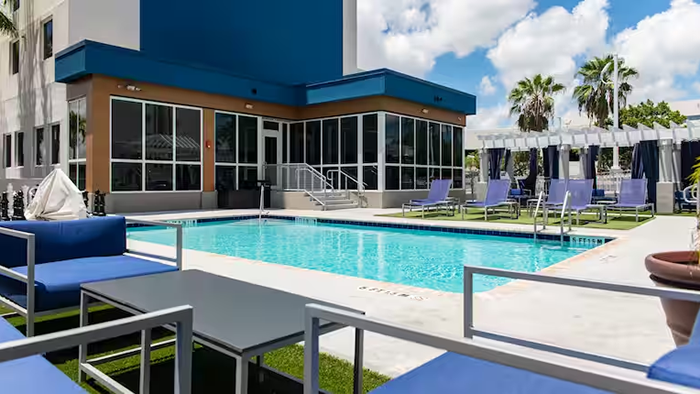
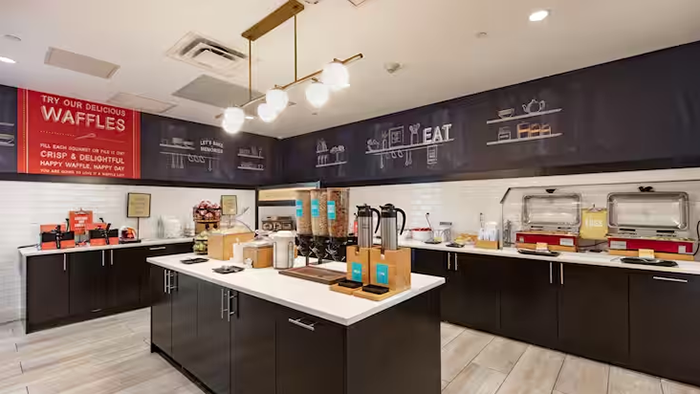
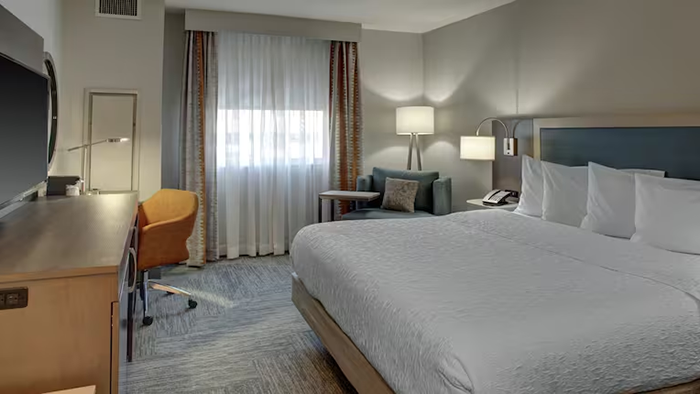
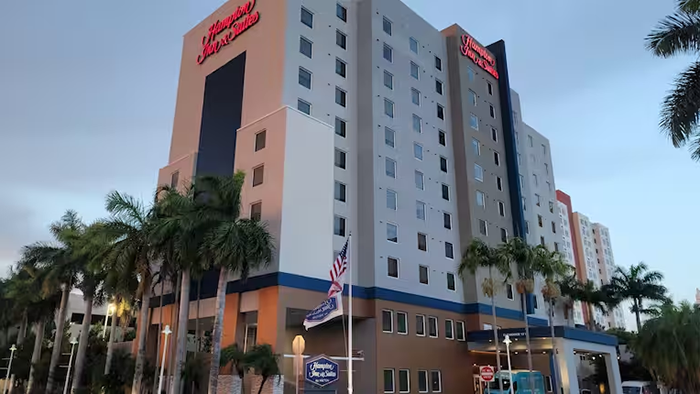
Hampton Inn & Suites by Hilton - Miami Airport South Blue Lagoon
A Stone's Throw from Miami's Airport
777 NW 57th Ave, Miami, FL 33126 — Miami
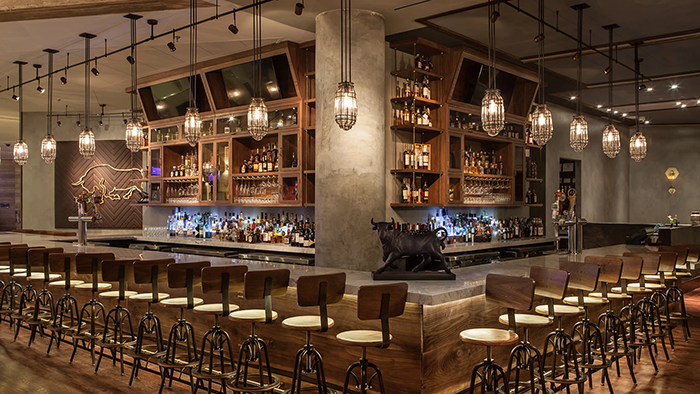
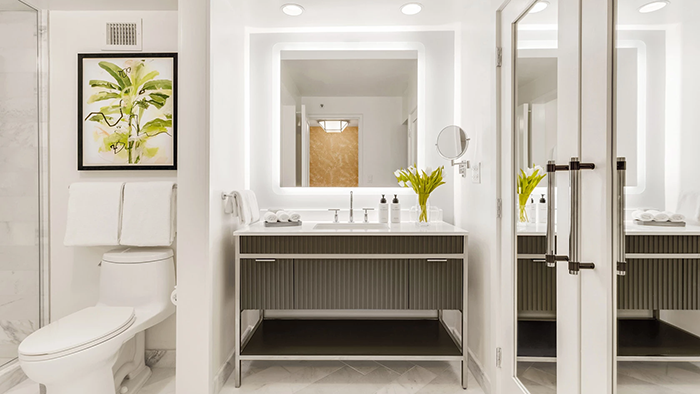
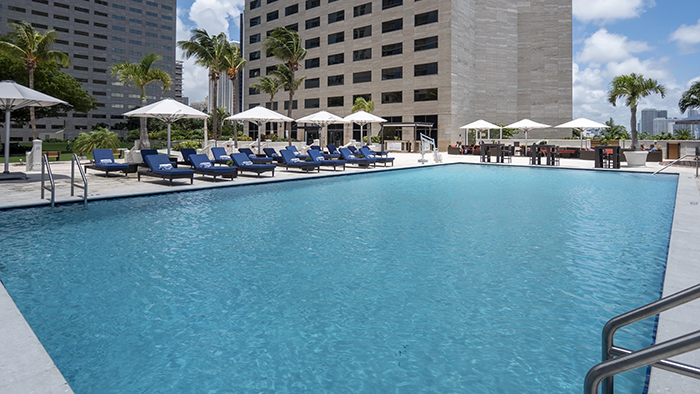
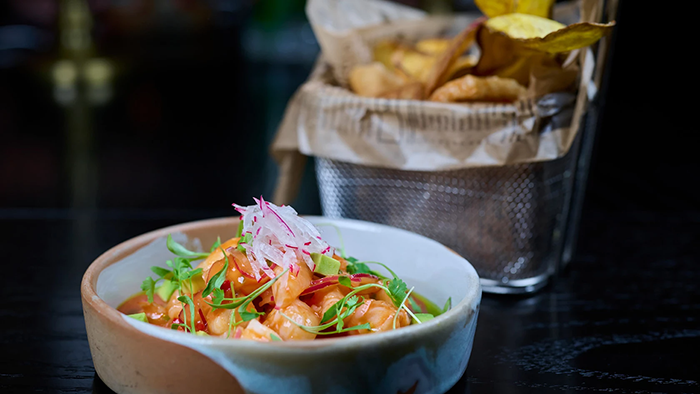
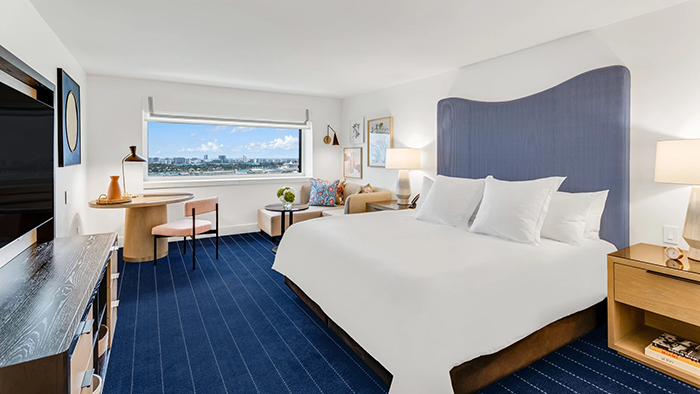
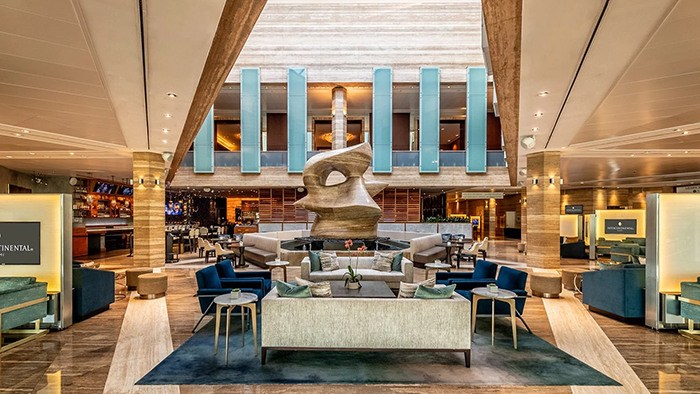
InterContinental Miami, an IHG Hotel
Miami's Bayfront Icon
100 Chopin Plaza, Miami, FL 33131 — Miami
Protect Your Trip with Allianz Travel Insurance
Allianz Travel Insurance plans can give you flexibility and support when your trip doesn’t go quite as planned. From unexpected flight issues to covered trip cancellations, travel emergencies, and more, travel insurance can help you manage unforeseen events that may impact your trip—giving you peace of mind from the moment you book your trip through your return home.
For an instant quote:
- Simply provide a few short details about your trip
- Review the available protection plans
- Enjoy the peace of mind you deserve
Why Protect your Trip?
Whether you’re planning your next trip or you recently booked one, travel insurance can help smooth over many unexpected travel glitches—while putting your mind at ease, knowing you’re off the hook for covered expenses that could arise from them.
Allianz Travel Insurance plans can provide you benefits and professional support when a covered situation comes up before or during your trip. The following examples may qualify for benefits:
- Cancelling your trip after unexpectedly becoming too sick to travel
- Taking care of a sick or injured traveling companion
- Having to end your trip early due to a family emergency
- Dealing with a flight delay or cancellation
- Needing to buy personal items if your luggage is lost or stolen
- Missing your cruise departure after a covered flight delay
You also can contact our travel protection partner Allianz Global Assistance’s 24/7, award-winning customer service for on-the-go assistance with issues like a medical emergency, replacing your lost passport, or making reservations around the world. To be eligible for a time-sensitive waiver of pre-existing medical condition exclusions, purchase your travel insurance plan within 14 days of initial trip deposit (other purchase requirements and conditions apply). Specific plan benefits may vary. Please review your plan details for more information.
What Can Travel Insurance Help Protect?
Allianz Travel Insurance plans can protect you before and during your trip—keeping you, your loved ones, and your travel budget safer. Benefits vary by plan, and these are brief descriptions. Please read your plan documents for details.
TRIP CANCELLATION
Reimburses your prepaid, non-refundable travel expenses if you need to cancel your trip due to a covered reason, such as you, a family member, or traveling companion experiencing a covered illness or injury. Examples include:
- A doctor says you or a traveling companion is too sick to fly
- Your parent or child requires hospitalization
- You need to attend the birth of a family member’s child
- You have a traffic accident (not breakdown) on the way to the airport
- A storm shuts down your airport for 24 hours or more
TRIP INTERRUPTION
Reimburses your unused, non-refundable travel expenses and increased transportation costs during your trip if you have to return home early due to a covered reason, for instance when a family member has a qualifying medical emergency and needs your care. Examples include:
- You have a covered illness or injury and a doctor says you must return home
- A family member has a qualifying injury and needs your care
- A covered emergency, like a fire or flood, makes your home uninhabitable
TRAVEL DELAY
If you have a covered delay while traveling, travel insurance can reimburse you for meals, accommodations, and transportation expenses when your trip is delayed for a minimum number of consecutive hours for a covered reason. Minimum number of hours varies by plan.
EMERGENCY MEDICAL AND DENTAL CARE
Reimburses your expenses related to covered medical and dental emergencies* that might occur on your trip. This benefit can be especially helpful if you have a covered emergency outside the United States, as most health insurance policies won’t cover you outside the country. Examples include:
- You slip and break your ankle while sightseeing
- You get food poisoning while sampling the local cuisine
- You lose a filling and need immediate dental treatment*
*A sublimit and maximum apply for this benefit. Check your plan documents for details.
EMERGENCY MEDICAL TRANSPORTATION
Arranges and pays for medically necessary transportation following a covered injury or illness to the nearest appropriate medical facility to receive care and get you home after treatment.
BAGGAGE LOSS, DAMAGE, or THEFT
Reimburses the replacement of your lost, damaged, or stolen luggage and personal items while traveling.
BAGGAGE DELAY
Reimburses essential items purchased during your trip if your baggage is delayed for a minimum number of hours (varies by plan).
CHANGE FEE
Reimburses fees if you need to change your flight itinerary due to a covered reason.
24-HOUR ASSISTANCE
Provides around-the-clock support during your trip. Allianz Global Assistance’s staff of multilingual problem solvers can help you with medical, legal, and travel-related emergencies whenever they happen. Medical assistance may include, but is not limited to:
- Medical triage with referrals to local prescreened medical providers
- Ongoing medical monitoring
- Payment guarantee
- Emergency medical transportation
Additional services for travel-related emergencies can help with:
- Missed connecting flights
- Lost/stolen travel documents
- Pre-trip information
- Prescription replacements
Our Promise to You
When you purchase any Allianz Travel Insurance plan, you automatically get 15 days (or more, depending on your state of residence) to review your policy documents. Within that period, you can cancel your plan for a full refund if you’re not satisfied, as long as you haven’t filed a claim or departed on your trip.
Need Help Along the Way?
Contact Allianz Global Assistance’s award-winning team of travel experts. Call anytime for assistance navigating travel mishaps overseas or in the U.S.—or help with everything from reporting lost baggage to locating emergency medical treatment. They can also help you replace passports, refer you to legal assistance, secure cash from home in case of emergency, and guarantee payment when you need to be admitted to a hospital, in some instances.
Contact Allianz Global Assistance
Phone (24/7):
1-800-284-8300 (within the U.S., Canada, Puerto Rico, and the U.S. Virgin Islands)
1-804-281-5700 (outside of the U.S., call collect)
File or Track a Claim
It’s easy and convenient to file and track a claim, upload documents, and more online. Start your claim using your email address or policy number.
File a ClaimIf you need help filing a claim or understanding the claims process, visit the Allianz Global Assistance Claims Center.
Update Your Plan
If you need to update your travel insurance plan, such as adjusting the dates of your plan to reflect itinerary changes, please contact us or manage your plan online so your plan reflects your entire itinerary and provides the right amount of protection for your travels.
Manage My PlanAbout Allianz Global Assistance
Allianz Global Assistance is a world leader in travel insurance and assistance, helping millions of travelers across the globe every year. Allianz Global Assistance is owned by Allianz SE, the world’s largest diversified insurance company. For over 100 years, Allianz SE has helped protect important milestones in American history, insuring the Wright Brothers’ first flight and Golden Gate Bridge construction.
Terms, conditions, and exclusions apply including for pre-existing medical conditions. Insurance benefits underwritten by BCS Insurance Company (OH, Administrative Office: 2 Mid America Plaza, Suite 200, Oakbrook Terrace, IL 60181), rated “A” (Excellent) by A.M. Best Co., under BCS Form No. 52.201 series or 52.401 series, or Jefferson Insurance Company (NY, Administrative Office: 9950 Mayland Drive, Richmond, VA 23233), rated “A+” (Superior) by A.M. Best Co., under Jefferson Form No. 101-C series or 101-P series, depending on your state of residence and plan chosen. A+ (Superior) and A (Excellent) are the 2nd and 3rd highest, respectively, of A.M. Best’s 13 Financial Strength Ratings. Plans only available to U.S. residents and may not be available in all jurisdictions. Allianz Global Assistance and Allianz Travel Insurance are marks of AGA Service Company dba Allianz Global Assistance or its affiliates. Allianz Travel Insurance products are distributed by Allianz Global Assistance, the licensed producer and administrator of these plans and an affiliate of Jefferson Insurance Company. The insured shall not receive any special benefit or advantage due to the affiliation between AGA Service Company and Jefferson Insurance Company. Plans include insurance benefits and assistance services. Any Non-Insurance Assistance services purchased are provided through AGA Service Company. Except as expressly provided under your plan, you are responsible for charges you incur from third parties. Contact AGA Service Company at 800-284-8300 or 9950 Mayland Drive, Richmond, VA 23233 or customerservice@allianzassistance.com.