OUR OFFICE HOURS

Mon-Fri 8:30am-6:00pm EST
Sat 10:00am-2:00pm EST

University at Sea®
A Division of Continuing Education, Inc.
5700 4th St. N.
St Petersburg, Florida 33703

Cruise Conference Planning For Your Association

Women's Health and Cardiology

10-Night Spain, Portugal & Morocco Cruise
Round-trip Barcelona, Spain
April 10 - 20, 2027
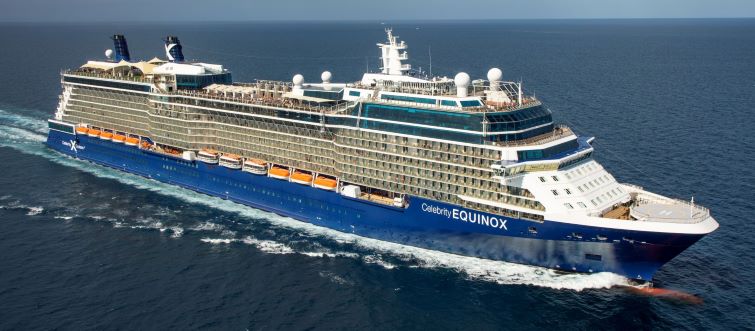
<em>Celebrity Equinox</em>
Celebrity Equinox
16 AMA PRA Category 1 Credits™
16 ANCC Contact Hours
Course Fees
$1,195.00 $995.00 for Physicians
$895.00 $745.00 for Nurse Practitioners, Physician Assistants
$695.00 $595.00 for Nurses
Early Bird Discount applied above expires July 10, 2026.

Target Audience
Physicians, Nurse Practitioners, Physician Assistants, Nurses
IMPORTANT NOTE: All conferees, their families, and guests must book their cruise within the University at Sea® meeting group through University at Sea® at 800-926-3775 or by registering online. This ensures our company can provide conference services and complimentary social amenities to all meeting participants and their guests. Thank you for your cooperation.
Faculty

Steven R. Bailey, M.D

Steven R. Bailey, M.D
Chairman of Internal Medicine at LSU Health Shreveport; Malcolm Feist Chair of Interventional Cardiology Dr. Steven Bailey is the Chairman of Internal Medicine at LSU Health Shreveport and the Malcolm Feist Chair of Interventional Cardiology. He is a Tenured and Emeritus Professor of Medicine and Radiology and previous Chief of the Janey and Dolph Briscoe Jr. Division of Cardiology at the University of Texas Health Science Center in San Antonio, Texas. Dr. Bailey received his medical degree from the University of Oregon Health Science Center at Portland and did his medicine residency and cardiology fellowship at Fitzsimmons Army Medical Center in Aurora, Colorado. He is board certified by the American Board of Internal Medicine with subspecialty board certification in both Cardiovascular Disease and Interventional Cardiology. Dr. Bailey's clinical focus is in Adult Congenital/Structural and Valvular heart disease in addition to Coronary Atherosclerotic Disease. His research laboratory is involved in investigating the effects of NOX subtypes in promoting cardiovascular disease and Pulmonary Endothelial cell prothrombic response to Covid 19 viral infection. He has translational research in the field of nanotechnologies and nanosensors and holds several patents in these fields. He was the Program Director for Interventional Cardiology at UTHSCSA from 1999 to 2019. Dr. Bailey chaired the UTHSCSA Promotion and Tenure committee. Dr. Bailey is a Past President of the Society for Cardiovascular Angiography and Interventions (SCAI) and is currently the Editor in Chief of Catheterization and Cardiovascular Interventions. He is a Master Fellow of SCAI, a Master Fellow of ACP, a Fellow of the American College of Cardiology, and a Fellow of the American Heart Association. He is a member of the Association of the Professors of Medicine, Association of University Cardiologists, the Association of Cardiology Professors, as well as the International Andreas Greuntizig Society.

Rebecca Levy-Gantt, DO

Rebecca Levy-Gantt, DO
Assistant Adjunct Faculty Touro College of Osteopathic Medicine Vallejo, California Private practice, Obstetrics and Gynecology Premier ObGyn Napa Inc Napa, California Dr. Rebecca Levy-Gantt is a Board Certified ObGyn and a certified menopause practitioner who has been practicing for the last 10 years in Napa, California. She is originally from New York City, where she grew up and went to medical school at the NY College of Osteopathic Medicine, graduating in 1992. She practiced on Long Island for 11 years before moving to Napa. Her special interests are menopause management, including hormones and alternative management strategies, as well as vaginal and vulvar pain syndromes. She owns a solo private practice which has been growing for the past 5 years, teaches medical students from Touro College of Osteopathic Medicine, and spends her free time teaching, traveling, running and writing.

Our staff can assist you with all your travel arrangements.

Questions? Call us at 800-422-0711.
We can assist you with all your travel arrangements. We'd be happy to help you plan your flights, hotels or tours before and/or after your cruise conference.

Cruise Itinerary

DATE PORT OF CALL ARRIVE DEPART
Sat Apr 10 Barcelona, Spain
- 5:00 pm
Sun Apr 11 At Sea
- -
Mon Apr 12 Tangier, Morocco
7:00 am 6:00 pm
Tue Apr 13 At Sea
- -
Wed Apr 14 Porto Leixoes, Portugal
8:00 am 6:00 pm
Thu Apr 15 Lisbon, Portugal
7:00 am 5:00 pm
Fri Apr 16 Cadiz (Seville), Spain
11:00 am 8:00 pm
Sat Apr 17 Malaga, Spain
8:00 am 6:00 pm
Sun Apr 18 At Sea
- -
Mon Apr 19 Palma De Mallorca, Spain
7:00 am 5:00 pm
Tue Apr 20 Barcelona, Spain
5:00 am -
*Tentative course schedule, actual class times may differ.
Itinerary Map

Ports of Call

Barcelona, Spain - For travelers fortunate enough to begin or end their voyage in Barcelona, we offer a crucial piece of professional advice: do not treat this city merely as a logistical bookend. To arrive only hours before embarkation or to fly out immediately upon docking is to miss the very soul of Catalonia. Barcelona is not simply a port; it is one of Europe’s most sophisticated, visually stunning, and culturally distinct capitals. We strongly recommend framing your cruise with a minimum of two to three nights here. This allows the city’s vibrant, artistic, and culinary culture to unfold at a human pace, rather than a frantic tourist sprint. Barcelona rewards immersion. It is a city of stark, beautiful contrasts: grand 19th-century boulevards abutting hidden medieval alleys; avant-garde design coexisting with centuries-old traditions; and a Mediterranean spirit of leisure blended with fierce Catalan pride. Below is a curated, unhurried itinerary designed to help you experience the best of the city before or after your voyage. ### Day 1: The Ancient Heart – Gothic Quarter & El Born Begin your immersion by losing yourself in the **Barri Gòtic (Gothic Quarter)**. This is the historical nucleus of Barcelona, a captivating labyrinth of narrow, winding streets that open unexpectedly onto sun-drenched plazas. While the **Barcelona Cathedral** is a soaring example of Catalan Gothic architecture (and worth a visit to see the 13 geese in the cloister), the real joy here is aimless wandering. Look for the **Temple of Augustus**, where four Roman columns remain hidden inside a medieval building—a quiet reminder of the city’s ancient origins as 'Barcino.' Adjacent to the Gothic Quarter is the trendier, more bohemian district of **El Born**. It shares the medieval layout but possesses a distinct artistic vitality. Here you will find the **Museu Picasso**, housed across five adjoining medieval palaces. It offers an unparalleled look into the artist's formative years. A short walk away stands the **Basilica de Santa Maria del Mar**, a church built by the people for the people, and a masterpiece of pure Gothic proportions. El Born is also a culinary hotspot; we recommend spending your evening here hopping between wine bars for *pintxos* (Basque-style tapas) and local Cava. ### Day 2: The Modernist Visionaries Today is dedicated to the architectural movement that defines Barcelona: *Modernisme*. Naturally, this begins with Antoni Gaudí’s magnum opus, **La Sagrada Família**. **Critical Advice:** You must book your tickets online weeks, if not months, in advance. This is not a suggestion; it is a necessity. While the exterior is a marvel of symbolic sculpture, the interior is where the true magic lies. Stepping inside is like entering an ethereal forest, with columns branching like trees and kaleidoscopic light filtering through stained glass. It is a profound, spiritual experience. However, for our clients—particularly those in the medical or architectural fields—we strongly recommend a visit to the **Recinte Modernista de Sant Pau**. Just a short walk from the Sagrada Família, this former hospital (designed by Lluís Domènech i Montaner) is a UNESCO World Heritage site often overlooked by the masses. It is a stunning complex of colorful pavilions and gardens designed to heal the spirit as well as the body. It is arguably one of the most beautiful Art Nouveau complexes in the world and offers a tranquil counterpoint to the bustle of Gaudí’s basilica. In the afternoon, stroll down the **Passeig de Gràcia**, Barcelona’s answer to the Champs-Élysées. Here you will find Gaudí’s residential masterpieces: **Casa Batlló**, with its dragon-scaled roof, and **Casa Milà (La Pedrera)**, with its undulating stone facade. Both require advance booking for interior tours, though the exteriors alone are worth the walk. ### Day 3: Views, Art, and the Sea If your schedule permits a third day, head to **Montjuïc**, the broad hill overlooking the harbor. You can reach it via a scenic cable car ride from the port area. This area is home to the **Fundació Joan Miró**, a bright, airy museum dedicated to Barcelona’s other famous artistic son. The views from the castle at the summit offer a perfect perspective on the city layout and the port where your ship awaits. Finish your stay in **La Barceloneta**, the seaside neighborhood. While touristy on the main boardwalk, the backstreets retain a salty, local charm. This is the place for a farewell lunch of *fideuà*—a local twist on paella made with short noodles instead of rice, served with dollops of garlic aioli. ### The Culinary Scene: Dining Like a Local Barcelona is a food lover’s paradise, but timing is everything. Lunch is the main meal (2:00 PM – 3:30 PM), and dinner is late (rarely before 9:00 PM). * **The Market Experience:** The famous **Mercado de La Boqueria** is visually stunning but often overwhelmingly crowded. For a more authentic experience, we recommend the **Mercat de Santa Caterina** in El Born, identifiable by its wavy, colorful mosaic roof. It is a fantastic place to see locals shopping and to grab a superb lunch at the market bar, *Cuines Santa Caterina*. * **Fer el Vermut:** Participate in the beloved local ritual of "doing the vermouth." Before lunch, find a bodega and order a *vermut de la casa* (sweet red vermouth over ice with an olive and orange slice) accompanied by chips and cockles. It is the quintessential Catalan aperitif. ### Practical Logistics for the Cruiser Barcelona is wonderfully easy to navigate, but the port logistics require specific attention. * **Port Location:** The main cruise terminal, **Moll Adossat**, is located on a very long breakwater. **Do not attempt to walk to the city center from the ship.** It is much further than it looks (nearly 2 miles to the Columbus monument) and is an exposed, industrial walk over a bridge. * **Transfers:** A **taxi** is the most direct option and costs roughly €35-€40 from the airport to the city, or €15-€20 from the city to the ship. Alternatively, the blue **Portbus (T3)** shuttle runs from the Columbus Monument at the foot of Las Ramblas directly to the terminals for a nominal fee. * **Safety:** Barcelona is generally safe, but it is infamous for skilled pickpockets, particularly on Las Ramblas, the Metro, and in the Gothic Quarter. Be vigilant with watches, phones, and wallets. Leave expensive jewelry in your hotel or ship safe. * **Getting Around:** The city is very walkable, but the **Metro** system is clean, air-conditioned, and efficient. A multi-day "Hola Barcelona" card is a great investment for exploring. By allowing yourself this extra time, you transform Barcelona from a mere departure point into a highlight of your vacation. It is a city that deserves to be savored, and you deserve the time to do it right.

At Sea -

Tangier, Morocco - Tangier is not a gentle introduction to Morocco; it is a full, immediate immersion. As the historic gateway between Africa and Europe, the city is a whirlwind of cultures, languages, and histories compressed into a vibrant, and at times intense, port of call. The primary experience lies within the ancient walls of its Medina and the hilltop Kasbah. Here, a labyrinth of narrow, winding alleys reveals the city’s true character. Expect a sensory overload in the best way: the scent of mint tea and exotic spices, the vibrant colors of leather goods and hand-woven carpets in the souks, and the evocative sound of the call to prayer echoing from minarets. The energy of the Medina can be overwhelming, and navigating its maze-like streets while politely declining persistent vendors is part of the experience. For this reason, engaging a reputable local guide can be invaluable, transforming a potentially stressful day into a fascinating one. Beyond the markets, the American Legation Museum, the first American public property outside the United States, offers a quiet and intriguing slice of diplomatic history. For a moment of tranquility, find your way to the legendary Café Hafa. Clinging to a cliffside, its terraced seating offers sublime views across the Strait of Gibraltar, a perfect spot to reflect over a glass of sweet mint tea. For those seeking dramatic scenery, a short drive to Cap Spartel offers breathtaking views from the northwesternmost point of mainland Africa, where the Atlantic Ocean meets the Mediterranean Sea. Tangier rewards the curious and patient traveler with an authentic, unfiltered cultural experience that feels a world away from the ship.

Porto Leixoes, Portugal - While your ship docks within the industrial bustle of Leixões, the true destination is Porto, located about 20 minutes away by taxi or metro. Porto is not a city of polished, manicured perfection; it possesses a soulful, gritty beauty and a UNESCO World Heritage designation that feels utterly authentic. The city’s topography is demanding—expect steep hills and cobblestones—so supportive footwear is non-negotiable. The historic heart is the Ribeira district, a captivating tangle of medieval alleys tumbling down to the Douro River. For the best orientation, walk across the upper deck of the Dom Luís I Bridge. This Eiffel-inspired masterpiece connects you to Vila Nova de Gaia, the historic headquarters of the Port wine trade. We highly recommend prioritizing a visit to a prestigious lodge such as Graham’s, Taylor’s, or Sandeman. These tours offer essential insight into the region's viticulture and provide a relaxing counterpoint to the busy city streets. Back in Porto, the São Bento train station is a mandatory quick stop to view the stunning azulejo tile panels depicting Portuguese history. Architecture enthusiasts should prioritize the Palácio da Bolsa (Stock Exchange Palace) to see the intricate Arabian Room. A note of caution regarding the famous Livraria Lello bookstore: while beautiful, the queues can consume hours of your limited port time. Unless it is a bucket-list item, we advise spending that time enjoying a local white port and tonic or exploring the fresh seafood restaurants in Matosinhos near the ship before departure.

Lisbon, Portugal - Lisbon is one of Europe’s most visually stunning capitals, greeting visitors with a dramatic entry along the Tagus River. Passing beneath the massive 25 de Abril Bridge offers a perspective unavailable to land-based travelers, setting the stage for a memorable arrival. Once ashore, the city demands physical engagement; the "City of Seven Hills" is paved with calçada portuguesa—beautiful but slippery limestone cobbles that make sturdy, non-slip footwear a necessity, not a suggestion. For a single day in port, strategic planning is vital as the city's attractions are spread out. The historic district of Belém is a top priority for many, housing the architectural jewels of the Age of Discovery. The Jerónimos Monastery and Belém Tower are UNESCO World Heritage sites that require time to appreciate properly. While there, the Antiga Confeitaria de Belém is the pilgrimage site for pastéis de nata (custard tarts), a culinary benchmark against which all others are measured. Alternatively, the Alfama district offers a journey into the city’s Moorish past. This labyrinth of narrow alleys survived the 1755 earthquake and remains the city's soulful core. It is best explored by getting intentionally lost, eventually finding your way up to the Castelo de São Jorge or one of the famous miradouros (viewpoints) like Portas do Sol, which offer sweeping panoramas of red-tiled roofs meeting the river. Downtown, the Baixa district showcases 18th-century rationalist planning, while the elegant Chiado neighborhood offers sophisticated shopping and historic cafés. For lunch, avoid the tourist traps on the main pedestrian drag; instead, seek out the Time Out Market for a curated selection of the city's best chefs, or find a modest tasca for grilled sardines and crisp Vinho Verde. Lisbon is dense with history and culture; rather than rushing to check every box, we recommend selecting one distinct area—Belém, Alfama, or Chiado—to experience fully without exhaustion.

Cadiz (Seville), Spain - The port of Cadiz presents a classic logistical decision: commit to the travel required for world-famous Seville, or embrace the accessible, ancient charm of Cadiz right at the gangway. Both options offer high-quality experiences, but they serve very different travel styles. Seville is the undisputed star of Andalusia, but it demands energy. The 90-minute transit each way leaves a compressed window for exploration, yet the rewards are substantial. The city boasts three UNESCO World Heritage sites: the Real Alcázar, a complex of palaces and gardens that rivals the Alhambra; the massive Gothic Cathedral, resting place of Columbus; and the Archivo de Indias. A visit to the Plaza de España is essential for its architectural grandeur. This is the correct choice for first-time visitors determined to see the icons, but be prepared for significant walking and, in summer, intense heat. For those who prefer a relaxed pace over a bus schedule, Cadiz is a sophisticated delight. As one of Western Europe's oldest continuously inhabited cities, it is entirely walkable from the ship. The experience here is about atmosphere rather than checking boxes. We recommend starting at the Torre Tavira for a unique Camera Obscura view of the city's layout. From there, navigate the narrow streets to the golden-domed Cathedral and the seaside Castillo de San Sebastián. The culinary scene is a major draw; visit the Mercado Central for authentic tapas and sherry, or find a local freiduría for the city's renowned fried fish. Cadiz offers a genuine, stress-free Spanish experience that many travelers end up preferring over the rush to Seville.

Malaga, Spain - Often presented as a gateway to the Costa del Sol, Malaga is a destination that stands firmly on its own considerable merits. This is the birthplace of Picasso, and the city honors its most famous son with the exceptional Museo Picasso, housing a significant collection of his works within a beautifully restored palace. The city’s appeal lies in its rich, visible layers of history. At the foot of the formidable Moorish Alcazaba—a wonderfully preserved fortress-palace that offers a more intimate alternative to Granada's Alhambra—lies a remarkably intact Roman Theatre. This juxtaposition of two great empires is a powerful sight and a testament to Malaga’s deep past. Beyond these headline sites, the city itself is the main attraction. The historic center is a delightful labyrinth of marble-paved lanes, leading to grand plazas and the impressive, yet famously unfinished, Malaga Cathedral, affectionately nicknamed 'La Manquita' (The One-Armed Lady). For a taste of authentic local life, the Atarazanas Market is a feast for the senses, set within a stunning 19th-century iron building with an original Moorish gate. The redeveloped port area, Muelle Uno, offers a contemporary contrast with its modern promenade, shops, and the colorful cube of the Centre Pompidou Malaga. Malaga is eminently walkable, allowing for a day of genuine discovery that effortlessly blends world-class art, ancient history, and the vibrant, sun-drenched energy of a modern Andalusian city.

Palma De Mallorca, Spain - Palma de Mallorca is frequently the sleeper hit of a Western Mediterranean itinerary. While often anticipated merely as a beach resort, the Balearic capital reveals itself as a sophisticated urban center with an architectural pedigree rivaling mainland Spain. It offers a compelling blend of Gothic grandeur, modernist flair, and a relaxed island pace that appeals to those who appreciate culture without the frenetic energy of larger metropolises. The skyline is dominated by the Catedral-Basílica de Santa María, known locally as La Seu. This sandstone leviathan is essential viewing, not just for its exterior dominance but for the interior dialogue between history and modernity; Antoni Gaudí’s unfinished wrought-iron canopy hangs above the altar, while Miquel Barceló’s ceramic chapel adds a controversial contemporary layer. Just below, the Parc de la Mar offers the perfect vantage point for photography. Beyond the cathedral lies the Casco Antiguo (Old Town), a labyrinth of narrow streets best explored without a map. Look for the traditional Mallorcan courtyards (patios) visible through iron gates of aristocratic homes. A stop at the Banys Àrabs (Arab Baths) provides a quiet glimpse into the city’s Moorish past. For a pause, the tree-lined Passeig del Born is the city’s living room, ideal for coffee and people-watching. For panoramic context, a taxi to Castell de Bellver is recommended. As one of Europe’s few circular castles, it offers 360-degree views of the bay and pine forests. Regarding logistics: The cruise pier is an industrial stretch about three miles from the historic center. We strongly advise utilizing a taxi or the port shuttle rather than attempting the walk, maximizing your time for tapas and exploration.

Our staff can assist you with all your travel arrangements.

Questions? Call us at 800-422-0711.
We can assist you with all your travel arrangements. We'd be happy to help you plan your flights, hotels or tours before and/or after your cruise conference.
SHORE EXCURSIONS
Please note that our shore excursions are operated separately and
independently of those offered by the cruise line.
©2026 - University at Sea®